Antivirals for Influenza
 Antimicrobial prescribing: NHS Forth Valley

-
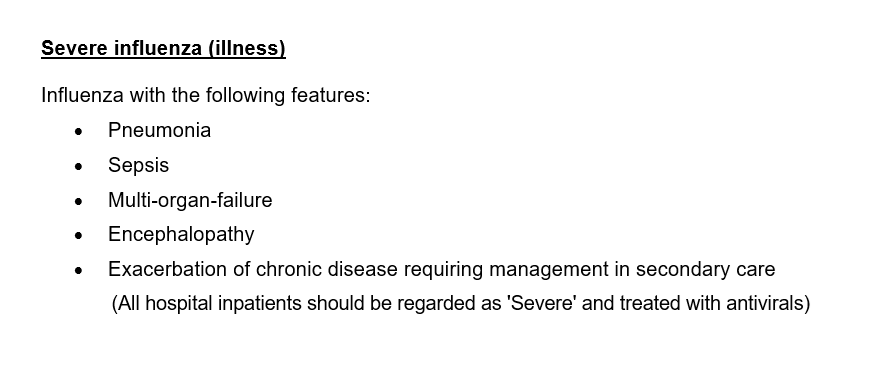
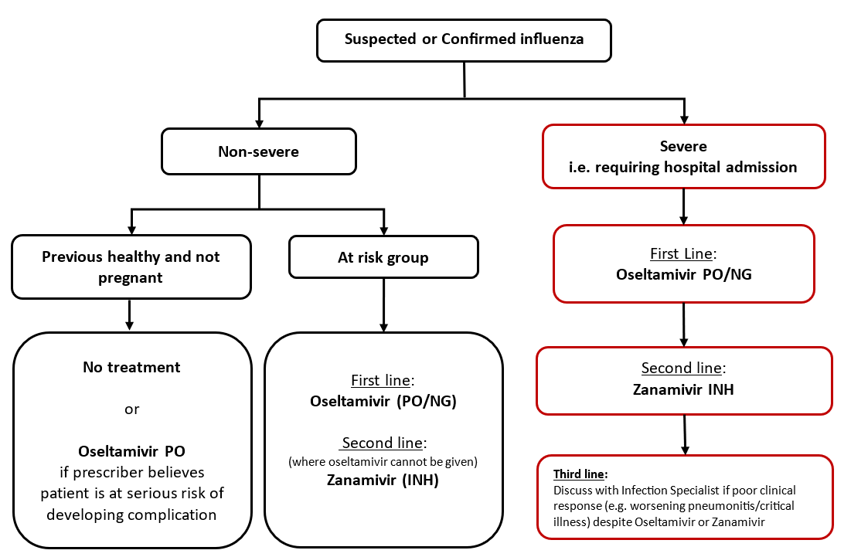
Any patient in hospital with influenza should be treated as 'Severe' influenza; start 5 day antiviral treatment
-
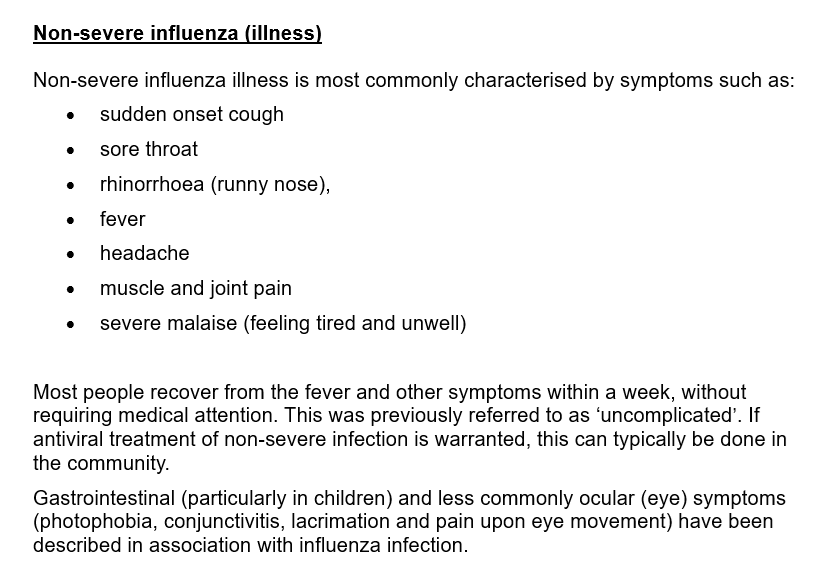
Patients with 'Non-severe' influenza typically do not require hospital care for management of their symptoms.
-
Certain at-risk groups should be offered antiviral treatment even if admission is not required:
-
Age over 65 years or under 6 months
-
Pregnancy (including up to 2 weeks post-partum)
-
Morbid obesity (BMI ≥40)
-
Diabetes mellitus
-
Chronic neurological, hepatic, renal, pulmonary and cardiac disease
-
Potential immunosuppression
-
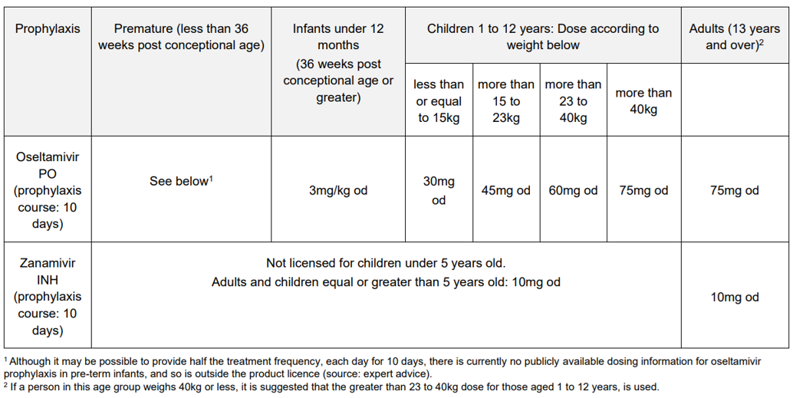
Inpatients exposed to influenza cases (e.g. bay contact) should be offered prophylaxis (10 days OD regimen - see table at bottom)
-
Patients on prophylaxis who become influenza positive should be changed to a treatment course of antiviral
-
Patients who complete 5 days of antiviral treatment no longer require isolation & enhanced infection control precautions provided patient has been afebrile 48hr
-
Patients taking prophylaxis who subsequently are changed onto treatment; isolation period restarts
RECOVERY trial
All patients with confirmed flu should be considered for inclusion into the RECOVERY trial - please send patient details to fv.clinicalresearchteam@nhs.scot or phone 01324 566316 and the clinical trials team will review patients' eligibility. Do not delay treatment whilst awaiting a reply.
Drug details
OSELTAMIVIR - Treatment course
Oseltamivir PO
Adults (13 years and over)
≥41kg
<41kg
75mg BD
60mg BD
5 days
Oseltamivir PO
Children 1 to 12 years:
>40kg
>23 to 40kg
>15 to 23kg
10-15kg
75mg BD
60mg BD
45mg BD
30mg BD
5 days
Oseltamivir PO
Infants <12 months:
≥36wk post-conceptional age
<36wk post-conceptional age
3mg/kg BD
1mg/kg BD
(off-label)
5 days
ZANAMIVIR - Treatment course
Zanamivir INH
Age >5 years
Children <5yr old
10mg BD
Not licensed
5 days
Zanamivir IV
Adult >17yr
Children 6yr-17yr
Children 6month-5yr
600mg BD
12mg/kg BD (max 600mg per dose)
14mg/kg BD
5-10 days
OSELTAMIVIR - RENAL IMPAIRMENT
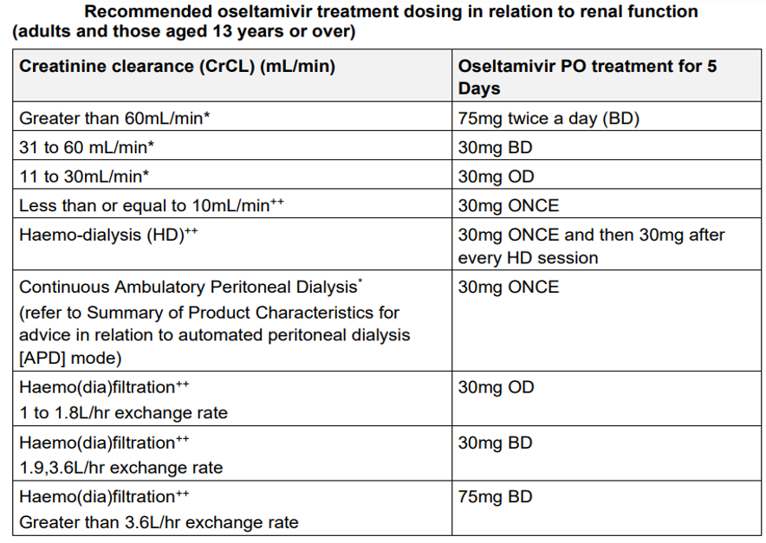
For dose adjustment in children <13 years old with renal impairment - refer to Oseltamivir chapter in the BNF for Children
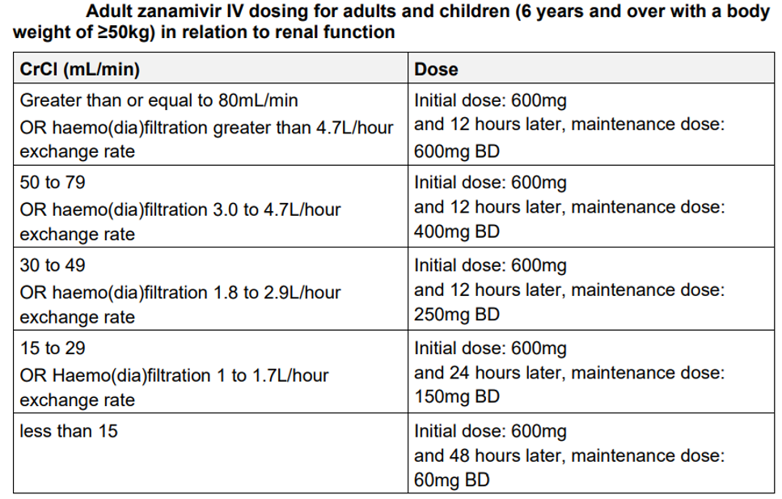
ZANAMIVIR IV - RENAL IMPAIRMENT
POST-EXPOSURE PROPHYLAXIS