Guidelines on calculating initial dose and monitoring treatment dose gentamicin in adults

When prescribing for prophylaxis or synergistic use DO NOT use the gentamicin calculator - See  either surgical prophylaxis guidelines or synergistic dosing guideline as appropriate for dosing information

Contraindications, Cautions and Toxicity (Please Read)

Contraindications

  • Previous hypersensitivity to gentamicin or other aminoglycoside antibiotics
  • Myasthenia gravis
  • Mitochondrial mutation m.1555A -> G 


Cautions

  • Liver disease - Patients with decompensated liver disease are at high risk of aminoglycoside induced renal failure and gentamicin may increase risk of hepatorenal syndrome. Cirrhotic patients may appear to have 'normal' creatinine levels masking renal dysfunction - use only when alternatives are unsuitable
  • Any personal or family history of vestibular / auditory toxicity whilst on aminoglycosides - use only when no other suitable alternatives
  • Creatinine Clearance <21ml/minute, ongoing AKI or oliguria 
    • If gentamicin is indicated, give the first dose and monitor closely before giving further doses - discuss with pharmacy if unsure whether to continue
  • Co-administration with neurotoxic or nephrotoxic agents, e.g. neuromuscular blockers, nonsteroidal anti-inflammatory drugs, ACE Inhibitors, diuretics
  • Patients with known conditions characterised by muscular weakness 


Toxicity

  • Monitor creatinine and any reduction in urine output daily - consider alternatives if creatinine rising (e.g. >15-20% increase) or patients become oliguric
  • All patients should be told to monitor for:
    • reduction in urine output
    • Allergic reactions: including rash, itch, fever,
      shortness of breath, a tight chest or wheezing,
      chills or shivers, swelling or redness of the skin
    • Hearing or balance problems e.g. tinnitus, hearing loss, dizziness or difficulty in keeping your balance
    • Visual disturbances


See full SAPG Gentamicin guidelines HERE for further details. Always seek advice from infection specialist if gentamicin is required beyond 3-4 days. 
 

Calculating Gentamicin Dose

Use SAPG Gentamicin dosage calculator when prescribing Gentamicin for treatment dose. Always take a gentamicin level after the first dose as per calculator instructions. 

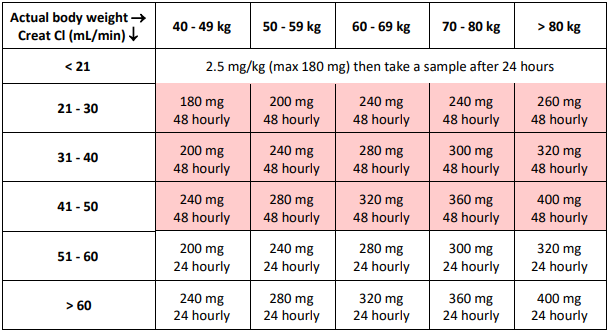
Only if the calculator is unavailable then use the table below to determine the initial dose and interval. Please read the full SAPG policy HERE which gives full dosing and monitoring guidance.


The first dose is based on current ACTUAL body weight and creatinine clearance as follows:

Give the recommended dose by IV infusion in 100mL sodium chloride 0.9% over 30 minutes

If the patient weighs <40 kg and CrCl is ≥ 21 mL/min, give a single dose of 5 mg/kg then take a sample 6 – 14 hours after the dose


If Creatinine is unknown when giving the first dose:

Give 5mg/kg actual body weight (max 400mg) or

If known CKD 5 - give 2.5mg/kg (maximum 180mg)

Calculate the dose as above once creatinine result is available.


Please note: patients with atypical clinical characteristics, such as weight <40 kg or >120 kg, age
>90 years may require dose adjustments and require close monitoring. In patients weighing >150kg larger doses of gentamicin may be required (Do not exceed 600mg). Contact pharmacy for advice.

Monitoring

All patients:

  • Check creatinine daily and record the value on the gentamicin chart 
  • Review therapy daily and seek advice from pharmacy if renal function is unstable (e.g. 20% increase from baseline or oliguric).  
  • Wherever possible gentamicin levels should be taken and sent to the lab during core hours.


For patients with Creatinine Clearance ≥21ml/min:

Take the first gentamicin level 6-14 hours after the start of the first gentamicin infusion 

Record the exact time of all gentamicin samples on the gentamicin chart 

Ensure that the time of sample collection is correct on the ordercomms request

Record the serum concentration on the gentamicin chart

Plot the concentration measurement on the graph on the reverse of the gentamicin chart. This will give you one of 3 outcomes:

  • Continue the present dosage regimen
  • Adjust the dosage interval
  • Withhold and resample after 24 hours

Seek advice from pharmacy if rapidly changing renal function. Document the action taken in the medical notes and by ticking the appropriate box in the action section on the gentamicin chart

If appropriate prescribe the next dose on the gentamicin chart

Subsequent levels should be taken minimum every 2 days or daily if risk of renal dysfunction


For patients with Creatinine Clearance <21ml/min:

Take a gentamicin level 24 hours after the start of the first gentamicin infusion

Record the exact time of all gentamicin samples on the gentamicin chart 

Ensure that the time of sample collection is correct on the ordercomms request

Record the serum concentration on the gentamicin chart

Review the concentration measurement, this will indicate one of two options:

  • If level <1mg/L – give a further dose
  • If level ≥1mg/L – Do not give a further dose. Take a further sample at least every 24 hours and re-dose once level <1mg/L

Document the action taken in the medical notes and by ticking the appropriate box in the action section on the gentamicin chart

If appropriate prescribe the next dose on the gentamicin chart

Subsequent levels should be taken 24 hours after every dose


If the gentamicin level is unexpectedly HIGH or LOW consider the following:

  • Were dose and sample times recorded accurately?
  • Was the correct and full dose administered?
  • Was the sample taken from the line used to administer the drug?
  • Was the sample taken during drug administration?
  • Has renal function declined or improved?
  • Does the patient have oedema or ascites?
  • Is the patient severely underweight or overweight?

If unsure - phone pharmacy for advice

Consider IV to oral switch when patients are haemodynamically stable and able to tolerate/absorb oral antibiotics - see IVOST policy or contact microbiology/ID for advice