This toolkit explains the recommendations in clinical guidelines produced by the Scottish Intercollegiate Guidelines Network (SIGN), the British Thoracic Society (BTS) and the National Institute for Health and Care Excellence (NICE).  It gives you information about the care your child is likely to get and can expect.  

Recommendations in the guidelines are based on different types of evidence. Some of it comes from current research, some from the clinical experience and opinions of healthcare professionals, and some from people with lived experience.

Your child’s healthcare professionals should be following these guidelines when looking after your child.

There are two different types of recommendations in the booklet

SIGN recommendations key


Who is this toolkit for?

This toolkit is for you if:

  • you have a child or young person who has or might have asthma
  • you are a family member or carer of a child or young person who has or might have

The toolkit explains:

  • diagnosis
  • who will be involved in looking after your child and helping with their asthma medicines
  • how you can help control your child’s asthma
  • asthma attacks
  • asthma in young people
  • where to find out more about


What is asthma?

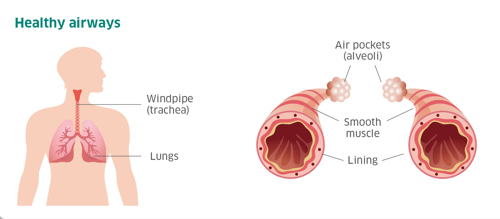
Asthma is a condition that affects your child's airways (the small tubes that carry air in and out of your child's lungs). Asthma can start at any age and there are many possible causes.

Image of healthy airways

Asthma symptoms include:

  • coughing a lot
  • wheezing (a whistling sound in their chest)
  • noisy breathing
  • difficulty breathing or feeling out of breath
  • tightness in their chest.

Asthma symptoms come and go. You might find your child has symptoms at different times of the day (particularly during the night) and even at different times of the year.

Some things can make your child's asthma worse. They are called asthma triggers. Examples of common asthma triggers are:

  • a cold or viral infection
  • dust
  • pollen and hay fever
  • cigarette smoke and e-cigarette vapour
  • changes in weather and temperature
  • pets
  • air pollution
  • mould and damp
  • exercise
  • stress and emotions.

People have different asthma triggers and most people have more than one trigger.

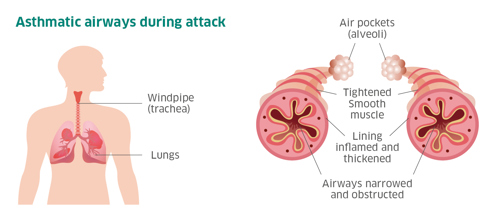
When your child comes into contact with their asthma triggers, a few things happen.

  •  The muscles around their airways tighten.
  •  The lining of their airways becomes swollen and inflamed.
  •  Sometimes, lots of mucus (phlegm) is produced in the airways.

These make your child’s airways narrower and lead to asthma. 


SIGN quote icon"It helps to learn more about the condition, to see how everything fits into place. Because asthma affects a child's whole life: at school, the playground, sports, going out etc. The more I knew about his condition, the more I was able to explain it to myself, my son and to other people, like teachers and other parents, to get their help. Because asthma is most of the time an invisible disease". Martine


How is asthma diagnosed?

How will healthcare professionals and I know if my child has asthma?

Asthma can be difficult to diagnose, particularly in young children. Your child will need to see a healthcare professional such as a doctor, nurse or other qualified professional to find out if they have asthma.  There is no single test that allows healthcare professionals to say for certain that your child has asthma, so they will do a full check. Your child might not have symptoms or signs when they see the healthcare professional, so they may need to check your chid again in the future when they are having asthma symptoms.


SIGN quote icon “My daughter was never poorly when we had an appointment at the chest clinic, however her consultant’s questions helped us to feel included and that our concerns were noted.” Donna


Recommendation based on the research evidence

If your child’s healthcare professional thinks your child might have asthma, they will ask about their symptoms and medical history. Here’s what they will check for:

  • Symptoms. They will ask if they have had:

- wheezing

- noisy breathing

- coughing

- shortness of breath

- chest tightness

They will also ask if these symptoms get worse at night, early in the morning or during certain seasons.

  • Triggers. They will ask if anything specific makes their symptoms worse, like exercise, cold air or allergens.
  • Medical history. They will ask if you or anyone in your family has had asthma or hay fever (allergic rhinitis). They will also ask if your child was born prematurely, and if they have any history of illness, hospital admissions, as well as allergies and eczema.
  • Other conditions. They will check if your child’s symptoms could be caused by something other than asthma.


Recommendation based on the research evidence

Your child’s healthcare professional will listen to your child’s breathing for a specific type of wheeze and look for signs of other conditions. Even if everything seems normal, they could still have asthma.


Recommendation based on the research evidence

Your child’s healthcare professional will confirm that they have asthma if their symptoms and medical history suggest it. A test is also needed to support the diagnosis. Until then, healthcare professionals will consider it ‘suspected asthma’.


What tests will Doctors do?


Recommendation based on the research evidence

If your child is over 5 years old, their healthcare professional will do a breath test called a FeNO (Fractional exhaled Nitric Oxide) test. This test measures the level of nitric oxide, which, when raised, can suggest lung inflammation. If breath testing is unavailable or the result is normal, healthcare professionals will move on to other tests.


Recommendation based on the research evidence

Your child may be asked to take a spirometry test (which checks how the lungs function) and to have it repeated after taking medicine to open their airways.  If their lung function improves after the medicine, this indicates asthma.  This is called bronchodilator reversibility (BDR) test.

If spirometry can’t be done or results are delayed, healthcare professionals may ask you to measure your child’s peak flow at home twice a day for 2 weeks. Asthma is likely if the difference between the best and worst results is 20% or more over the 2 weeks.

Spirometry is a breathing test that measures the amount and speed of air that your child can blow out of their lungs. It is done using a machine called a spirometer. You can watch this video to see how this is done.


Bronchodilator is a type of medicine that helps open up the airways in the lungs by relaxing the muscles around them. This makes breathing easier.


Peak flow is a breathing test that measures how fast your child can blow air out of their lungs. It is done using a small device called a peak flow meter. You can watch this video to see how it’s done.


Recommendation based on the research evidence

If asthma is confirmed, your child’s healthcare professional will note this in their medical records.  If the tests don’t confirm asthma but it still seems likely that your child has it, they will do some further tests. 


Recommendation based on the research evidence

If asthma still seems likely, their healthcare professional may do tests for allergies or inflammation. These include:

  • skin prick tests
  • blood tests.

If these tests don’t provide clear answers, your child may need to see a specialist for more advanced tests.


How is asthma diagnosed in children under 5?

Diagnosing asthma in children under 5 is more challenging because many tests are hard for young children to do.

Recommendation based on the research evidence

Instead of tests, healthcare professionals may treat your child with a trial of inhaled steroids (medicines to reduce inflammation in the airways). Your healthcare professional will review their symptoms regularly to see if the inhaled steroids help. If your child still has asthma-like symptoms when they turn 5, testing may begin at that time.


Recommendation based on the research evidence

If your child struggles with tests at age 5, their healthcare professional will:

  • try again every 6 to 12 months.
  • refer your child to a specialist if symptoms don’t improve with treatment.


Recommendation based on the research evidence

If your pre-schooler (under 5) has been admitted to the hospital for asthma or wheezing or needed to go to the emergency department for wheezing two or more times in 12 months, you should ask for a referral to a specialist respiratory paediatrician.


How will my child’s healthcare professional help me look after their asthma?

Once your child has been diagnosed with asthma, they should have their asthma treatment reviewed at least once a year by their healthcare professional. They will also need an asthma review of they have had an asthma attack that needed treatment in emergency care.


Recommendation based on the research evidence

At your child’s asthma reviews, their healthcare professional will check and record the following:

  • Time off nursery or school. They will ask if your child has missed school or nursery because of their asthma.
  • Reliever inhaler use. They will check how often your child uses their reliever or anti-inflammatory reliever (AIR) inhaler (the one they use when they have symptoms) and look at their prescription records.
  • Inhaler technique. They will check to make sure your child is using their inhaler correctly.
  • Use of oral steroid (a type of medicine that reduces inflammation that was prescribed as a tablet or syrup after the asthma worsened). They will count how many times your child has needed to take these for their asthma.
  • Hospital visits. They will ask if your child has had to go to the hospital or emergency department because of their asthma.

If your child’s asthma is not well controlled, their healthcare professional will adjust their treatment.

 SIGN quote icon “I encourage my 7-year-old son to take some responsibility for his asthma. When we see the consultant, she asks him how he thinks he’s been coping with his asthma. He really enjoys being involved in the discussion and can offer details of how he copes at school and during sports, which helps to inform decisions about his treatment.” Karen


Recommendation based on the research evidence

If regular peak flow monitoring is part of your child’s personal asthma action plan, their healthcare professional will do this. This written action plan explains what to do when the asthma is under control, when it gets worse, and during an emergency.

You can read more about personal asthma action plans on pages 21-23. anchor link to sections*

SIGN quote icon  “Seeing the dedicated asthma nurse was a huge breakthrough for us. She spent time going through inhalers, techniques and imparted a wealth of knowledge.” Alex


Your child’s healthcare professional will watch your child use their inhaler to check they’re using it properly. Always remember to take all your child’s inhalers and spacers to the asthma review.

If you feel your child’s asthma is not well controlled, you can ask for an asthma review at any time. You don’t have to wait for their regular asthma review.

What medicines can help control my child’s asthma?

Your child’s healthcare professional will give you medicines to help you control your child’s asthma. If their asthma is controlled well, your child should:

  • have no or few asthma symptoms during the day
  • not be woken up at night because of their asthma
  • not need to use their reliever inhaler
  • not have asthma

Having the right medicines will also mean their asthma won’t interfere with their daily life (including taking part in sports and exercise). It can take time to find the best medicines to suit your child.


It’s OK to Ask

When you go to your child’s healthcare appointment(s), we encourage you to ask four key questions that will help you, your child and your healthcare professionals make decisions together.  This will make sure that the care is right for them.

  1. What are the benefits of their treatment?
  2. What are the risks of their treatment?
  3. What alternative treatments can my child try?
  4. What if we do nothing?

Learn more about “It’s OK to ask”

Learn more about realistic medicine


Using a blue inhaler too much can be harmful.  In April 2025, the Medicines and Healthcare Regulatory Agency (MHRA) reminded people that overusing a short-acting beta agonist (SABA) inhaler – often called a blue reliever inhaler can lead to serious asthma attacks and even death. This can happen even if they’re also using a regular preventer inhaler.

If your child is using their blue inhaler more than twice a week or their asthma is getting worse, speak to your healthcare professional. They may need to change your child’s treatment.

Your child might be offered a new medicine at their yearly asthma check-up or after an asthma attack to help keep their asthma under control.

Asthma medicines usually come as inhalers, and there are two main types: preventers and relievers.
Preventers (like inhaled corticosteroids) help stop symptoms from happening. Relievers (such as short-acting beta agonists or SABAs) work quickly to ease symptoms when they happen. Some inhalers contain both types of medicine. Your child’s healthcare professional will help you find the treatment that works best for them.


Asthma Medicines

Type of Medicine When to take it How it helps

Maintenance and reliever therapy (MART).   

MART, also known as SMART (Single-Inhaler Maintenance and Reliever Therapy) uses one inhaler that combines two medicines:


  • Inhaled corticosteroid to reduce inflammation.
  • Long-acting beta agonist (LABA), which works quickly to relieve symptoms.

SIGN thumbs up icon

MART allows your child to use only one inhaler to both relieve the sudden (acute) symptoms and also to help prevent the inflammation in the airways.

Your child should take their inhaler twice a day, morning and night, as well as when they have symptoms. 

This inhaler helps keep inflammation under control, maintaining your child’s health.  When they have symptoms, taking extra doses eases those symptoms and also adds more anti-inflammatory treatment to prevent more symptoms developing. 

Anti-inflammatory reliever (AIR). 

This new approach uses a single inhaler that works as both ‘preventer and reliever’.

This inhaled corticosteroid and  long-acting beta agonist (LABA) combination reliever inhaler, is licensed for people aged 12 years and over. It is sometimes also called preferred reliever therapy.


SIGN thumbs up icon

Some children above the age of 12 might be given a combination inhaler like the one described above, but to be used only for the relief of symptoms.

The combination of ‘reliever’ and ‘preventer’ helps your child’s symptoms immediately and provides anti-inflammatory treatment to their lungs to prevent further symptoms.

Separate preventer inhaler and reliever inhaler.

Your child may still be on this traditional approach, which uses a combination preventer inhaler and a reliever inhaler. Use of these will be looked at in their asthma review.


SIGN thumbs up icon

Take these as prescribed.  Your child may need to take the preventer inhaler once or twice a day to prevent symptoms.  These inhalers are not to be used as relievers.


Your child should only take their reliever inhaler when they get their asthma symptoms, for example when they start to cough or wheeze

The preventer builds up long-term protection by reducing swelling and sensitivity in your child’s airways.

The reliever acts fast to open their airways when they’re struggling to breathe, giving quick relief during an asthma attack or flare-up.

Your child’s healthcare professional may consider trying your child on other medicines to help control their asthma.  These may include some of the medicine below.  These should be taken along with their regular inhaled steroid inhaler.


Other asthma medicines


Type of medicine How it helps

Long-acting reliever inhaler alongside combined inhaler (the medicine is called long-acting anti-muscarinic receptor antagonist).

SIGN thumbs up icon

It contains a reliever medicine that opens up your child’s airways by relaxing the muscles that surround them.

Leukotriene receptor antagonist tablets

These are tablets, for example montelukast, that act as preventers. 

Montelukast also comes as granules (for very young children). They don’t contain steroids.

SIGN thumbs up icon

They work by blocking the receptors used by one of the chemicals that is released when your child comes into contact with an asthma trigger. They are taken once a day, ideally in the evening.

Oral steroids (tablets or syrup).

SIGN thumbs up icon


Oral steroids work by reducing the inflammation in your child’s airways and are used during an asthma flare-up.


Decreasing your child’s medicines

When your child’s asthma has been well controlled for a while, your healthcare professional may talk to you and your child about reducing their regular medicines. This process helps ensure they’re not taking more medication than they need, and it will be done carefully.

·       Well-controlled asthma means your child:

·       rarely has symptoms during the day or night

·       hardly ever needs to use their reliever inhaler

·       hasn’t had asthma attacks recently.


Recommendation based on the research evidence

At your child’s yearly asthma review, their healthcare professional will talk to you and your child about:

  • The benefits and risks of lowering their medicines. Potential benefits include fewer side effects and less reliance on medication. There is the potential risk of your child’s asthma becoming less controlled.
  • Steps to reduce medicines. Medicines will be reduced or stopped gradually, based on how well they worked for your child and any side effects they had. Your child will wait at least 8 to 12 weeks after each adjustment to see how their asthma responds before making further changes.
  • Monitoring and follow-up. You, your child and your healthcare professional will agree how to track symptoms and check progress during this time. This may include keeping a symptom diary or using a peak flow meter.
  • Personal asthma action plan update. Your child’s healthcare professional will update their personal asthma action plan. This plan includes:
    • what medicines they should take
    • how to recognise if your child’s asthma is getting worse
    • what to do in case of an emergency.

This is called a ‘step-down approach’ and it ensures your child is taking the least amount of medicine while keeping their asthma well controlled.

Spacers and inhalers

Your child's healthcare professional will talk with you and your child about several important topics to help you understand and manage their asthma. This includes how the inhaler medications work, when to use them and the proper way to use the inhaler.


If your child is using a pressurised metered dose inhaler (a handheld device that delivers a set amount of medicine into your lungs in the form of a mist or spray), they should be given a spacer to use with their inhaler. Spacers help deliver the medicine to your child’s airways and make the inhaler easier for your child to use. They are typically plastic containers with a mouthpiece or mask at one end and a hole for the inhaler at the other.

You can watch a demonstration of how to use an inhaler and spacer on Asthma and Lung UK’s website.


Recommendation based on the research evidence

Your child’s healthcare professional should discuss the following with you and your child:

  • Medications that are in your child’s inhaler and how they help manage your child’s asthma.
  • The specific times and situations when your child should use their inhaler.
  • The proper way to use their inhaler. Your child’s healthcare professional will demonstrate how to use it and help your child to do it correctly.
  • If your child uses a metered dose inhaler, they will explain the benefits of using a spacer and how to use it.
  • The environmental impact of different inhalers and help your child to choose the most eco-friendly option.
  • If your child’s inhaler has a dose counter, how to use it to keep track of their medication.
  • Routine checks on your child’s inhaler technique during asthma reviews and consultations.
  • Alternative devices if your child has trouble using their inhaler.


Recommendation based on the research evidence

Your child’s healthcare professional should always take your child’s preferences into account when discussing inhalers and spacers, making sure that the treatment plan is tailored to their needs and comfort. If you or your child has any questions or concerns, their healthcare professional can provide further explanations and support.


Recommendation based on the research evidence

Your child’s healthcare professional will recommend using the same type of inhaler for both preventer and reliever treatments if your child needs more than one inhaler.


Recommendation based on the research evidence

You should take any used or expired inhalers to the pharmacy for disposal. 


How can I help control my child’s asthma?

It’s important that you and your child keep good control of your child’s asthma. Managing asthma goes beyond just taking medicine – it’s about giving you and your child the tools and knowledge to stay in control. This is known as self-management. By following a personal asthma action plan and identifying your child’s triggers, you can reduce the chances of asthma attacks, reduce the number of symptoms and feel more confident in managing your child’s health. Research shows that having a personal asthma action plan leads to better asthma control, fewer attacks and a lower risk of needing hospital care. If your child doesn’t have a personal asthma action plan yet, talk to your child’s healthcare professional to get started. You can also download a blank personal asthma action plan from Asthma and Lung UK.

How can a self-management programme help you and your child stay in control of their asthma?

This is a plan made just for your child that helps you and your child to stay on top of their asthma.


Recommendation based on the research evidence

Your child’s healthcare professional will offer a programme that includes:

  1. A personal asthma action plan.
  1. Your child’s healthcare professional will teach you and your child about asthma, triggers (things that make their asthma worse), and how to avoid them.

This plan will help you and your child manage asthma based on symptoms. You can give other people who care for your child a copy of the plan and send a copy to their school.


SIGN quote icon"Our school seems to be a lot more prepared in responding to asthma exacerbations. There was a time when we used to worry about how they would recognise our son’s asthma was getting worse, but we now feel a lot more confident with good training in place and a well written asthma action plan to hand.” Debbie


SIGN quote icon"When we got a personal asthma plan written for our son, it was a game changer. We had defined ‘targets’ and if he slipped below, we knew exactly what to do. Without it we might have left it too long to intervene or conversely panicked before we needed to!” Diane

Your child’s personal asthma action plan should contain information on:

  • your child’s asthma triggers
  • your child’s medicines (for example, what they take and when)
  • how to recognise when their asthma is getting worse
  • what to do when their asthma is getting worse
  • what to do if your child has an asthma

Recommendation based on the research evidence

Triggers are things that can make your child’s asthma worse. These might include:

  • pollution, as bad air quality inside or outside can make it hard to breathe
  • second-hand cigarette smoke and vapour from e-cigarettes, which is harmful to your child’s lungs
  • other personal triggers such as allergens like dust, pets, or even stress.

Your child’s personal asthma action plan will include ways to reduce their exposure to these triggers, like staying indoors on high-pollution days.


Recommendation based on the research evidence

If your child is under 5, their healthcare professional may also offer your family a self-management programme that includes a written personal asthma action plan and education for your family.  The self-management programme will also include advice on when to contact a healthcare professional if your child’s asthma deteriorates. 


Recommendation based on the research evidence

To make it easier for your child to follow their plan, healthcare professionals might:

  • send reminders for reviews or check-ups
  • share educational materials by email or post
  • offer phone or online support
  • work with your community workers.

When should your child’s personal asthma action plan be reviewed?

Recommendation based on the research evidence

You should check your child’s personal asthma action plan with their healthcare professional:

  • after leaving the hospital if your child has had an asthma attack
  • during emergency visits or doctor appointments for asthma symptoms
  • at least once a year as part of your child’s yearly asthma review.

This ensures your child’s plan is always up to date and easy to understand.


Ways you and your child can help control their asthma

What can I do? How can this help?

Make sure your child takes their asthma medicines when they should and their inhalers are replaced when close to being empty.

SIGN thumbs up icon

For good asthma control it’s important for your child to take their medicines, even when they feel well.

Learning about asthma gives you and your child the confidence to take charge of their health. Your child’s healthcare team will explain everything in plain language, answer any questions and make sure you and your child feel prepared to manage their asthma every day.

SIGN thumbs up icon

Many children put up with troublesome asthma symptoms (such as coughing and wheezing) and think this is normal.

But good asthma control means your child doesn’t have asthma symptoms day or night. If they often do, this is serious and can lead to an asthma attack and long-term lung damage.

Knowing your child’s personal triggers (things that make asthma worse) can also help to improve their control. You can find more information on how to control the triggers on Asthma and Lung UK’s website. needs link*

Keep your child away from cigarette smoke or e-cigarette vapour.

SIGN thumbs up icon

Smoking or being around cigarette smoke or vapour from e-cigarettes can make your child’s asthma worse.

If you smoke or vape, ask for help to try to stop. If you would like to stop, your doctor, asthma nurse, or pharmacist can offer advice and support to help you.

You should try not to smoke in front of your child and you should encourage other people not to smoke near them. Aim to avoid exposing your child to any form of smoke or vapour.

Encourage your child to have a healthy lifestyle, which includes maintaining a body weight within the normal range, eating nutritious foods, and engaging in regular physical activity.

SIGN thumbs up icon

If your child is overweight, your healthcare professional will support them to lose weight. Losing weight may help improve your child’s asthma control.


By following these steps and staying in touch with your child’s healthcare professional, having asthma will not stop your child from leading a full and active life


Recommendation based on the research evidence

Your child should have all the recommended vaccines including the flu vaccine. The vaccines can help your child avoid serious infections of the lungs, such as pneumonia.

If your child is on high-dose steroids for their asthma, the vaccines may not be as effective.  You can speak to your child’s healthcare professional about this.


What happens in an asthma attack and how will it be treated?

Asthma can usually be controlled with medicines, but sometimes triggers can lead to asthma attacks.

An asthma attack is when your child’s airways become swollen and the muscles around the airways become very tight, which makes breathing more difficult.


Image of healthy airways


Image of airways during an attack


Asthma attacks don’t usually come out of the blue. Most are triggered by viral infections, particularly the group of viruses called rhinoviruses that cause the common cold. Your child will probably feel their asthma getting worse over a few days before the attack, for example:

  • coughing and wheezing more
  • finding breathing more difficult
  • developing a runny nose
  • starting to feel tightness in their chest
  • becoming

How will I know my child is having an asthma attack?

Your child is having an asthma attack if any of the following happen:

  • their asthma is getting worse, for example, they are coughing or wheezing more than usual or they feel more breathless or their chest feels
  • they cannot breathe easily and it’s hard for them to talk, eat or
  • they have to use their reliever inhaler more often than usual.
  • their reliever inhaler doesn’t
  • if they are using a peak flow meter, the readings will go down.

If your child is having an attack, follow the advice in their written asthma action plan. 

If they don’t have an action plan or you can’t find it, follow the advice from Asthma UK in the box below.

Asthma attack advice for a MART and AIR inhaler:

  1. Sit up and try to keep calm.
  2. Take one puff of your inhaler every 1 to 3 minutes. Total: up to 6 puffs.
  3. If you feel worse at any point or you do not feel better after 6 puffs, call 999 for an ambulance.
  4. If the ambulance has not arrived after 10 minutes and your symptoms are not improving, repeat step 2.
  5. If your symptoms are no better after repeating step 2, and the ambulance has still not arrived, contact 999 immediately.

If you do not have your inhaler, call 999 straight away.


Asthma attack advice for someone using a blue reliver inhaler:

  1. Sit up and try to keep calm.
  2. Take one puff of your blue reliver inhaler every 30-60 seconds. Total: up to 10 puffs.
  3. If you feel worse at any point or you do not feel better after 10 puffs, call 999 for an ambulance.
  4. If the ambulance has not arrived after 10 minutes and your symptoms are not improving, repeat step 2.
  5. If your symptoms are no better after repeating step 2, and the ambulance has still not arrived, contact 999 immediately.

If you do not have your blue reliever inhaler, call 999 straight away.

Will my child need to go to hospital if they have an asthma attack?

Your child won’t always have to go to hospital if they have an asthma attack. Often children only need to go to hospital if their asthma attack is severe. If your child does have a severe attack, you need to get medical help urgently. When they are in hospital they will be looked after by a specialist.

What treatment may my child be given if they have an asthma attack?

The table below describes the medicines used to treat asthma attacks and how they help.


Treatment How treatment is given

Oxygen

SIGN thumbs up icon

Your child’s oxygen levels should be checked. If they are low, your child will be given oxygen through a mask or small tubes in their nose.

Reliever medicine

SIGN thumbs up icon

Your child will be given an asthma reliever medicine through an inhaler and spacer or a nebuliser. A nebuliser creates a mist of medicine that your child breathes through a mask.

Your child may be given another reliever medicine in the nebuliser if the attack is severe or isn’t responding to the first reliever medicine alone.


The medicine used in the reliever inhaler may be given through a drip.

Steroids

SIGN thumbs up icon

Your child may be given steroid tablets to help with their breathing.

Magnesium sulphate

SIGN thumbs up icon

Your child may be given this through a drip if they have a severe asthma attack.  It will help to reduce their asthma symptoms.

Aminophylline

SIGN thumbs up icon

Your child’s specialist may give them this medicine through a drip if they have a severe asthma attack. This opens the airways and helps to treat shortness of breath and wheezing.

The type of treatment of asthma attacks varies depending on your child’s age.

Antibiotics don’t usually help treat asthma symptoms as most asthma attacks are triggered by viral infections such as the common cold that don’t respond to antibiotics.

Before your child leaves hospital

To help decide when your child is well enough to leave hospital, their healthcare professional will:

  • regularly check their breathing rate
  • check how hard they are breathing
  • monitor their oxygen level
  • check that they don’t need their reliever inhaler more than once every 4 hours
  • review medications
  • review adherence
  • discuss triggers
  • discuss with you how to look after your child’s asthma, including showing you how to monitor it using a peak flow meter or keeping a diary to monitor their symptoms
  • watch your child use their inhaler to make sure they are taking it properly, and
  • give them a new personal asthma action plan.

When your child leaves hospital

Recommendation based on the research evidence

The hospital will tell your child’s general practitioner (GP) about their treatment in hospital and will also arrange a follow-up appointment in a clinic for children with asthma.


Asthma in young people

This section has been written for teenagers to read with their parents or carers.

Things can be tough enough when you are going through adolescence and you may feel that having asthma makes things worse. If that makes you feel a bit anxious or depressed, that’s normal.


If your asthma does make you feel anxious or depressed, you can speak to your asthma healthcare professional. You can also find information from Asthma and Lung UK

Your school can work with you to help control your asthma. It’s important that you keep your school up-to-date with changes in your medication, for example what you take and how much.

As you get older, your asthma healthcare professional will support you to take more responsibility for your asthma, for example by seeing you on your own, without your parents or carers, for part of the time.  Your conversation will be private and will not be discussed with your parents or family unless you would like them to know about it or if your GP or asthma nurse has concerns about your safety.

Your written personal asthma action plan, developed between you and your healthcare professional, allows you to take control of your asthma by taking responsibility and making some choices for yourself.

Answering the questions below will help you and your healthcare professional know you’re able to manage your asthma and look after yourself.

  • Can you tell what things make your asthma worse?
  • What medicines do you take for it?
  • Do you know how to recognise an asthma attack?
  • Do you know what to do if you have an asthma attack?
  • Do you know how each medicine helps you?
  • How easy is it to remember to take your medicine?
  • Do you have a plan that helps you remember to take your medicine?
  • How do you describe your asthma?
  • When you need to see your GP or asthma nurse, how do you arrange to do this?
  • If you can’t keep an appointment with your doctor or asthma nurse, do you know how to cancel it?
  • How do you make sure you arrange new prescriptions before your medicine runs out?


There are specific things you can do to stay healthy and in control of your asthma. Managing asthma might seem difficult, but understanding your condition and making informed choices can make a big difference.


Recommendation based on the research evidence

  • Avoid smoking or vaping as this can increase the risk of asthma attacks, damage your airways and reduce the benefits of your asthma medicines). If you vape or smoke, talk to your healthcare professional about quitting. They can give you advice and connect you with NHS stop-smoking services to help you quit.
  • Talk to your healthcare professional about your career plans so you can learn how to manage asthma triggers at work. Some jobs can make asthma worse because of the things you might be exposed to like dust, chemicals or allergens.
  • Let your healthcare professional know if you don’t use your inhaler in public or at school because you feel awkward. They can help find ways to make it easier for you to manage your asthma in these situations.

Don’t be afraid to discuss with your healthcare professional or parents about how you feel if any of these issues concern you.


How does self-management help you stay in control?

Self-management means having a clear plan for how to take care of your asthma.

Recommendation based on the research evidence

Your healthcare professional will work with you to create a personal asthma action plan that includes:

  • when to take your medicine
  • what to do if your symptoms get worse
  • what to do in case of an asthma attack
  • ways to avoid your asthma triggers, like air pollution or smoke.

This plan is designed just for you, so it’s important to review it regularly, especially after a hospital visit or at your yearly asthma check-up.


How can you make sure your personal asthma action plan is working for you?

Recommendation based on the research evidence

It's important to regularly review your personal asthma action plan to make sure it works for you and you can follow it. The plan helps you manage your asthma day-to-day and shows you what to do if your symptoms get worse.


Recommendation based on the research evidence

You should go over your personal asthma action plan:

  • if you’re admitted to hospital
  • if you’re admitted to a virtual ward (a service where you are monitored at home but still under care)
  • after a visit to your GP, emergency department, or urgent care centre
  • during your annual asthma check-up.

At these times, the healthcare professionals you see will check that your plan still fits your needs and that you know how to use it properly.


What should you do if your symptoms get worse?

If your symptoms get worse, follow your personal asthma action plan and contact your healthcare professional as soon as possible to review your treatment. 


What if you need extra support?

Recommendation based on the research evidence

If you’re struggling to control your asthma, your personal asthma action plan should remind you to contact a healthcare professional for advice. There are also different strategies that can help with asthma care, like:

  • alerts or reminders to schedule regular asthma reviews
  • support from doctors, nurses, and community pharmacists
  • receiving educational resources by email or post
  • regular phone calls to check on how you’re doing and offer support
  • using apps or websites to monitor your asthma.


How can you be more involved in your care?

Recommendation based on the research evidence

To stay in control of your asthma, it’s important to be involved in your own care. Make sure you understand how your treatment works, what to do in case of an emergency, and how to adjust your medication when needed. This will help you take better care of yourself.

By staying on top of your personal asthma action plan and staying in touch with your healthcare team, you can stay in control of your asthma and lead an active life.


Complementary therapies and devices

Some people like to consider complementary therapies as a way to treat medical conditions such as asthma. You should never use them instead of the treatments your healthcare professionals recommend. Always tell your healthcare professionals if you are using any complementary therapies.


How will your asthma care change as you get older?

If you are under the care of a specialist, as you get older the health services you need will change.  Moving from services for children to services for adults is called a ‘transfer’. The period of planning, transfer, and the support you have afterwards is called ‘transition’. You will become more involved in managing your asthma.

The people who provide your care and support should talk to you and your parents or carers about your transition. This should happen early and before you transfer so you have time to really think about what you want. To make this easier, there should be a clear plan about what should happen. You, your family, carers and other people who help manage your asthma should be involved in the decisions about how and when you will move from child services to adult services.


 

Where can I find out more?

National organisations for people who have asthma

  • Allergy UK: a charity that aims to increase people’s understanding and awareness of allergies, and helps them manage their allergies. 


  • Asthma and Allergy Foundation: Scotland’s only dedicated asthma charity that provides evidence-based health information, confidential advice and support to people with asthma, their families and carers across Scotland. The organisation also provides asthma awareness training to businesses and healthcare professionals. 


  • Asthma and Lung UK: aims to reduce deaths and ill-health caused by lung conditions through focused research, campaigns, and dedicated efforts in tackling critical issues like air pollution, smoking, and asthma care. 


  • Beat Asthma: improves asthma care for children and young people by educating and supporting families, healthcare professionals, and schools to empower patients to manage their asthma effectively.


Other organisations


  • NHS 24: a 24-hour helpline for people in Scotland. It’s led by nurses who provide confidential healthcare advice and information 24 hours, 365 days a year. 


  • NHS 111: a 24-hour helpline for people in England and Wales. It’s led by nurses who provide confidential healthcare advice and information 24 hours, 365 days a year. 
    • telephone icon 111 


How are guidelines produced?

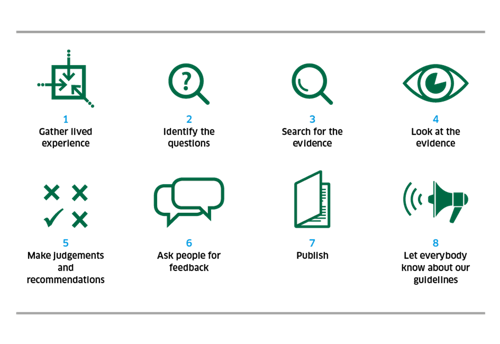
Guidelines are produced by looking at the latest scientific research to find the best ways to diagnose, treat and care for people.  If the research doesn’t provide clear answers, healthcare professionals use their experience and judgement to suggest treatments.  This ensures the guidelines are both evidence-based and practical.

SIGN methodology key