This toolkit explains the recommendations in clinical guidelines produced by the Scottish Intercollegiate Guidelines Network (SIGN), the British Thoracic Society (BTS) and the National Institute for Health and Care Excellence (NICE).  It gives you information about the care you are likely to get and can expect.  

Recommendations in the guidelines are based on different types of evidence. Some of it comes from current research, some from the clinical experience and opinions of healthcare professionals, and some from people with lived experience. 

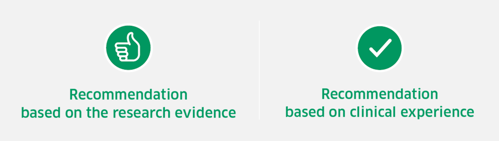
There are two different types of recommendations in the toolkit

image of SIGN recommendations


What if I have asthma and I’m pregnant?

If you become pregnant or are planning to try for a baby, you should discuss your asthma with your healthcare professional.  They will reassure you about your medication and help you manage your asthma safely. 

Recommendation based on the research evidence

You should keep taking all your asthma medicines and your healthcare professional will reassure you it's safe to do so.


It's OK to Ask


When you go to healthcare appointments, we encourage you to ask four key questions that will help you and your healthcare professionals make decisions together. This will make sure that the care is right for them.

  1. What are the benefits of my treatment?
  2. What are the risks of my treatment?
  3. What alternative treatments can I try?
  4. What if I do nothing?

Learn more about "It's ok to ask"  

Learn more about realistic medicine 


Recommendation based on the research evidence

Your baby needs a good supply of oxygen. Taking your medicines as prescribed will help you keep a good control of your asthma so you can breathe freely during your pregnancy. Visit your healthcare professional regularly so they can monitor your symptoms and adjust your medicines if necessary. 

If you have asthma symptoms all the time, you will be seen by a respiratory doctor (a doctor who specialises in breathing-related conditions) as well as an obstetrician (a doctor who specialises in caring for pregnant women). They will help you control your asthma. 


Smoking and vaping

Women who smoke during pregnancy are more likely to have babies who have breathing problems, including asthma. Children whose parents smoke are 1.5 times more likely to have asthma.

Smoking while pregnant also has other harmful effects; for example, you become more likely to have a miscarriage or a premature baby.

Vaping is thought to be less harmful to health than regular cigarettes, but more research is needed on how vaping affects pregnancy.


Recommendation based on the research evidence

We know that quitting smoking is difficult, so if you're thinking of trying to quit. speak to your doctor, nurse or pharmacist, who can support you. You can also visit this NHS website on quitting smoking (link needed).


Diet

Not enough evidence to tell us if something is of benefit

There is not enough evidence to suggest that taking dietary supplements while you are pregnant can prevent your child developing asthma. 


Recommendation based on the research evidence

Avoiding certain foods during pregnancy and breastfeeding has not been shown to prevent your child developing asthma. 

 

Is it safe to take asthma medicines while I’m pregnant?


Recommendation based on the research evidence

It’s safe to take medicines used to treat asthma while you are pregnant. It’s really important for you and your baby’s health that you continue to take your medicines as prescribed, so that your asthma is controlled. You may be given the following medicines while you are pregnant:

  • A single inhaler that acts as a preventer and a reliever.
  • A preventer
  • A reliever
  • Theophylline (a medicine that is given in tablet form or through a drip to relax your airways).
  • Steroid
  • Leukotriene receptor antagonist
  • Inhaled long-acting muscarinic receptor antagonists.

It is important to discuss your medication with your midwife, particularly if you are taking biologic therapy.  Biologic therapy for asthma is a type of medicine that helps calm down the immune system to stop it causing swelling and mucus in the lungs, making it easier to breathe. 


SIGN quote icon"Knowing that I could continue to take my inhalers as usual helped me feel more relaxed during my pregnancy." Fiona

What will happen if I have an asthma attack when I’m pregnant?


Alert triangle iconHaving an asthma attack when you're pregnant is an emergency. If you're having an asthma attack, dial 999 or 112

 

Recommendation based on the research evidence

If you have to go to hospital because of an asthma attack, you will be given the same medicines as if you were not pregnant. You may also be given oxygen and your baby's heart rate will be monitored. 

If you had an asthma attack and were seen in hospital, afterwards you will be seen regularly by a hospital respiratory doctor and an obstetrician for the rest of your pregnancy. They will help you control your asthma during your pregnancy. It’s important to attend the follow-up appointments with both the respiratory doctor and obstetrician. 

Is there a risk I will have an asthma attack during labour? 

It is very unusual to have an asthma attack during labour. When you're in labour your body produces natural steroid hormones that help prevent asthma attacks. If you do get asthma symptoms during labour, you can take your normal asthma medicine. You should discuss your asthma medications with your midwife during pregnancy so that the labour team is aware of them. 

Recommendation based on the clinical experience

If you're taking more than 7.5mg a day of the steroid called prednisolone for more than two weeks before you go into labour, you will be given a drip or injection of hydrocortisone every six to eight hours during labour.


Breastfeeding


Recommendation based on the research evidence

All women are encouraged to breastfeed their babies because of its many benefits. Breast milk may reduce the chances of your child having asthma. 


Recommendation based on the research evidence

You should still take your asthma medicines when you are breastfeeding as they will not harm your baby, and they keep your asthma controlled.


image of a quotation mark"It was good to know that having asthma would not affect my ability to breastfeed." Nicola

Immunisations


Recommendation based on the research evidence

Immunisations are the vaccinations your child will be given by healthcare professionals as they are growing up.

It's important that your child has vaccinations to help protect them against infectious diseases.


Information 

You can find out more about asthma as pregnancy from Asthma and Lung UK (needs link)

Where can I find out more?

National organisations for people who have asthma

  • Allergy UK: a charity that aims to increase people’s understanding and awareness of allergies, and helps them manage their allergies. 


  • Asthma and Allergy Foundation: Scotland’s only dedicated asthma charity that provides evidence-based health information, confidential advice and support to people with asthma, their families and carers across Scotland. The organisation also provides asthma awareness training to businesses and healthcare professionals. 


  • Asthma and Lung UK: aims to reduce deaths and ill-health caused by lung conditions through focused research, campaigns, and dedicated efforts in tackling critical issues like air pollution, smoking, and asthma care. 


Other organisations


  • NHS 24: a 24-hour helpline for people in Scotland. It’s led by nurses who provide confidential healthcare advice and information 24 hours, 365 days a year. 


  • NHS 111: a 24-hour helpline for people in England and Wales. It’s led by nurses who provide confidential healthcare advice and information 24 hours, 365 days a year. 
    • telephone icon 111 


How are guidelines produced?

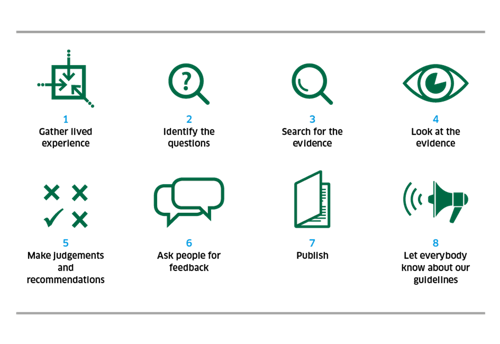
Guidelines are produced by looking at the latest scientific research to find the best ways to diagnose, treat and care for people. If the research doesn’t provide clear answers, healthcare professionals use their experience and judgement to suggest treatments. This ensures the guidelines are both evidence-based and practical. 

image of SIGN methodology