Patients with chronic hepatitis B virus infection are managed by the Gastroenterology team at BGH

Testing:

Hepatitis B core antibody (anti-HBc) testing is performed as the initial screening test for chronic infection (4.9mL brown capped gel tube). The laboratory will reflexively test hepatitis B surface antigen (HBsAg) for patients being screened for BBV infection who are anti-HBc positive. It is important that the rationale for testing is clearly documented so that the laboratory can add the correct HBV markers.

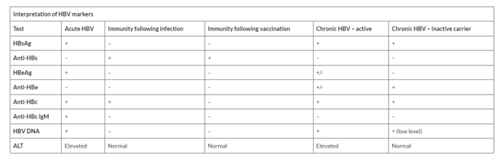
HBV Markers

If the screening test is negative, but there has been a potential exposure within the window period, then please offer repeat testing at least 3 months after exposure.

Contact tracing

All contact tracing in the Borders is done via public health. New patients referred to gastroenterology will be contact traced via this method.

Patients who have tested positive for HBV should be offered testing for HIV and hepatitis C


Who to refer, who not to refer, how to refer

Who to refer:

All those with chronic hepatitis B virus infection (HBsAg positive for > 6 months).  

Who not to refer:

Patients who are HBsAg negative should not be referred. If the HBsAg is negative but anti-HBc is positive this indicates past infection and ongoing follow up is not required. However, these individuals may be at risk of HBV reactivation if undergoing immunosuppression. If the patient is on/being considered for immunosuppressive therapy, the hospital specialty managing the immunosuppression/chemotherapy will usually discuss the need for preventative therapy directly with HBV services.

How and where to refer:

Patients with positive HBV should be referred to the Gastroenterology team at BGH via SCI gateway as an urgent referral.

Borders General Hospital -> Gastroenterology -> Borders General referral


Patients who are also infected with HIV should be separately referred to the sexual health centre.

Primary care management

All patients with HBV infection should be given general lifestyle advice, advice on minimising/stopping alcohol, and weight reduction/healthy eating advice if BMI >25. Patients should be offered testing for HIV and HCV infection, and for immunity to hepatitis A virus (HAV) infection. If there is no evidence of immunity to HAV (HAV IgG negative) then patients should be offered vaccination.  

Any patient with an ALT above the upper limit of normal should be encouraged to attend specialist services, as treatment with oral anti-virals may be required.

Patients with chronic hepatitis who do not wish to be referred / do not attend are at risk of complications of cirrhosis / cancer and need to be aware of this. They should be strongly encouraged to accept referral to secondary care and every opportunity taken to prompt this and check LFTs if they present again. Please note that patients with an AST/ALT ratio greater than 1 are at risk of complications of cirrhosis.

If appropriate, patients with cirrhosis will be enrolled into HCC surveillance, consisting of 6 monthly liver ultrasound and serum AFP measurements

Local service contact details

Editorial Information

Author(s): Angus Wallace, Chris Evans.

Author email(s): bor.gastroenterology@borders.scot.nhs.uk.