Warning

Background

PMS is a condition which is characterised by distressing physical, behavioural and psychological symptoms which occur during the luteal phase of the menstrual cycle, and disappear within a few days of the period starting.

Symptoms include:

  • Mood change (low mood, anger, irritability, mood swings)
  • Anxiety or tension
  • Tiredness and fatigue, poor sleep
  • Difficulty with concentration, brain fog
  • Physical symptoms such as breast tenderness, bloating, joint pains, headaches

Around 30-40% of women experience some symptoms of PMS, but for around 5-8% of these women the symptoms are severe and significantly affect functioning at home, work and socially.

Treatment

Treatment can aim to either reduce hormonal variation, or to reduce the effects of tis variation.

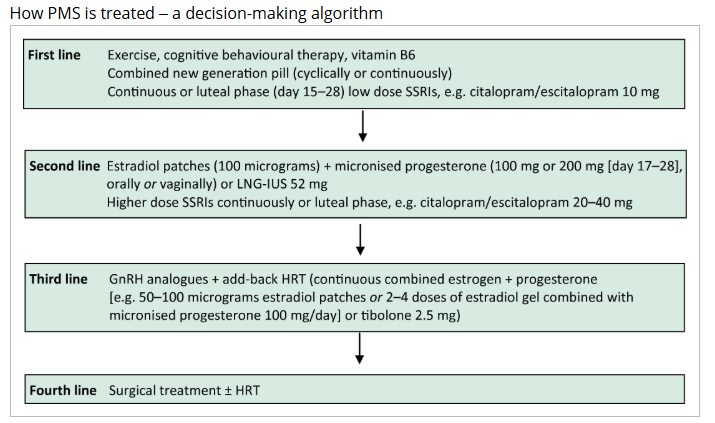
First line treatments as outlined in the chart below (COCP, luteal phase SSRIs) below can be started in primary care.

PreMenstrual Syndrome

Click for full size

Pre Menstrual Syndrome (PMS) patients are seen in Dr Rodger’s Near Me clinic and should be referred to Gynaecology

Who to refer, who not to refer, how to refer

Who to refer:

Who not to refer:

  • Women with milder symptoms who have not tried initial treatments. Women whose symptoms do not show a cyclical variation

How to refer:

Via SCI Gateway to the Gynae Clinic. Please ask patients to keep symptom diaries.

Primary care management

  • Lifestyle changes can help to alleviate symptoms of PMS. These include reducing stress, getting adequate sleep, exercise, eating a healthy diet, reducing or eliminating alcohol and nicotine.
  • Dietary advice: good intake of fruit and vegetables, calcium and Vitamin D, avoiding complex carbohydrates and excess sugar. Vitamin B6 supplementation may be helpful.
  • CBT may be helpful in management of symptoms.
  • Combined hormonal contraception. First line pharmaceutical management for symptoms of PMS is the COC. Continuous rather than cyclical regimens are likely to be more effective. COCs containing dropserinone are recommended as these are more likely to be effective and may have fewer side effects for women with PMS
  • SSRIs. SSRIs, either continuously or in the luteal phase (days 15-28) only, for example Citalopram/Escitalopram 10mg can be helpful.

Local service details

Obsandgynae.mailbox@borders.scot.nhs.uk

Editorial Information

Last reviewed: 24/07/2025

Next review date: 24/07/2027

Author(s): Faye Rodger.

Author email(s): Obsandgynae.mailbox@borders.scot.nhs.uk.