Dermatology
Mild
The most common type of photosensitivity in Scotland is polymorphic light eruption (PLE), which affects around 20% of the population and is often confused with “prickly heat”. Milder cases of PLE light sensitivity often present an itchy, raised lumpy rash, sometimes with watery blisters, which appear on sun-exposed areas after sun exposure during spring/summer in the UK or when abroad. This often disappears after 2-7 days and although potentially irritating, does not impact on patients’ lives significantly. PLE or similar mild reactions to light can be managed in Primary Care by doing the following:
- Advice given to the patient on appropriate photo(sun)protection such as sitting in the shade and using clothing, hats, and high SPF 50+ sunscreen, and by taking a steroid cream on holidays to use on the rash if it occurs. There are links available within patient resources that have more detail on the type of clothing and sunscreens available that would be appropriate for patients.
- Sometimes people with mild PLE can also desensitise/harden themselves by exposing themselves cautiously to very low levels of daylight exposure on a regular basis, starting in springtime.
- Advise the patient to avoid being outdoors during peak UV levels, for example between 11am-3pm.
- Creams that can be prescribed include a steroid cream: such as 1% Hydrocortisone, Eumovate or Betnovate cream to use on the rash for a few days. Only 1% Hydrocortisone cream or ointment (or sometimes Clobetasone butyrate 0.05% cream or ointment) should be used on the face, and only for a few days. Tacrolimus ointment could be used to help prevent the rash.
Moderate
Some people experience more troublesome symptoms, such as the following: disruption to their day-to-day life by having to seek shade often, experiencing skin symptoms all year round, acute pain on sun/light exposure, experiencing symptoms even through clothing or through window glass. For these patients, a prompt and accurate diagnosis is required, and referral to the Scottish Photobiology Service is advised. Depending on the diagnosis made, management can include:
- Reducing exposure to light
- Seeking shade and avoiding reflective surfaces
- Wearing protective clothes
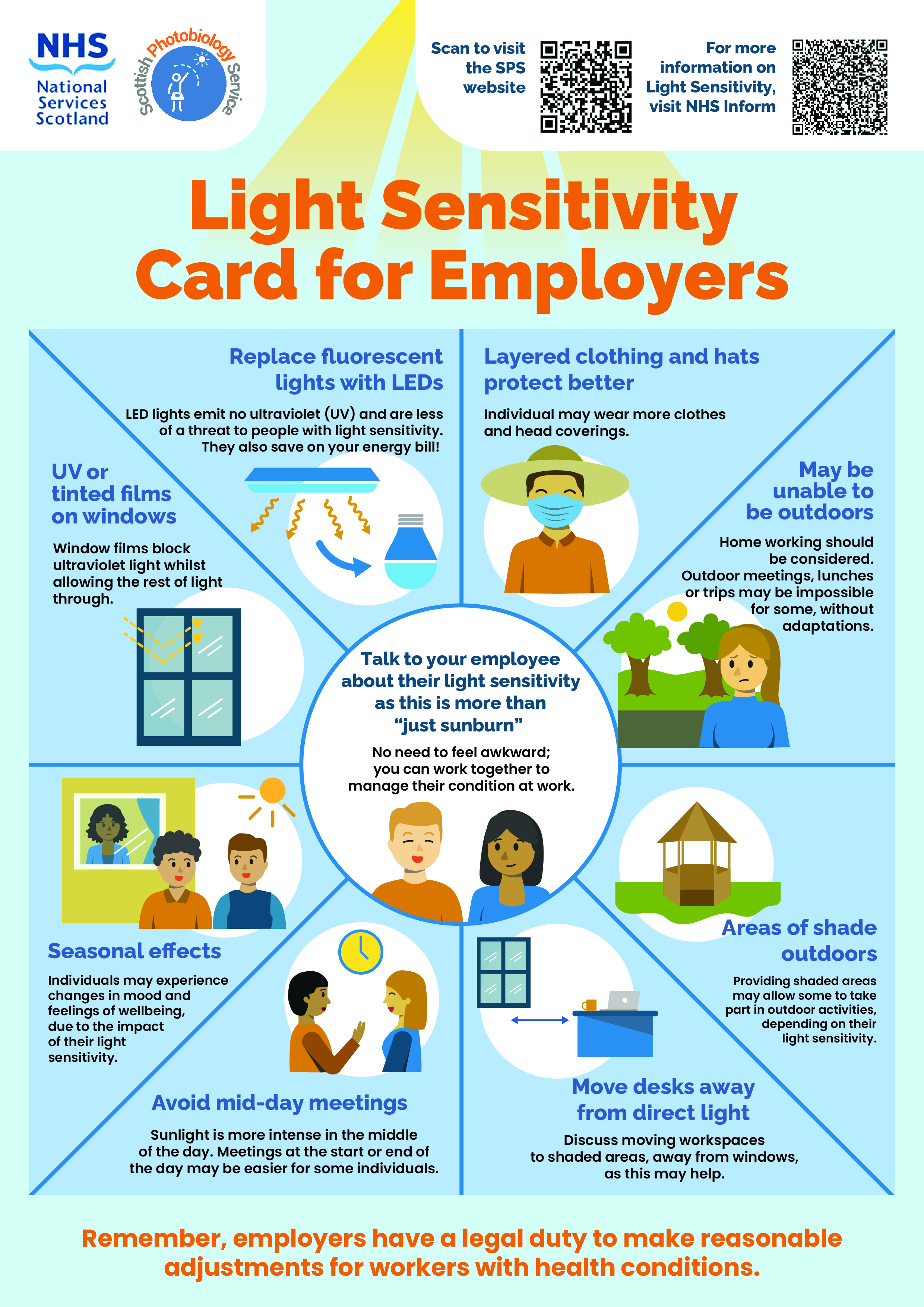
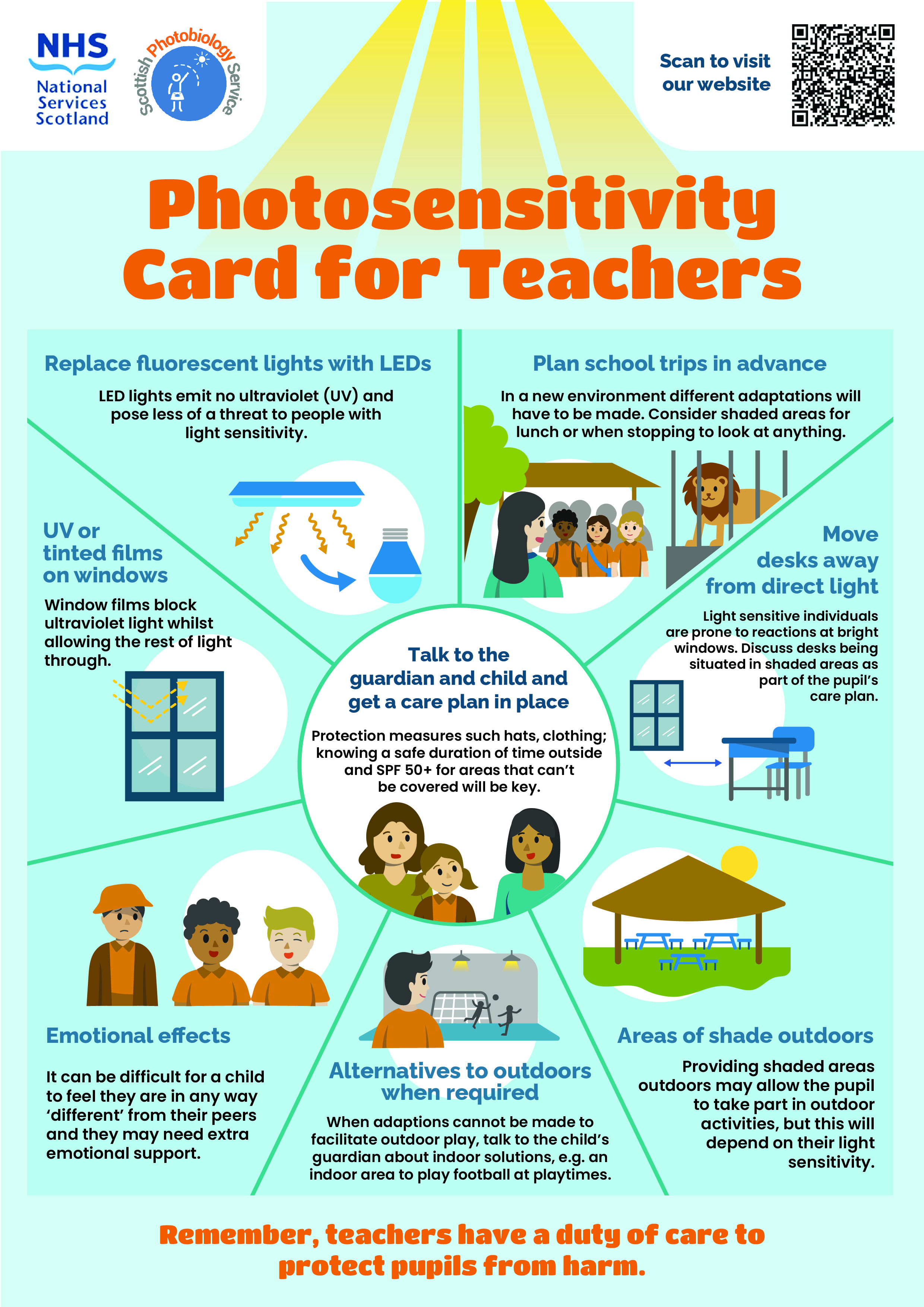
- Keeping away from windows or applying a special type of UV filter film
- Lighting – LED lighting can be more appropriate
- Use of high SPF sunscreens – some available on prescription
- Preventing symptoms and managing symptoms
- Not avoiding being outdoors completely – as sometimes hardening/desensitisation is possible
- Plan ahead
- Make small changes to daily routine
- Preventative use of locally applied corticosteroids
- A potent steroid cream or ointment each morning for 5 days can help to prevent polymorphic light eruption. This can be useful when going on holiday
- Places of work and school
- Use filters or blinds on windows and consider where the person will be sitting
- Allow home working or to stay in one place during working day
- Replacing fluorescent lights with LEDs
Severe
- For more severe photosensitivity, other treatments such as immunosuppressing medications, may be needed, but this would be with specialist input and monitoring.
- Any person who is avoiding sun exposure should also be aware that they may become deficient in vitamin D, so taking vitamin D supplements and making sure your diet contains vitamin D, such as with oily fish, is advisable.