1. Right Decisions
  2. Back
  3. Gastroenterology pathways
  4. Reflux
Warning

Background

Gastro-oeosphageal reflux disease results in a retrosternal burning pain. It can also be associated with upper abdominal pain and an acid taste in the mouth. It can be worse both with eating and on lying flat.
Reflux is a common long term condition that results in a high number of referrals to the Gastroenterology Service. Traditionally patients are either seen in Gastroenterology clinics as a new patient or referred directly for endoscopy.

The detection rate from these investigations for patients with reflux who don’t present with ‘red flag’ Urgent Suspicion of Cancer (USoC) warning symptoms is very low, as highlighted in the recent report from the British Society of Gastroenterology (BSG): Diagnostic yield from symptomatic gastroscopy in the UK: British Society of Gastroenterology analysis using data from the National Endoscopy Database | Gut (bmj.com).) and is below the threshold for USoC referrals.

This pathway aims to help patients self-manage their condition and highlight to primary care the more complex cases that should be referred to secondary care for investigation.

It also provides an opt-in mechanism so that patients who continue to have problems can still access secondary care services through Reflux clinics.
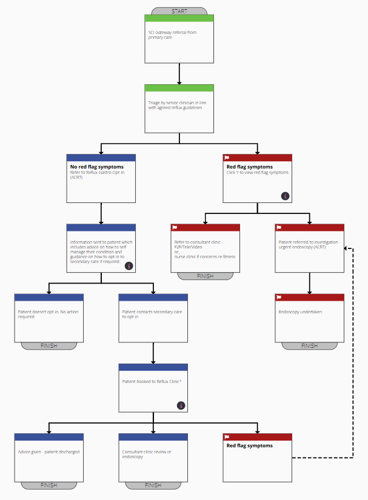
 

NHS Scotland reflux pathway

Click on the image below to open the pathway


Pathway recommendations

Guidance for primary care

Presenting symptoms

  • heartburn (an uncomfortable burning sensation in the chest that often occurs after eating)
  • acid reflux (where stomach acid comes back up into your mouth and causes an unpleasant, sour taste)
  • oesophagitis (a sore, inflamed oesophagus)
  • bad breath
  • bloating and belching
  • feeling or being sick
  • pain when swallowing and/or difficulty swallowing

It is important to assess for red flag symptoms including:

  • Persistent or progressive dysphagia, not ‘feeling of something stuck in the throat’ (FOSSIT).
  • Weight loss equal to or above 5 per cent of body weight in a person aged 55+ AND one or more of the following:
    • upper abdominal pain
    • early satiety
    • reflux
    • dyspepsia
    • nausea
    • vomiting

The patient should be urgently referred via the USoC pathway if the above criteria are met.

Lifestyle advice

Patients should be given lifestyle advice on:

  • weight loss (if appropriate) and consideration of a referral to weight management services if required
  • smoking cessation
  • reducing alcohol intake
  • diet (including avoiding excessive caffeine, carbonated drinks, spicy, acidic or citrus foods) should be avoided if they exacerbate symptoms
  • advise to avoid eating for 3 hours before bed time, particularly if there are nocturnal symptoms and they may benefit from raising the head of the bed.

Treatments to try before referring

Patients should be given a trial of proton pump inhibitor (PPI) for 4 weeks and the dose can be doubled if a partial response.

After 4 weeks, patients should be advised to continue the lowest dose of PPI that controls their symptoms.

If symptoms are difficult to control, famotidine or sucralfate can be co-prescribed and should be continued longer term if they give the patient additional benefit.


References and further resources

Patient resources

Patient information leaflet (provided by local NHS Board)

NHS Inform Illnesses and conditions: Gastro-oesophageal reflux disease (GORD) Last updated: 29 May 2023

Guts charity: Heartburn and acid reflux 2021


References

NICE Guidelines CG184: Gastro-oesophageal reflux disease and dyspepsia in adults: investigation and management Published: 03 September 2014 Last updated: 18 October 2019

Beaton DR, Sharp L, Lu L, et al. Diagnostic yield from symptomatic gastroscopy in the UK: British Society of Gastroenterology analysis using data from the National Endoscopy Database. Gut 2024;73:1421-1430. DOI:10.1136/gutjnl-2024-332071 


  gjnh.cfsdpmo@gjnh.scot.nhs.uk

  www.nhscfsd.co.uk

@NHSScotCfSD

Centre for Sustainable Delivery

  Scan the code to visit the CfSD website

Editorial Information

Last reviewed: 31/10/2024

Next review date: 31/10/2027

Author(s): Centre for Sustainable Delivery (CfSD).