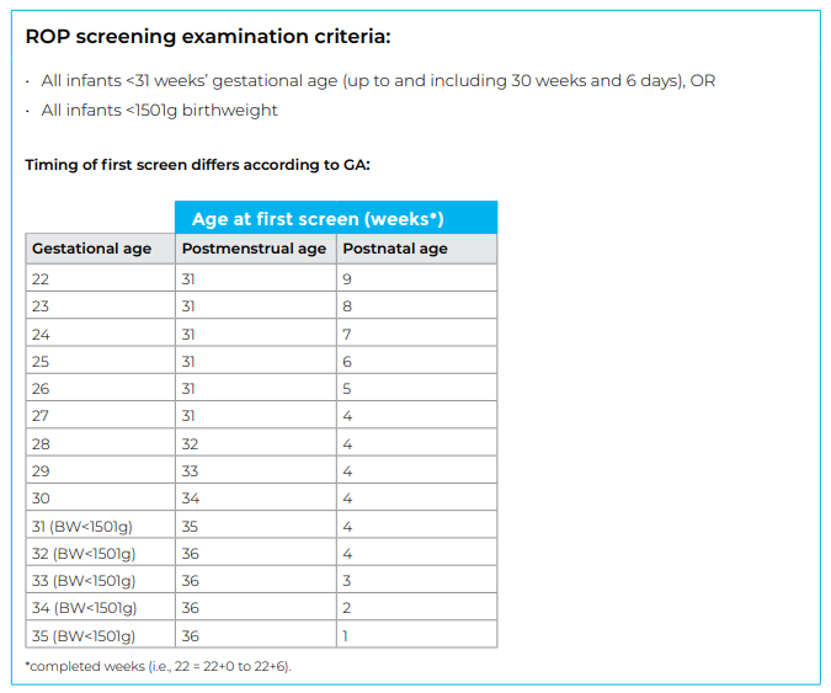
[SEE APPENDIX 1]
For infants born before 31+0:
Book the first screen as soon as both the criteria below are met
- Babies must be at least 4 weeks old
- Babies must be 31+0 weeks corrected gestational age or more
For infants born from 31+0 (who weight 1500g or less):
Book the first screen as soon as the infant is:
OR
- Is 36 weeks corrected gestational age
Subsequent screening: Screening will then continue at intervals designated by the Ophthalmologist (usually 1 to 2 weekly) until the retinae are fully vascularised or there is felt to be no ongoing risk of the infant developing severe ROP. Where it is likely that the infant will be discharged before the next screen is due a decision should be made in conjunction with the ophthalmologist as to the most appropriate time and venue for the next screen.
Local arrangements for screening:
Each neonatal unit has its own arrangements for screening, which may be subject to change. It is important that staff in each unit are aware of local arrangements for screening as well as contact details for the visiting ophthalmologist and his/her secretary. It is the responsibility of the attending neonatal unit medical staff to ensure that babies who are eligible for screening are identified and screened timeously and that medical records are up to date. Sufficient sterile examination packs should be available (one for each infant) for each screening session.
Each unit keeps an ROP diary and it is the responsibility of neonatal staff to enter each eligible baby’s name into the diary on the date that they will commence ROP screening (see guideline). It is recommended that a subsequent check is made, prior to the ophthalmologist visit, that all eligible babies are recorded in the diary. The ophthalmologist (or their secretary) will confirm, in advance, the date and time of the screening round to ensure that drops are administered appropriately. Following the ROP round, the ophthalmologist will record the timing of the next appointment in the ward diary and complete the Badger ROP screening entry
N.B. No infant's screening should be cancelled or postponed without consultant sanction. If a decision is made to postpone screening, this decision must be reviewed weekly, and documented in the infant’s case record. The parents should be updated regarding the rationale for and implications of delayed screening.