1. Right Decisions
  2. GGC - Primary Care
  3. Back
  4. Dermatology
  5. Molluscum Contagiosum

Molluscum Contagiosum

Centre for Sustainable Delivery logo with the word Dermatology added at the base of the Logo
Warning

Patient Presentation

Molluscum Contagiosum is a common DNA pox virus infection of the skin.  Most infections resolve spontaneously within 12 –24 months. 


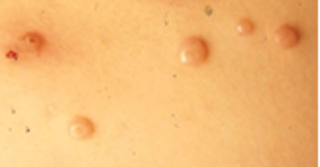
  • Flesh coloured or pink papules with umbilicated centreNatural progression arrow

Flesh coloured or pink papules with umbilicated centre image


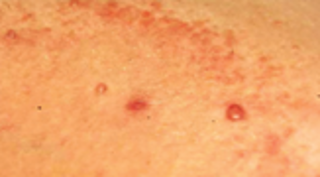
  • Eczema around molluscum contagiosum 

Eczema around molluscum contagiosum image


  • Resolving molluscum contagiosum 

Resolving molluscum contagiosum image


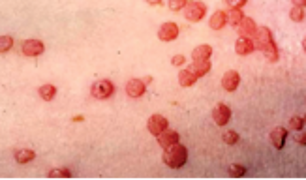
  • Extensive molluscum in immunosuppressed

Extensive molluscum in immunosuppressed image


Not all treatment options may be listed in this guidance. Please refer to local formulary for a complete list.

Treatment/therapy

GP Management 

In the majority of cases no treatment is required as spontaneous resolution occurs 

  • A number of topical treatments can be considered but evidence for efficacy is limited:
    • Podophyllotoxin 0.5% (for anogenital disease)
    • Imiquimod 5%
    • Hydrogen peroxide 1% cream
    • Salicylic acid preparations
    • Potassium hydroxide (over the counter Molludab, Mollutrex)
  • Cryotherapy (not usually considered under age 6) 
  • Topical antiseptic may help to reduce superadded bacterial infection 
  • Curettage with use of topical anaesthetic cream: send specimen for histopathology  
  • Eczema around molluscum: treat with emollients or mild topical steroid 


Therapeutic tips: 

  • Advise avoid sharing towels, sponges and clothes. 
  • Anogenital involvement 
    • Adults/sexually active young people: consider referral of patient to genitourinary medicine for infection screening if widespread anogenital involvement.  Advice about barrier methods of contraception. 
    • Children (under 16): anogenital involvement common.  Consider referral to child protection if there are other reasons for concern 
  • Do not use salicylic acid on face. 

Referral management

Dermatology Referral 

Criteria for referral 

  • Diagnostic uncertainty 
  • Extensive, painful, inflamed lesions 
  • Immunosuppressed patients 

Patient information resources

  • NHS24 Tel: 08454 242424 

Editorial Information

Last reviewed: 01/06/2025

Next review date: 01/04/2028

Author(s): Adapted from Dermatology Patient Pathways.

Co-Author(s): Dermatology Specialty Delivery Group, Centre for Sustainable Delivery.