

Chronic mucosal otitis media (chronic tympanic membrane perforation)
 GGC - Primary Care

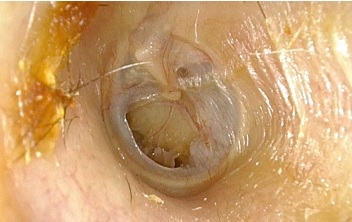
Background: Chronic mucosal otitis media is the presence of a tympanic membrane perforation. The patient may have intermittent discharge (particularly if there is water ingress) without pain or a degree of hearing loss. It may be an incidental finding on examination. It may be a consequence of childhood ear problems or previous trauma. Most patients can be managed conservatively. The condition is categorised by the following:
- Active – there is active inflammation with pus present
- Inactive – the middle ear is dry and there is no pus present
- Healed – tympanic membrane is now intact likely due to surgery with scarring evident
How to assess:
Examine the ear
Perform Freefield hearing test
How to manage:
Ensure patient keeps their ear dry, advise the use of cotton wool with Vaseline to prevent water ingress when in the bath or shower.
If discharging
Take a swab of any pus if possible
There is NO role for oral antibiotics
Topical antibiotic and steroid drop (ciprofloxacin and dexamethasone)
Referral guidance:
Referral to ENT as routine if no improvement after 2 courses of topical treatment
Referral to ENT as routine if hearing loss and patient would consider intervention to assist hearing loss (hearing aid / surgery).
Note:
Surgery to close the tympanic perforation does not normally result in hearing improvement but can reduce the frequency of ear discharge and can facilitate the patient being able to wear a hearing aid in some cases.
Of note, if swabs show bacteria resistant to ciprofloxacin, topical gentamicin and prednisolone drops can be used in patients with tympanic membrane perforation if no alternatives exist– treat until otorrhoea stops, then treat for another 2 days, then stop. This minimises the risk of ototoxicity.