

Tonsillitis (including glandular fever)
 GGC - Primary Care

Background: Tonsillitis is very common, particularly among younger adults. Exudate is usually seen on the tonsils. The mainstay of management is analgesia, along with antibiotics. Steroids can also expedite patient recovery.
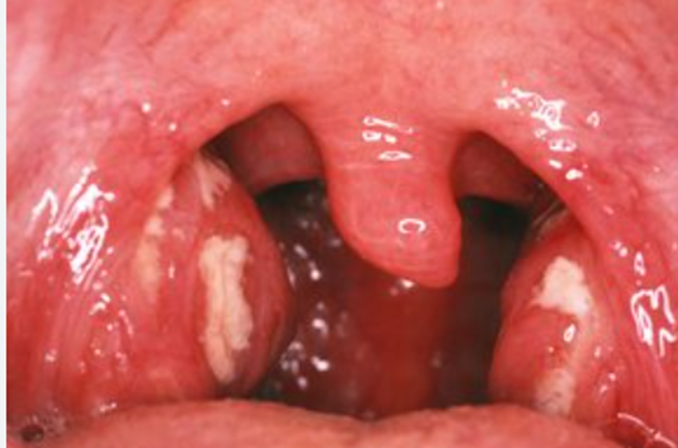
Figure – bilateral tonsillitis with exudate (taken from Tonsillitis - NHS (www.nhs.uk)
Patients who are unable to eat or drink may require inpatient management for intravenous therapy.
How to manage:
Ensure adequate analgesia use. Often patients will present to primary care having taken little analgesia. Once adequate pain control is achieved, oral hydration and antibiotics can be given, avoiding the need for hospitalisation. We suggest:
- Dispersible co-codamol 30/500
- Ibuprofen (can use paediatric liquid formulation if necessary) as long as no contraindications e.g. asthma
- Difflam spray PRN before taking oral medication may help
Most patients should be managed with this pain control protocol for 24 hours prior to considering secondary care referral.
Phenoxymethylpenicillin is first line antibiotic.
If penicillin allergy, Clarithromycin
A single dose of oral dexamethasone can also be considered
Local prescribing guidelines Infection Management in Adults, Primary Care, NHSGGC (166)
Referral Guidance:
If septic, refer to ENT as emergency for same day review
If not septic, consider trial of pain control protocol and re-review after 24 hours. If unable to eat and drink despite pain control protocol, refer to ENT as emergency for same day review
Cautions:
Young patients with “chronic bilateral tonsillitis” despite oral antibiotics are likely to have glandular fever. They should be managed symptomatically with analgesia and no further antibiotics are required. They should be advised of the prolonged course of glandular fever as well as the associated tiredness that can persist for several months. They should avoid contact sports for 6 weeks. If any concern regarding malignancy (e.g. unilateral symptoms, weight loss) however, consider referral to ENT as urgent, suspicion of cancer.
Beware of patients with symptoms of “tonsillitis” with a normal oropharyngeal examination. Supraglottitis/ Epiglottis can present with similar symptoms but with no visible abnormality in the mouth – please discuss these cases with ENT as an emergency for consideration of immediate review
Complications such as quinsy or deep neck space abscesses can also occur.