Back to:
NHS GGC

Nutrition and COPD

Why is eating healthily important in COPD? 

What you eat is important when you have a lung condition like COPD as your body needs fuel to perform all activities, especially breathing. Breathing requires more energy for people with COPD as you may burn up to 10 times more calories than a person without COPD. 

Eating a balanced and varied diet can improve your health and how you feel. 

You may find you sleep better, have more energy and have better concentration when you eat healthily 

Having a good diet also helps you maintain your strength and fitness and is essential in preventing infections and keeping your lungs healthy.

The Eatwell Guide shows how much of what you eat should come from each food group. This includes everything you eat and drink during the day. 
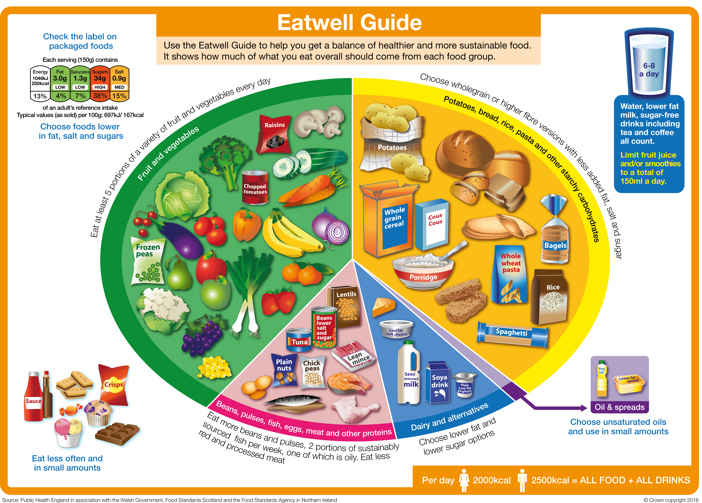
Eatwell guide

Use the Eatwell Guide to help you get a balance of healthier and more sustainable food. It shows how much of what you eat overall should come from each food group.

So, try to:

  • eat at least 5 portions of a variety of fruit and vegetables every day
  • base meals on potatoes, bread, rice, pasta and other starchy carbohydrates; choosing wholegrain versions where possible
  • have some dairy or dairy alternatives (such as soy drinks); choosing lower fat and lower sugar options
  • eat some beans, pulses, fish, eggs, meat and other proteins (including 2 portions of fish every week, one of which should be oily)
  • choose unsaturated oils and spreads and eat in small amounts
  • drink 6 to 8 cups/glasses of fluid a day

If consuming foods and drinks high in fat, salt or sugar have these less often and in small amounts.

You can read more information in the Eatwell Guide Booklet

The Eatwell Guide graphic is subject to Crown copyright protection, which is covered by an Open Government Licence. 

Image source: Office for Health Improvement and Disparity (OHID) in association with the Welsh government, Food Standards Scotland and the Food Standards Agency in Northern Ireland

Staying at a healthy weight and the impact of body weight on COPD 

Maintaining a healthy body weight is beneficial to your overall health, including to your COPD. Having a BMI between 20 and 25 is usually considered to be a healthy weight. 

Click here You can calculate your own BMI using the calculator on the NHS inform website: Calculate your body mass index (BMI) for adults - NHS 

If you are overweight, your heart and lungs have to work harder to supply oxygen to your body, making breathing harder.  

If you are underweight, you may feel weak and tired. You are more likely to catch infections and have flare ups of your COPD.  

There are lots of different social, mental and physical factors that can affect what you are able to eat. Changing your body weight can be challenging and take time and effort to see a meaningful difference. Sometimes seeking help or advice can be helpful. If you have concerns about your weight and would like more advice from a dietician, your GP can refer you to your local service. 

This video from the NHSGGC Community Respiratory Team gives more information about why having a healthy diet is important for people with COPD.

Practical tips to help balance your symptoms and eating 

Coping with breathlessness and tiredness around mealtimes 

Meal preparation: 

  • try taking time for meal preparation and making use of pre-prepared foods so you aren’t trying to prepare a meal and eat it all in the same sitting 
  • Try freezing leftovers or do batch cooking  
  • Consider using a shopping or meal delivery service 
  • ask your family to help with preparing meals if possible 

During eating: 

  • clear your airways before eating
  • eat sitting up to ease the pressure on your lungs and help them expand more easily 
  • eat slowly, taking small bites