Telephone triage, Maternity SOP

Warning

Objectives

The purpose of this Standard Operating Procedure (SOP) is to support staff working in telephone triage. It provides standardised care pathways and algorithms to ensure the safety of women accessing the service, ensuring they are assessed appropriately and in accordance with national and local guidance.

This guidance has been developed in response to the recognised need for standardising telephone triage in maternity care. It draws on nationally recommended practices established through the Birmingham Symptom-specific Obstetric Triage System (BSOTS) framework and endorsed by the Royal College of Obstetricians and Gynaecologists (RCOG) in their Good Practice Paper

Scope

For the purposes of this SOP, the term 'woman' will be used to refer to birthing individuals. However, NHS Greater Glasgow and Clyde recognises that not all birthing people identify as women and is committed to inclusive language and care.

Regulatory background

This guidance has been developed in response to the recognised need to standardise telephone triage in maternity care. It is based on nationally recommended practices established through BSOTS and endorsed by the Royal College of Obstetricians and Gynaecologists (RCOG) in their Good Practice Paper.

The importance of consistent triage and documentation has also been highlighted by the Healthcare Safety Investigation Branch (HSIB), which has identified variation in triage processes as a contributing factor in maternity safety incidents.

Locally, NHS Greater Glasgow and Clyde has incorporated this approach into its clinical guidance, accessible via the Right Decisions platform, helping ensure that triage practices are aligned with national standards and consistently applied across services.

Additionally, the National Institute for Care Excellence (NICE) guidelines advocate for clear, evidence-based pathways in maternity care, reinforcing the need for standardised triage protocols.

Together, and in line with government recommendations, these bodies support the integration of systems like BSOTS and centralised, recorded triage lines to improve overall patient safety and outcomes.
Key duties

All triage calls across GG&C will be received in a centralised telephone triage hub, separate from all clinical areas. The hub will be staffed independently to maternity triage and will provide a 24/7 service to women who are booked to have their baby at The Queen Elizabeth University Hospital, The Princess Royal Maternity Hospital, The Royal Alexandra Maternity Hospital, The Vale of Leven Hospital and Inverclyde Royal Hospital. The call hub should be used for triage related concerns and not for scheduled appointments or non-emergency concerns.

  • Women are encouraged to telephone maternity triage if they have immediate concerns relating to their pregnancy and for up to 6 weeks postnatal.
  • Community Midwives, GPs, A&E and other healthcare professionals are encouraged to call the centralised triage line if they have concerns regarding women in their care
  • Triage calls will be answered by a dedicated team of Band 6 midwives who will give standardised telephone advice as per BSOTS framework and GG&C policies.
  • Telephone conversations should be documented by the receiving midwife on the Triage Contact TAB within the BSOTS section of the electronic patient record.
  • The midwife taking the call should refer to the standardised telephone triage algorithms, directing appropriate care and advice alongside the application of clinical judgment.
  • The midwife must check that the woman has transport available and can attend in a timely manner. If the woman has no access to transport or is identified as being in a vulnerable group, the hospital co-ordinator should be called and a hospital taxi organised.
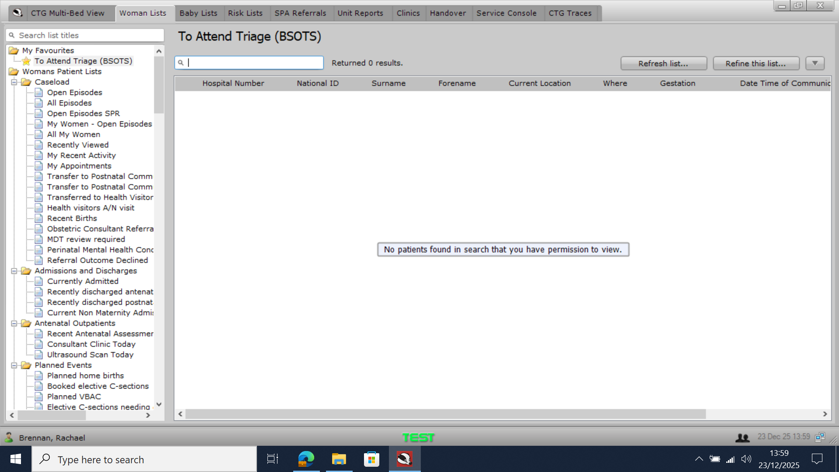
  • Women will be added automatically to the ‘To Attend Triage’ list in badger (Appendix C). This will be used by triage to monitor who is coming into triage along with an updated ward attender list on Trakcare.
  • Women who are invited into triage will attend the hospital they are booked to have their baby at. There may be instances where women are asked to attend another unit within the same health board due to acuity levels. This will be agreed by the hospital co-ordinator as per local divert policy GGC divert policy.
  • Women being re-directed to a different hospital will be signposted on how to access that hospital, making sure to involve an interpreter if English is not their 1st language.
  • Midwives will consider the use of an interpreter in all cases where English is not the first language, utilising the appropriate language line service.

Procedure to follow

Women will usually call triage in relation to one (or more) of the eight algorithms identified by BSOTS.

Abdominal Pain

Ruptured membranes

Suspected labour

Reduced fetal movements

Hypertension

Antenatal bleeding

Postnatal concerns

Unwell/Other

Advice on how to triage these symptoms in line with BSOTS are below. This list is not exhaustive and will require clinical judgement at times to determine the appropriate care pathway. All calls should be answered and triaged by an experienced midwife.

Occasionally women might call triage with general enquiries or non-pregnancy related concerns and should be redirected to the correct department/specialty i.e. GP/pharmacy.

Example of how to answer a triage call:

‘Thank you for calling Triage you are speaking to …….
Please can I take your CHI number?’

‘Can I confirm which hospital you intend on having your baby at’?
‘Can I ask the main reason for you calling today’?
‘Have you called before within the last 24 hours’? 

‘I am now going to ask you some standard questions….’

  • Has your baby maintained its normal movement pattern?
  • Have your waters broken?
  • Are you having any vaginal discharge?
  • Do you have any constant pain?
  • Do you have any PV bleeding
  • Are you passing urine normally?
  • Do you have a temperature/feel feverish/shivering?

Always take a history and gather as much information as possible.

  • Do they have any complications in the current pregnancy? E.g., diabetes, low lying placenta, known hypertension
  • Are they on any regular medication?
  • When the last ultrasound was performed and was it normal?
  • Any pre-existing medical conditions?

Suspected labour

Advise to attend if any one of the following:

  • Suspected labour < 37/40
  • Term and contracting regularly and strong:
  • Multiparous e.g. 2-3 contractions in 10 mins, lasting 40 seconds
  • Primiparous e.g. 3-4 contractions in 10 minutes lasting 60 seconds
  • Distressed and not coping
  • 3rd call to triage with labour symptoms within 24 hours
  • Has tried analgesia and other coping mechanisms which are not effective
  • Previous precipitate labour
  • Any concerns about obstetric history/complications (e.g. preterm, booked CS, low lying placenta)

Advise not to attend if:

  • Blood-stained mucus at term
  • Appears to be in early labour (see advice below)

Advise to call back if:

  • Contractions are every 5 minutes and lasting 40-60 seconds
  • Membranes rupture (especially if brown, green, pink/red)
  • PV bleeding
  • Baby’s movement pattern changes

Advice for latent phase of labour:

  • Eat nutritious, high-energy foods
  • Drink fluids to thirst (not excessively and try to monitor amount)
  • Regular bladder emptying (4hrly at least and monitor)
  • Rest – sleep/relax between contractions when able to do so
  • If unable to rest then mobilise (birthing ball, walking, upright positions)
  • Massage from birth partner may be helpful
  • Use TENS machine if available
  • Utilise bath if available
  • Breathing techniques/ hypnobirthing
  • Use paracetamol as per instructions
  • Reassure that it is normal for labour to take some time to establish, especially with the 1st baby but take individual considerations into account.

Advice for imminent birth at home (Two telephone triage midwives may be required during this)

  • Stay on the phone with the woman, providing reassurance and advice on preparation for birth.
  • If the partner is with the woman and able to call a 999 ambulance then this is what is advised by the Scottish ambulance service (SAS). If it is more appropriate for the midwife to make the call to an ambulance then they must ask for an ’immediate threat to life’ ambulance to instigate a Category 1 ambulance. This is due to a woman birthing with no medical assistance.
  • Update the hospital (the ambulance will attend the nearest hospital) of the expected arrival and ensure any relevant information is handed over.

Antenatal abdominal pain

Always ask the nature of the pain:

  • Describe the type of pain (Sharp, dull ache, tightness? If multi-parous does it feel like labour pain?)
  • Where is the pain? (Upper abdomen, pelvis, central, all over?)
  • Duration? (Does it last for a few seconds or minutes? Is it constant?)
  • Frequency? Has this pain occurred before, is it a regular pain, does it come every 5 minutes? 30 minutes?)
  • Do they have any UTI symptoms or recent UTI infection?
  • Do they have a history of pelvic girdle pain? If so, has this changed e.g. different severity or location of pain?

Advise to attend if:

  • Suspected labour <37/40
  • Moderate or severe constant pain in the abdomen
  • Inability to void
  • Experiencing backache alongside abdominal pain
  • If the woman is within a vulnerable group then face-to-face assessment may be required to ascertain the severity of the symptoms.

Advise not to attend if:

  • Chronic or mild pain on mobilising only
  • Generalised Backache
  • Urinary symptoms (i.e. dysuria, frequency, mild and dull pain) in an otherwise well patient should be redirected to GP/pharmacy. If out of hours- contact NHS 24.

To call back if:

  • Pain/contractions increase
  • Pain is accompanied with PV bleeding
  • Change in foetal movements

Advise:

  • Continue to monitor
  • Try some paracetamol
  • Try a warm bath

Antenatal bleeding

Always ask the nature of the bleeding to decide urgency of attendance:

  • When did it start?
  • Has there been any injury/bump to abdomen?
  • Is the bleeding post- coital?
  • Are they Rh negative?
  • Can they describe the colour? (Fresh red, pink discharge, brown old loss, mucus)
  • Can they quantify it? (Spots on wiping, full pad, continuous trickle)
  • Is the loss ongoing or has it settled?
  • Do they have a known low lying placenta?

To attend if:

  • Any PV bleeding at any gestation that is not mixed with mucus
  • Blood-stained mucus show at < 37/40
  • Ongoing bleeding with a low lying placenta- consider 999 ambulance

Advise not to attend if:

  • Blood-stained mucus at term

Call back if:

  • Any pain or contractions
  • Have further PV bleeding
  • Change in any fetal movements

Advice:

  • Keep any pads that have PV loss and bring to hospital when attending
  • Put on a fresh pad

Fetal movements

Take history:

  • How have the movements changed? (Less often, not as strong, increased, change in the usual pattern?)
  • How long have the movements been altered for?
  • Assess for risk factors of SGA/stillbirth
  • Is this the 1st episode of RFM

<24/40

  • If no fetal movements felt by 24 weeks, then they should be referred for a department scan within 72 hours.

<26/40

  • If feeling regular movements and movements have been reduced then to attend for auscultation.

≥26/40

  • Advise to attend for assessment + CTG monitoring

Spontaneous rupture of membranes (SROM)

Take history:

  • What time did the SROM occur?
  • Was it a gush of fluid or is it damp underwear?
  • What colour is the loss?
    • Colour should be documented as clear, blood stained or meconium
  • Is it continuing to leak?
  • Are they wearing a pad?
  • Are they known/previous GBS+?

To attend if:

  • Convincing history of SROM at any gestation
  • Known GBS and suspected SROM

Advised not to attend if:

  • Uncertain history of SROM (No GBS known) - advise to wear a pad and call back with an update in 1-2 hours for further discussion and plan.

Call back if:

  • They think the membranes have gone or pad shows liquor not urine
  • If pain/contractions increase
  • PV bleed
  • Change in fetal movements

Headache

Take history of:

  • When did the headache start?
  • Where is the headache? (Frontal, behind eyes, all over?)
  • Do they suffer with migraines pre pregnancy? Is this episode a change in symptoms?
  • Is it associated with any visual disturbances or other symptoms of PET?
  • Are they known PET in this pregnancy or previous pregnancy?
  • How have they tried to relieve the headache already?
  • Is it a hot day? Could they be dehydrated?
  • If postnatal, did they have an epidural? Could it be a Dural tap? Is the headache better when laid down/ in a dark room

To attend if:

  • Moderate or severe headache (not migraine) and /or visual disturbances, epigastric pain, fit/loss of consciousness
  • Refer to headache flowchart for guidance (see appendix D)

Advise not to attend if:

  • Migraine sufferer and no difference to normal symptoms.
  • Refer to headache flowchart for guidance (see appendix D)

Call back if:

  • Headache gets worse, persists or develop any other symptoms e.g. visual disturbance
  • Change in fetal movements
  • PV loss

Advice:

  • Take paracetamol, rest, eat and increase fluid intake (not excessively)
  • If any neurological symptoms such as numbness/weakness to attend A&E

Postnatal

‘Thank you for calling Triage you are speaking to ……. Please can I take your CHI number?’

‘Can I ask the main reason for you calling today?
Have you called before within the last 24 hours?’

‘I will need to ask you some standard questions….’

  • What was the date and mode of the birth?
  • Were there any complications with either you or baby during or after the birth? (e.g., PPH, HDU admission)
  • Were there any complications during the pregnancy (e.g. high blood pressure?)
  • Are you on any medication?
  • Are you feeling unwell/feverish?
  • How is your blood loss? (Colour? Amount? Is it heavier than usual?)

To attend if:

  • Heavy/continuous lochia after 5 days
  • Offensive smelling at any time or if passing large clots (ask to save any clots/take pictures if possible)
  • Suspected mastitis/infection/temperature (>37.8, if feels hot feverish or extremely cold/unwell)

Advise not to attend if:

  • Increased lochia after being active, sleeping, breastfeeding and has now settled again
  • Any concerns with baby that is not feeding advice or that cannot be referred to community midwife to assess then they should refer to the children's hospital.

Call back if:

  • Lochia becomes heavy and continuous or offensive
  • Sudden onset of abdominal pain or starts to feel unwell

Advice:

  • If minor to contact community midwife
  • If any neurological symptoms such as numbness or weakness, then advise to attend A&E

Unwell/other

To attend triage if:

  • Suspected DVT- calf pain, swelling in one leg, area of redness or an area that is hot to touch.
  • Suspected UTI with moderate to severe pain, temperature, vomiting, or inability to void.
  • Temperature >37.8 or if feels hot, feverish or extremely cold, any obvious infection site e.g abdominal wound, perineum, breasts, UTI.
  • Persistent vomiting >12 weeks– unable to tolerate any diet/fluids despite anti-emetics. If <12 weeks then to attend ED and will be referred to GYN (PRM guidance).
  • Diabetic concerns
    • To attend triage if:
    • To contact diabetic specialist midwife/nurse if:

Advised not to attend if:

  • Diarrhoea/vomiting or hyperemesis if able to keep small amounts of water down and passing urine (use clinical skills to assess if needs to be seen e.g. other risk factors/symptoms, not typical hyperemesis, any changes to vomiting)
  • Mild to moderate mental health concerns (check if well supported at home and refer to specialist/email community midwife)

Call back if:

  • Continues to feel unwell, pain/contractions, PV loss or R

Common pregnancy related queries

Women may also call the telephone triage line looking for advice with these common pregnancy related issues and should be advised in line with local policies.

  • Persistent itching of hands/feet -attend DCU for review and bloods tests within 2-3 days. Intrahepatic Cholestasis of Pregnancy (ICP) or Obstetric Cholestasis (OC)

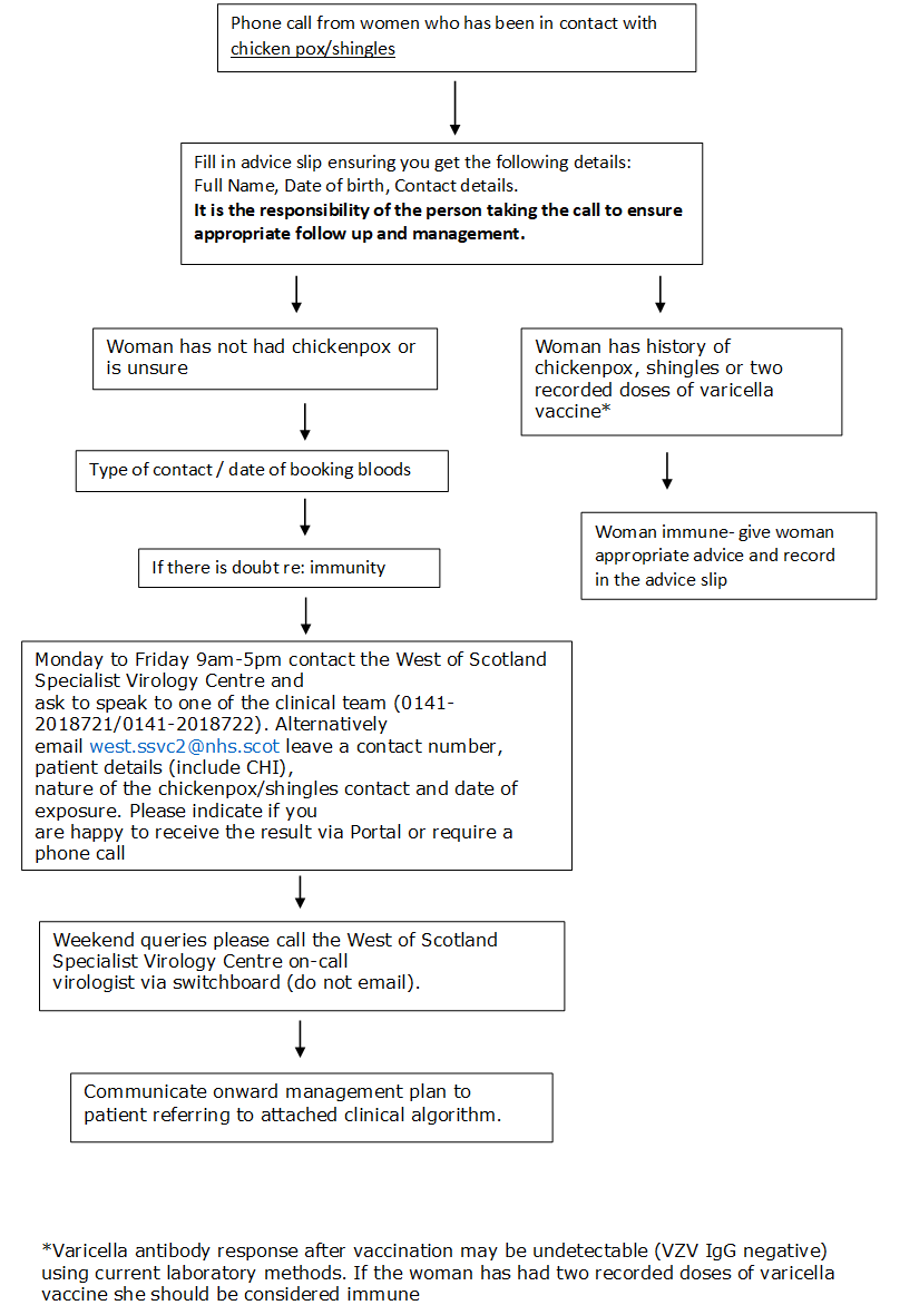
  • Exposure to Varicella-Zoster (Chicken Pox) – See flowchart within guideline for the appropriate pathway to follow. Chickenpox in Pregnancy

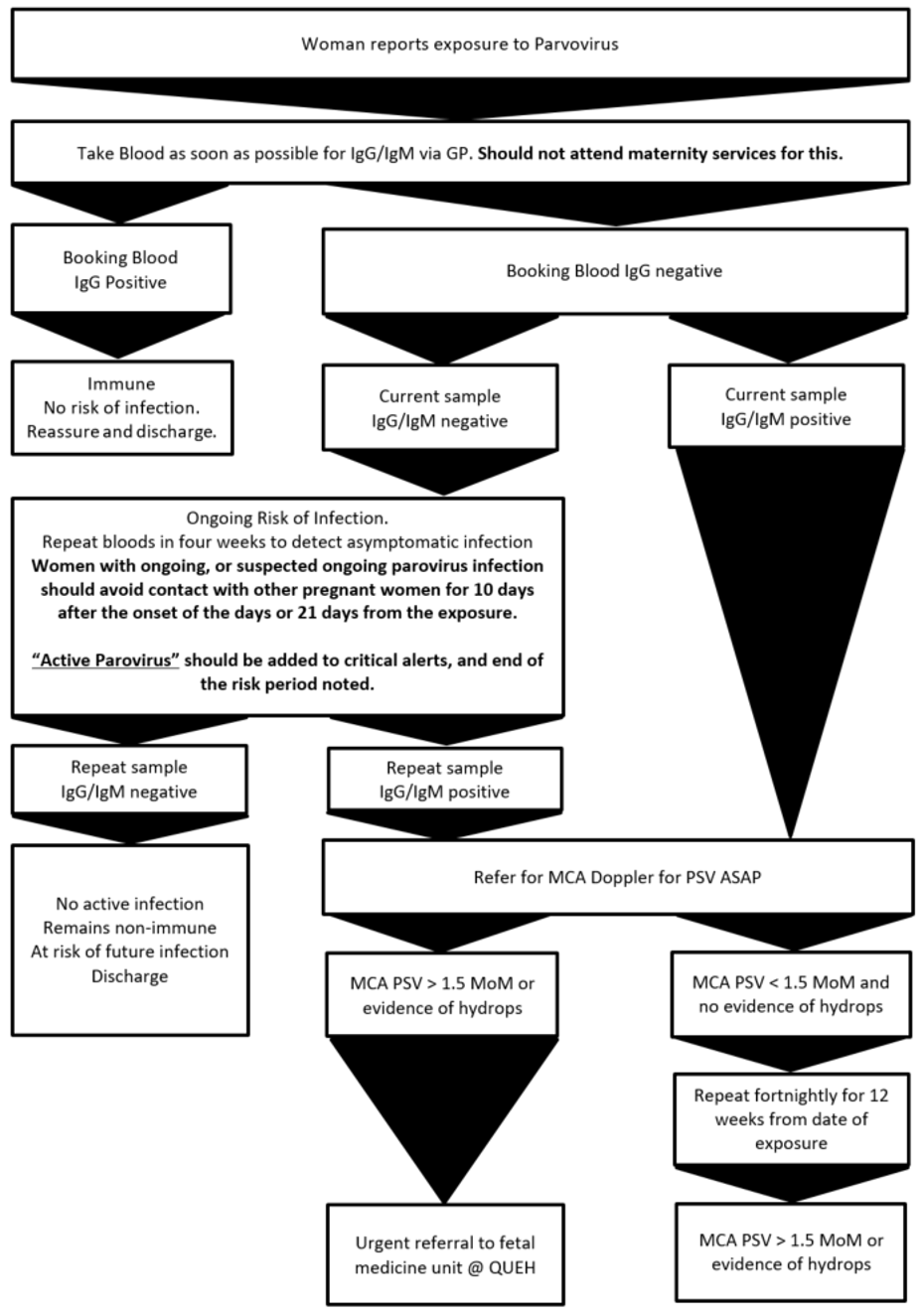
  • Exposure to Parvovirus B19 (Slap Cheek) – If a woman calls with suspected parvovirus exposure then they should be advised to contact their GP for bloods if they have not yet had a booking appointment. If the woman has had a booking appointment then the midwife should contact virology via email (this information is in the chicken pox flow chart below) giving the woman’s CHI, gestation and date of exposure and ask them to check previous exposure via booking bloods. When requesting this information the midwife should do so via the generic telephone triage email in order to ensure follow up and put the woman’s details in the virology book within the call hub. Advice and reassurance to give women is available on the right decisions platform. Parvovirus B19 Exposure in Pregnancy (593) | Right Decisions See below a flowchart taken from the platform (Appendix A).

  • Exposure to hand foot and mouth disease– reassure women that there is no routine investigations or blood tests required. Advice to women is to ensure good hand hygiene, do not share towels/clothes and try limit exposure. Reassure that most adults have immunity to this illness and symptoms, if any, are mild in adults. If symptomatic of hand foot and mouth near EDD, then inform consultant as small chance of baby being born with mild symptoms. Hand foot and mouth disease

Appendix A: Parvovirus flowchart

Appendix B: Chicken pox flow chart

Appendix C: To Attend Triage (BSOTS) on Badgernet

Appendix D: Headaches during pregnancy and the immediate postnatal period flowchart

Additional Information/ Learning

It is mandatory that midwives working in telephone triage have completed the ‘BSOTS training for midwives working in triage’ to be fully familiar with the way BSOTS works.

Midwives working in telephone triage will require full training prior to undertaking this role. Midwives must be Band 6 with triage experience.

A percentage of calls will be audited for training and monitoring purposes and will support staff with ongoing learning and development. Calls deemed to be; difficult to triage, of an emergency situation, triaged to a high standard may also be used to help educate staff and provide examples of effective telephone triaging after discussion with relevant staff.

NHS GGC Aggressive caller log should be used for any calls that are deemed to be violent or aggressive.

Further details on call recording within telephone triage can be accessed on the Call recording SOP.