MyPsych App

Cocaine was implicated in almost half of the drug related deaths in 2023. At toxicology, cocaine is often found to be present with other drugs. These other drugs are usually central nervous system depressant (CNSD) drugs such as heroin or methadone. For this reason, naloxone should always be administered when a more typical CNSD overdose presents where cocaine has also been taken.
The signs and symptoms of a cocaine overdose can be different from those we expect to see in a typical CNSD overdose because cocaine is a stimulant drug.
A cocaine overdose occurs when excessive cocaine intake overwhelms the body causing a life-threatening state. This can result in toxicity, stroke and heart attack.
The mechanism of COSHT involves a complex interaction of pharmacological effects leading to multi-organ dysfunction. This should always be treated as a medical emergency.
- Dopamine and norepinephrine reuptake blockade- This prolongs their duration of action in the synaptic clefts and results in excessive sympathetic nervous system activation (fight-or-flight response), causing tachycardia (fast heart rate), hypertension (high blood pressure), hyperthermia (high body temperature), and agitation.
- Serotonin reuptake blockade- Whilst less prominent an impact than dopamine or norepinephrine, serotonin reuptake inhibition may contribute to CNS excitation and potential neurotoxicity (damage to the brain).
- Sodium Channel Blockade- Cocaine acts as a local anaesthetic by blocking sodium channels in cardiac tissue. This impairs electrical conduction leading to arrhythmias (irregular heart rhythm) or depressed cardiac function.
- Vasoconstriction (the narrowing of blood vessels) and ischemia (sub optimal flow of blood)- This coronary vasoconstriction can precipitate myocardial infarction (heart attack), while cerebral (brain) vasoconstriction increases the risk of stroke.
- Platelet Activation- Cocaine enhances platelet aggregation (the process where tiny blood cells stick together to form a clot or blockage). This increases the likelihood of obstructing blood flow meaning heart attack or stroke become a risk.
- Central Nervous System (CNS) Effects- Overstimulation of the CNS leads to seizures, hyperthermia and agitation. Hyperthermia also exacerbates metabolic demand and can cause muscle breakdown leading to acute kidney damage.
These mechanisms lead to the life-threatening conditions of COSHT such as arrhythmias, heart attack, stroke, seizures, kidney failure, and multi-organ collapse. Rapid medical attention will increase the likelihood of a positive outcome.
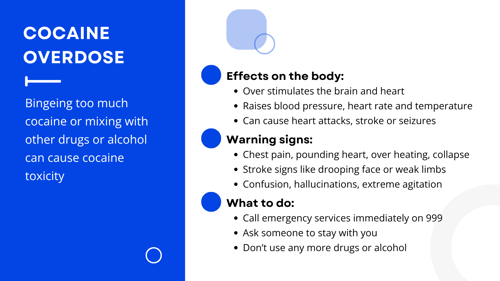
- Stroke signs (drooping of the face or loss of movement in the limbs)
- Heart attack signs (pain in chest, arms, jaw, neck)
- High blood pressure (headache, dizziness)
- Increased heart rate (pounding chest, palpitations)
- Severe headache
- Blurring or loss of vision
- Severe agitation, restlessness, confusion, excited delirium*
- Hyperthermia (sweating not caused by heat or exercise)
- Abnormal reflexes/movement
- Seizure
- Diarrhoea, vomiting, abdominal pain
If COSHT is suspected the person should call emergency services as soon as possible and follow the call handler’s instructions.
*Cocaine induced excited delirium. People displaying symptoms such as aggression, hyperactivity, extreme paranoia, hyperthermia, incoherent shouting or screaming and unusual strength are often at risk for sudden death.
Clinical Outcomes
Management within a hospital setting will focus on stabilizing vital signs and may include treatments such as cooling for hyperthermia, benzodiazepines for agitation/seizures and medicating other specific complications.
Reducing the Risk of COSHT
- Taking less cocaine (dose)
- Lengthen the time between doses
- Limit the duration of the sitting
- Not consuming other drugs, alcohol or tobacco within the same sitting
- Accessing heart health checks as a means of identifying cardiovascular problems at the earliest possible stage