Warning

Lung problems

Prolonged crack/freebase smoking is likely to result in some form of lung problem. Repeated inhalations can cause or exacerbate lung or respiratory conditions such as asthma, shortness of breath or chronic obstructive pulmonary disease (COPD). Smoking crack cocaine may also cause pneumonia.

Crack lung is a clinical condition where alveolar haemorrhage (bleeding) occurs acutely within 48 hours of smoking crack or freebase cocaine.

Crack lung has also become a term used to describe any acute pulmonary injury related to smoking crack cocaine. Some people may experience such severe damage to the lungs that they spit up blood, whilst serious cases may result in respiratory failure.

The chemicals used during the preparation process can be inhaled directly into the lungs causing harm. This is particularly relevant when smoking freebase rocks where the ammonia has not been properly rinsed before smoking.

Symptoms such as chest pain, extreme coughing fits and difficulty breathing are all indications that significant harm is occurring.
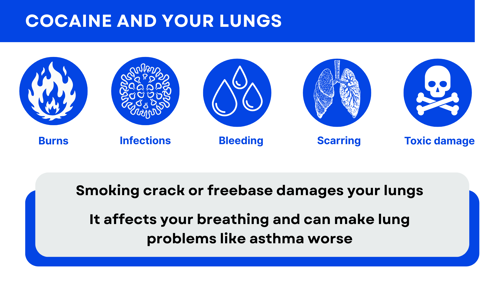
Infographic explaining the effect on cocaine on the lungs - as covered by text above.

Pipe risks

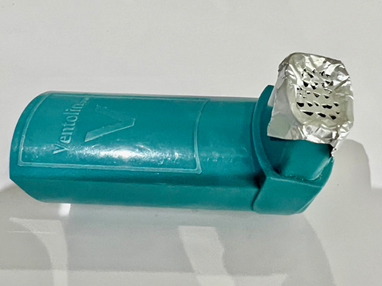
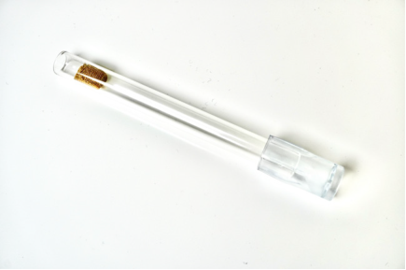
Ideally people would smoke their crack/freebase from a purpose made pipe or glass/Pyrex tube with suitable gauze. If these are not easily accessible people will make their own from easy to find household items. Drinks cans, plastic bottles, glass miniature bottles and inhalers are all commonly used. A bed of cigarette ash can be used to better melt the rock without clogging the holes, however the inhalation of this burning ash can create further risks. The risk associated with each type of pipe varies greatly. If any of these pipes are shared then there is a potential for a wide range of viruses and infections to be transmitted including BBVs, Tuberculosis and Covid etc.

Drinks cans- Holes are made and the rock is often placed on a bed of cigarette ash. Toxic fumes from the burning paint or plastic coating inside the can may be inhaled along with the drug itself. There is a risk of virus transmission and other infections if shared with others.

Plastic bottles, inhalers and other plastic items- Fumes from burning plastic can be inhaled along with the drug. Some of these pipes place the rock and flame very close to the face resulting in burns to the head and neck. There is a risk of virus transmission and other infections if shared with others.

Glass miniature bottles- The bottom is often taken off of this small bottle leaving sharp edges which may cause cuts. There is a risk of virus transmission and other infections if shared with others.

Gauze- It is common for loose filters to be made from stainless steel scouring pads. These are chosen as a bed for the rock to sit on allowing better melting and inhalation. However, these can disintegrate and break off during heating, meaning small particles can be inhaled causing significant damage to the mouth, throat and lungs.


A crack pipe
A crack pipe provided by Harm Reduction Service (not UK)
A blue asthma inhaler with mouthpiece covered in tin foil with holes.
A makeshift crack pipe made from a salbutamol inhaler


Recycling cocaine from pipes

When a pipe has been used numerous times cocaine residue will gather inside. In order to free this residue for further use, a chemical such as acetone or nail varnish remover can be used to dissolve the cocaine. The liquid can then be poured on to a mirror and left to dry. The cocaine recovered can be scraped off of the mirror and re-used. Inhaling these chemicals before they have fully evaporated can cause lung damage.

Smoke harm reduction

Personally made freebase cocaine is less likely to have impurities when compared to street bought crack. Freebase rocks should be rinsed properly to wash off any ammonia residue. Placing rocks on a damp tea bag and carefully rinsing with cold water before allowing to dry prior to smoking will help to remove ammonia.

Purpose made toughened glass or steel pipes are likely to be the safest choice. The pipe should be long enough that it is far enough away from the face to stop any burns from the flame or debris.

Pipes should not be shared with any other person to reduce the risk of virus transmission and infection.

Proper pipe gauze should be used in place of metal scouring pad type material. This should be carefully inserted into the pipe or tube and changed frequently.

A lighter which has enough reach to melt the rock without burning the fingers should be used.

Use of a blow torch poses a significant fire risk if the person collapses as it will not shut off automatically. In this scenario people should be advised not to use alone.

Holding the crack or freebase smoke in the lungs for long periods can damage the lung tissue without increasing effects of cocaine.

Smoking tobacco along with cocaine increases strain on the heart and cardiovascular system.

Any burns, blisters, sores or chaps on the lips should be treated properly with appropriate ointment or cream.

Good hydration through drinking lots of fresh water may stop the lips becoming dry and chapped.

Editorial Information

Last reviewed: 01/09/2025

Next review date: 01/09/2027

Author(s): MAT SPMG.

Version: 2

Author email(s): ggc.nhsggc.mypsych@nhs.scot.

Approved By: Medicated Assisted Treatment - Substitute Prescribing Management Group

Reviewer name(s): Injecting Equipment Provision Manager.