

 MyPsych App
It can be difficult to differentiate between the symptoms of mental illness and temporary drug-affected behaviour. Therefore, it is often not possible to conduct a mental health assessment until the effects of the drugs have fully worn off. However, it may be necessary to provide a crisis assessment in order to ascertain if an immediate mental health intervention is required due to temporary incapacity or where there is a risk to the person or others.
Crisis intervention

Warning
A crisis is an acute, time-limited episode experienced as overwhelming emotional reactions to an event. What is a crisis for one person may not be so for another. What becomes a crisis may not have been a crisis before or would not be a crisis in a different setting. Crisis has been described as a system out of balance. Crises occur when balance cannot be regained, even though a person is trying very hard to correct the imbalance
Commons symptoms of a drug related mental health crisis are:
- Extreme anxiety/paranoia
- Hallucinations- auditory (hearing things), visual (seeing things), and tactile (bodily sensations such as feeling things crawling on them)
- Persecutory beliefs (believing someone is trying to harm them)
- Delusional thoughts (believing they are someone else or they have done something they have not)
- Self-harm
- Suicidal ideation/acts
- Loss of grip on reality
- Whilst some people report being concerned about aggression, this is usually a fear response and is unlikely to occur if the person is appropriately supported
In the majority of cases symptoms resolve as substance(s) wear off and where the person is able to sleep.
Sometimes with severe drug toxicity, delusional behaviours and extreme agitation can occur in the presence of other serious physical health symptoms such as extreme overheating and extremely fast heart rate. Delusional behaviours may manifest as bizarre behaviours e.g. getting undressed in public or aggression and extreme fear; this condition is referred to as acute behavioural disturbance or excited delirium and is a medical emergency. In the case of stimulants, excited delirium is caused by a condition called serotonin syndrome and can be life threatening if left untreated or if the person is placed in restraints/held down with force for prolonged periods.
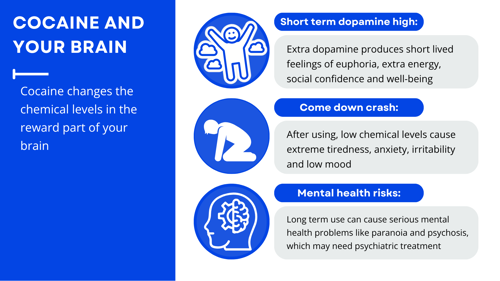
Therefore, if a stimulant related psychosis is suspected e.g. person presents with excited delirium symptoms, it is important to rule out a stimulant overdose. Signs to look out for are extreme overheating (being hot to touch and/or profusely sweating), muscle rigidity, over responsive reflexes or involuntary muscle spasms e.g. jerking. Other signs might be seemingly insensitive to pain, displaying a high level of physical activity /energy without tiring and appearing to have excessive strength (this can be due to fear if struggling against being contained or against use of restraint). If such physical symptoms are identified, urgent medical care should be sought by phoning 999.
Where there are no signs of the physical symptoms connected to excited delirium, cases can be managed as any acute mental health crisis. Focus would be on providing a safe environment, managing agitation and offering reassurance and de-escalation in the first instance.