Taking a baby home following perinatal loss

Warning

Objectives

To provide support for clinical decision making.

Aims/Purpose

  • ensure families are aware of all the choices available to them
  • to provide all documentation necessary for discharge to your home
  • provision of consistent communication to all relevant health care professionals in the hospital and community
  • ensure advice is given to parents for transportation of their baby to their home, please refer to patient leaflet
  • empower families to care for their babies at home

The objective of this document is to ensure consistent high quality care.

Scope

The guideline applies to all members of staff working within maternity services.

It is the responsibility of the maternity team to ensure that these guidelines are adhered to when providing care to bereaved families in the postnatal period.

Audience

This document is a clinical guideline to promote safe and effective practice for clinicians within maternity services who are caring for bereaved families who wish to take their baby home after death.

Resource 

Available cold cot

Training

Staff are expected to access appropriate bereavement training where provided

Training needs should be identified through annual appraisal and clinical supervision. All midwives should be aware of the process involved when supporting families who wish to take their baby home.

Background

Sometimes a family whose baby has passed away in the perinatal period may wish to take their baby home. The guideline is to support all staff caring for bereaved families and to provide consistent information and guidance to ensure all care that is given is standardised and of high quality.

Legally there is no reason why parents cannot take their baby home after death, apart from when a death has been referred to the coroner. In these cases, the coroner should be contacted if the parents are requesting to take the baby home and this discussion should be documented.

If a family wish to have a post-mortem, they should be advised to return the baby after 24 hours as the value of results may reduce as time passes. There may still be an opportunity to have baby at home following post- mortem should they wish.

Care in hospital

Parental Choices

  • all families should be informed of choices following the birth of their baby.
  • if a family wish to have a post-mortem, they should be advised to return their baby within 24 hours as the value of results may reduce as time passes. There is still opportunity for them to have the baby at home following the post-mortem should they wish.
  • respect and support the family’s decision. No family should be rushed into decisions or going home

Documentation

  • appropriate documentation should be recorded on Badgernet or within handwritten notes.

Respect and Dignity

  • give as much support to the family to ensure they feel comfortable and confident taking their baby home after they have died
  • respect parental choice                                                                                                                
  • Parents will need to be sensitively informed of the changes in baby’s appearance over time, such as skin integrity, discolouration, odour, and
  • leakage of fluid. Use factual and clear language and be gentle during the explanation

Communication

  • ensure continuity of care and support is provided, concise information must be cascaded to all health care professionals
  • there is no need to contact the Police
  • inform the bereavement midwife team via email, they can be part of the point of contact team for the family
  • Community Midwife team- they should visit as normal to provide support to parents and ensure they are coping
  • GP and Health Visitor
  • notify the Mortuary staff

Transportation of baby home

  • provide appropriate advice to parents to ensure that their baby is transported in a safe and dignified manner
  • Parents can use their own transport to go straight home
  • the use of safety seats, Moses basket and seat belts are advised to ensure that baby is secure during the journey
  • if the parents do not have their own transport and require taxi service, they should check with taxi company first
  • public transport is not advised

Care of baby at home

  • advise the parents to keep the baby cool at home utilising the cold cot as much as possible
  • advise them not to have all the windows opened, especially in summer
  • advise parents they can care for and hold their baby as they wish, including bathing and dressing, however over handling may increase rate of deterioration
  • ensure the community midwife is aware of the arrangements in place so that they can provide extra support if required and arrange for the return of the cuddle cot when it is no longer required
  • when the parents are ready to goodbye, or if they decide having their baby at home is no longer the right thing for them, the parents are to be advised to contact their chosen funeral director to arrange for collection of the baby. The baby should not be returned to hospital mortuary unless PM is being undertaken and prior arrangements are in place.
  • parents should be aware that they can continue to visit their baby at the funeral home until the day of the funeral
Advice and guidance for parents wishing to take their baby home

The loss of a baby is one of the most traumatic and most emotionally distressing times of your lives. It is natural to be experiencing mixed emotions from shock to disbelief making it hard to concentrate on all the information you are being given by the midwives and staff in Labour Ward. This leaflet will hopefully clarify some of the practical advice you may need, if you have decided you wish to take your baby home. It is important that you feel supported at this time and you know who to contact should you require any additional support. The guidance will also provide advice to care for your baby. it will include information about who to contact if you have any concerns at home and details of what to do when you decide you are ready to say goodbye.

Transporting your baby home

  • it would be advisable to ask someone to drive you all home as you may find it difficult to concentrate on driving while feeling all these emotions.
  • ask them to meet you at the front entrance of the hospital
  • you can carry your baby to the car in your arms or in a Moses basket and a member of staff can accompany you to the car
  • the baby should ideally be secure in a car seat or an approved transport device
  • you will be given a copy of the parent transport letter to take with you. This can be presented if you are stopped on your way home from hospital or are involved in an accident

What to expect once you are home

The condition of your baby will change over time. These expected physical changes may be:

  1. changing colour or peeling skin
  2. slight ooze of bodily fluids or odour
  3. temporary stiffness
  4. coolness of skin

There are some things you can do at home to slow down these changes. These include:

  1. keeping your baby cool by using the cool cot as much as possible
  2. keeping windows closed especially in hot weather
  3. keeping pets out of the room

You may bathe, dress and hold your baby as you wish, ideally baby should be kept as cool as possible.

You should contact your preferred funeral director for them to collect your baby when you feel the time is right.

You need to register the baby’s birth/death (if over 24 weeks) at your local Registry Office.

Changing your mind

We recognise that sometimes circumstances and feelings change, and you may decide that having your baby at home is no longer the right thing for you. If this happens it is important to contact your Funeral Directors and collect your baby. You will still be able to visit your baby at the funeral home until the funeral. If you have decided to have a post mortem, then he/she should be returned to the hospital. A time and place for this must be arranged between you and the bereavement midwife. If you have any concerns or questions, please use contact numbers on parent transport letter.

Setting up the cuddle cot at home : Parent's guide

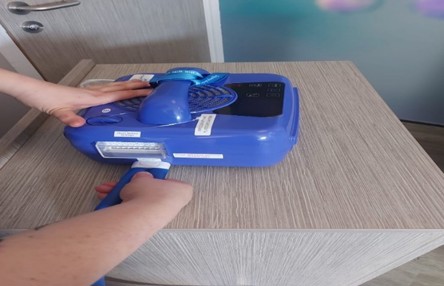
The cuddle cot is a cooling system which will keep your baby at the correct temperature allowing you to spend more time together at home.

We will fill the cooling unit ready for you to use but there are the instructions in case your baby stays with you longer than expected.

Contents:

Cuddle cot storage box
Cuddle cot unit
Hose with connector
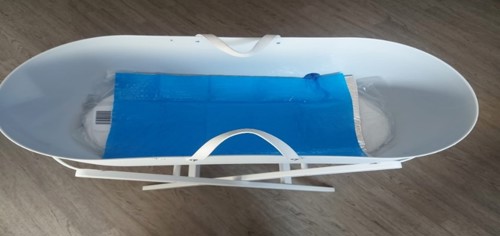
Cooling mat
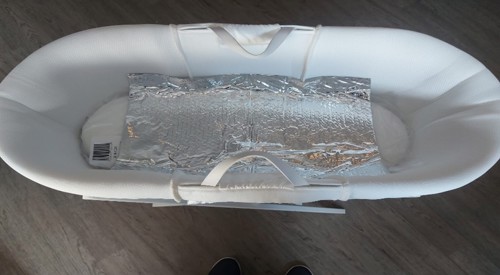
Insulating silver foil sheet
Bottle of sterile water
Key to empty water
Moses basket
Moses basket frame

How to set up the cuddle cot

  1. Place the silver insulation foil on top of the surface being used e.g. Moses basket. With shiny side upwards
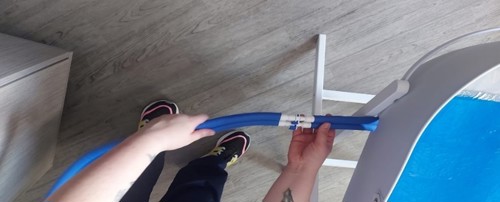
  2. Place the cooling mat onto the silver insulation foil and cover with a sheet ensuring the tubing hangs through the hole in the side of the Moses basket and is kink free
  3. Plug the cooling unit on and attach the hose to the cooling unit (you will hear a click)
  4. Plug the cooling pad connectors into the end of the hose. You should hear a click.
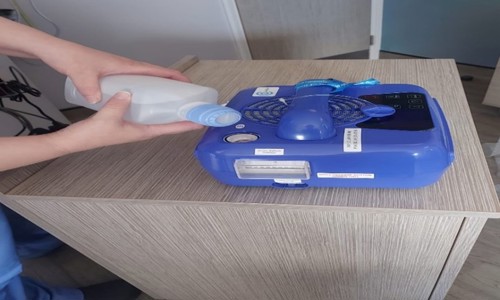
  5. Open the filler cap and the fill the unit with water until 2/3rds full of STERILE water. Add two drops of biocide. The tank will need filled periodically so it does not run out (an alarm will sound if the water level drops)

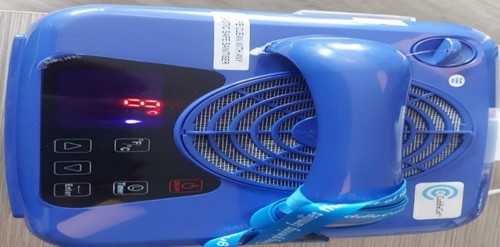
  6. Switch the cooling unit on/off button. Press the down arrow until is shows 8 degrees and then press enter (the unit and take up to 45 minutes to cool)
  7. The cuddle cot is now working

    After you are finished with the cot the community midwife will arrange for it to be returned to Borders General Hospital, Melrose.

Appendix 1 Patient transport letter

Editorial Information

Next review date: 31/03/2028

Author(s): Wilson L.

Version: 1.0

Approved By: Women's Services CMT

Reviewer name(s): Wilson L.