NHS Borders clinical guidelines

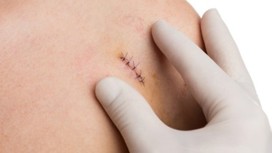
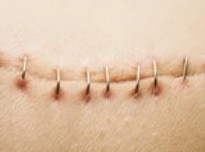
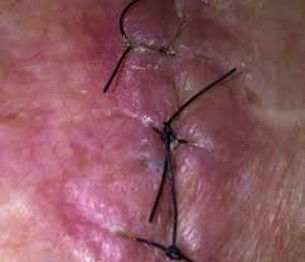
Sutures are tiny threads, wire, or other material used to sew body tissue and skin together. They may be placed deep in the tissue and/or superficially to close a wound. A variety of suture techniques are used to close a wound, and deciding on a specific technique depends on the location of the wound, thickness of the skin, degree of tensions, and desired cosmetic effect (Perry et al., 2014).
There are three types of sutures techniques: intermittent, blanket, and continuous. The most commonly seen suture is the intermittent suture.
Sutures may be absorbent (dissolvable) or non-absorbent (must be removed). Non-absorbent sutures are usually removed within 7 to 14 days. Suture removal is determined by how well the wound has healed and the extent of the surgery. Sutures must be left in place long enough to establish wound closure with enough strength to support internal tissues and organs.
Directions to remove sutures must be obtained prior to the procedure, and a comprehensive assessment of the wound site must be performed prior to the removal of the sutures by a health care team member.
Alternate sutures (every second suture) are typically removed first, and the remaining sutures are removed once adequate approximation of the skin tissue is determined. If the wound is well healed, all the sutures would be removed at the same time. Alternately, the removal of the remaining sutures may be days or weeks later (Perry et al., 2014).
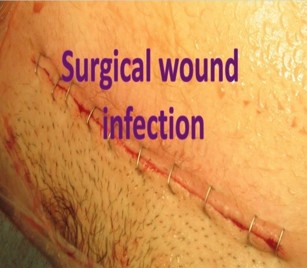
See Appendix 1 Table 1 for complications and guidance