NHS Borders clinical guidelines
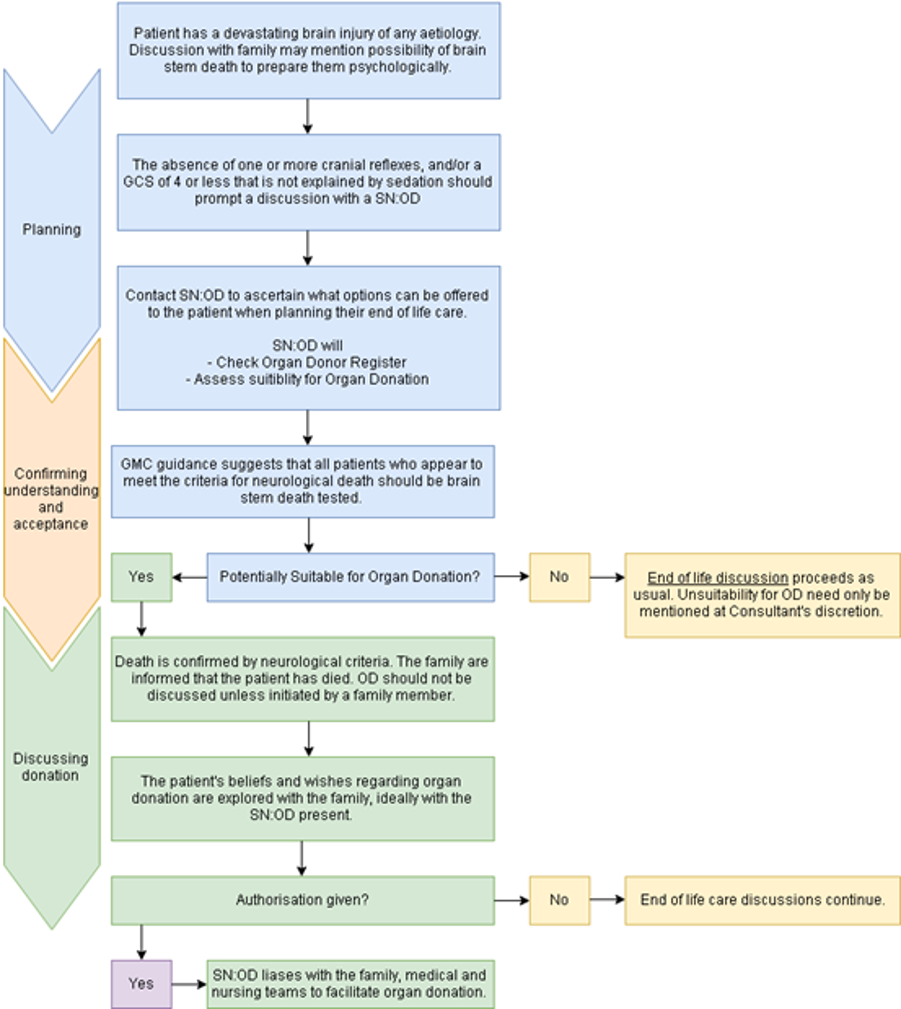
Consideration of organ and tissue donation after death should become a normal part of end-of-life care in all areas of NHS Borders. This will be facilitated by identification of potential donors, and timely referral to Specialist Nurses in Organ Donation (SNOD)/ Tissue Donor Coordinators. The Human Tissue (Scotland) Act 2006 places a duty on certain healthcare workers, mainly SNODS/SRs/TDCs to make inquiries about a potential donor and their last known views on Organ and tissue donation with the nearest relative. Organ and tissue donation is an infrequent but important activity within NHS Borders. The health board works in partnership with NHS Blood and Transplant (NHSBT) and the Scottish Government to deliver the national strategy for organ donation. In the UK this is guided by the current strategy document Organ Donation and Transplantation 2030: Meeting the Need, along with the Scottish Government document Donation and Transplantation Plan for Scotland: 2021 – 2026. Priority 3 of this plan states “We want to continue to ensure that, wherever possible, anyone who would have wanted to donate can have that decision respected when they die”. It is important therefore that all parts of the hospital support donation.
Organs suitable for donation and transplantation include but are not limited to heart, lungs, liver, kidneys, pancreas and small bowel.
General Medical Council (GMC) guidance advocates that: “If a patient is close to death, and their views cannot be determined, you should be prepared to explore with those close to them whether they had expressed any views about organ or tissue donation, if donation is likely to be a possibility. You should follow any national procedures for identifying potential organ donors, and in appropriate cases, for notifying the regional Specialist Nurse – Organ Donation.”
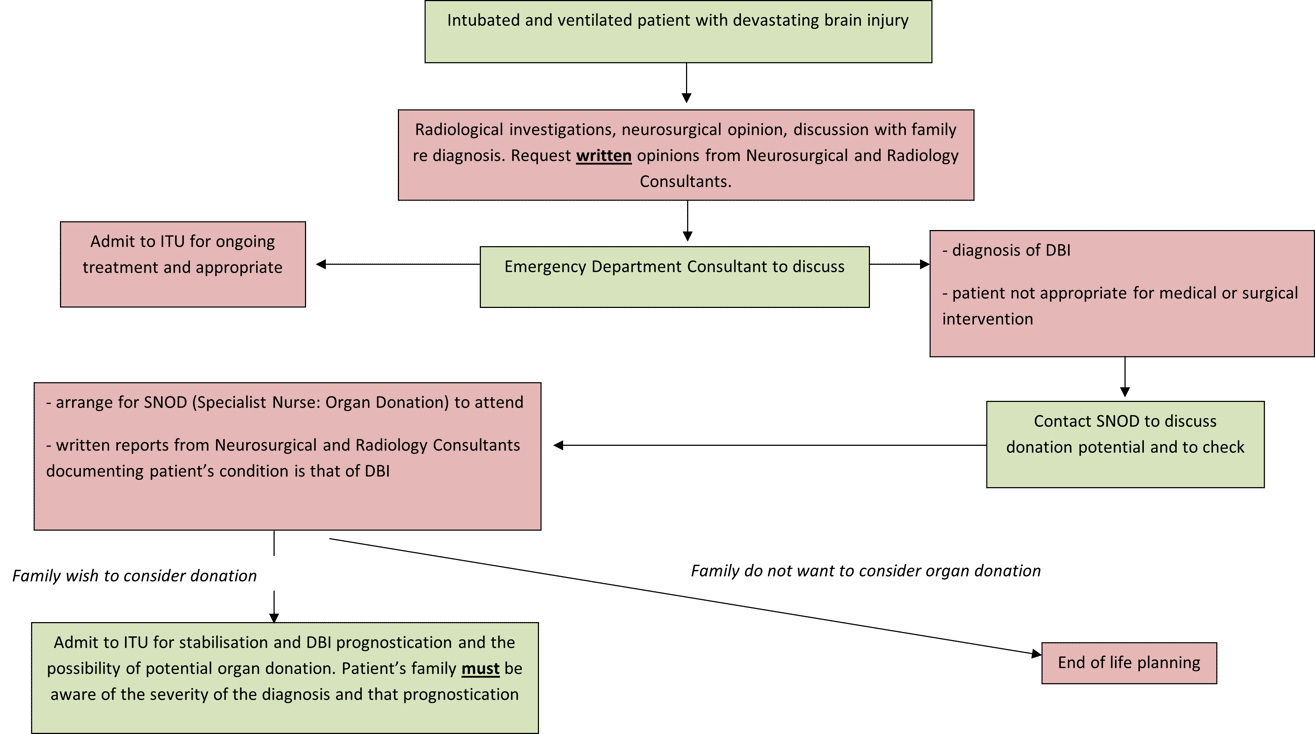
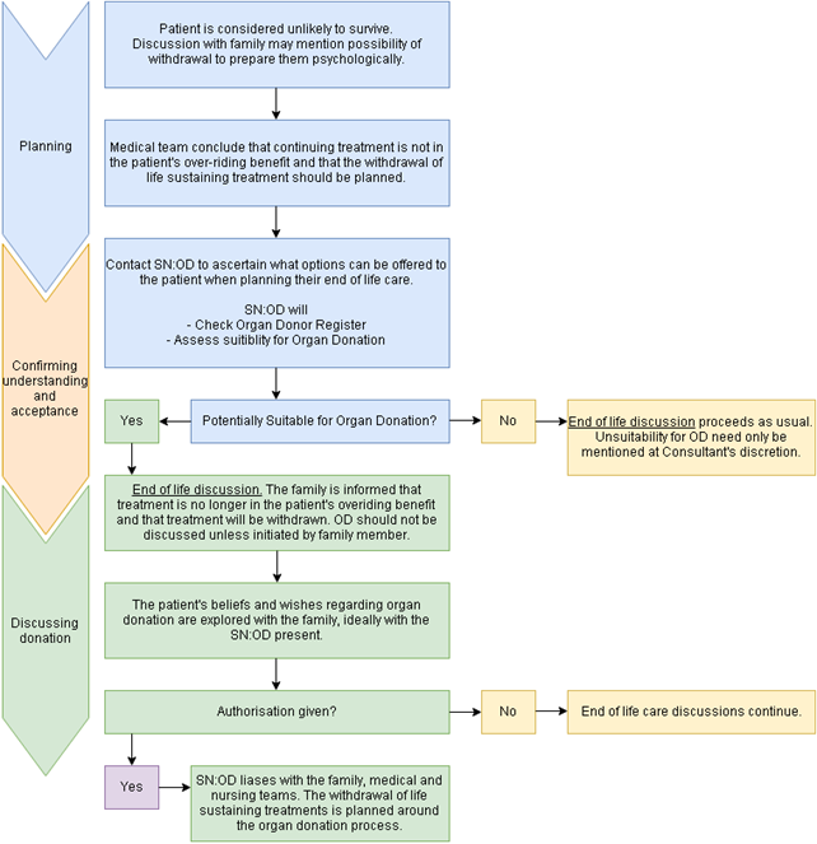
Current guidance states that “although donation occurs after death, there are steps that health professionals may need to take before the death of the patient if donation is to take place.” This policy covers such steps and in the case of clinical triggers, action that might take place even before the inevitability of death has been recognised.
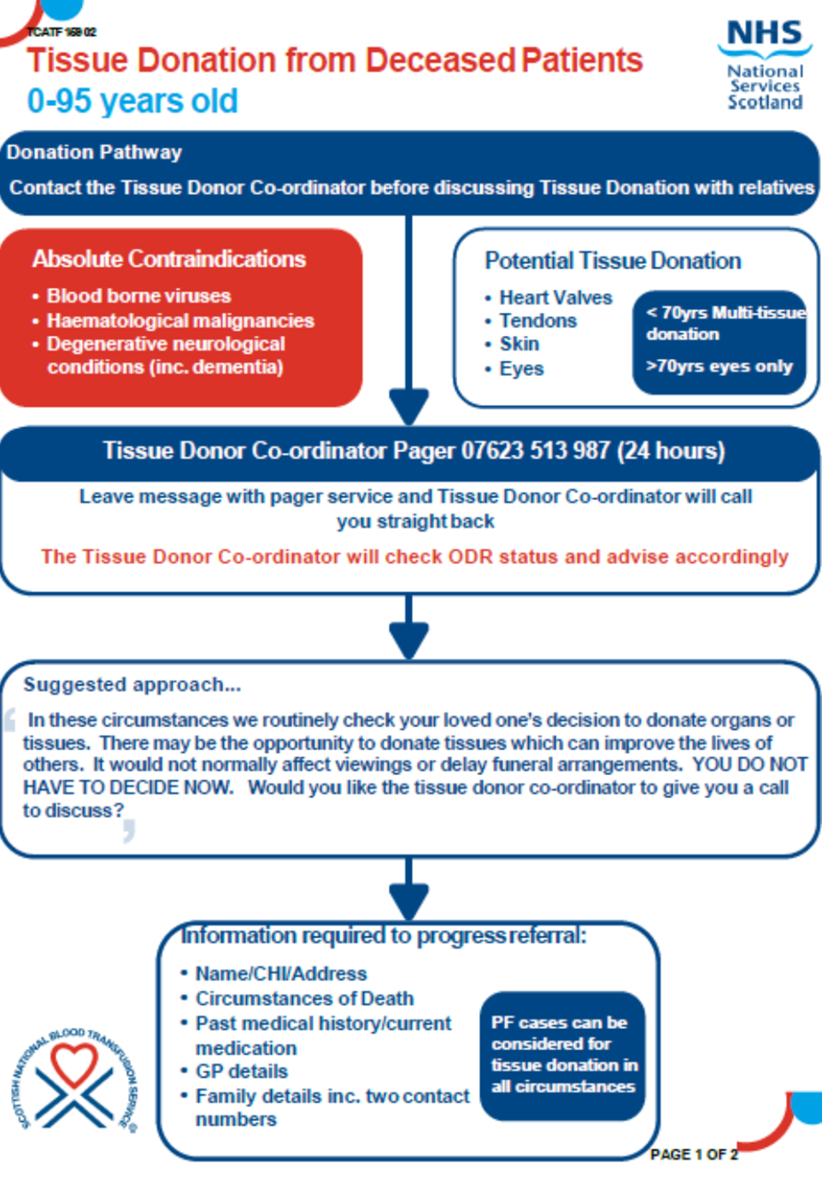
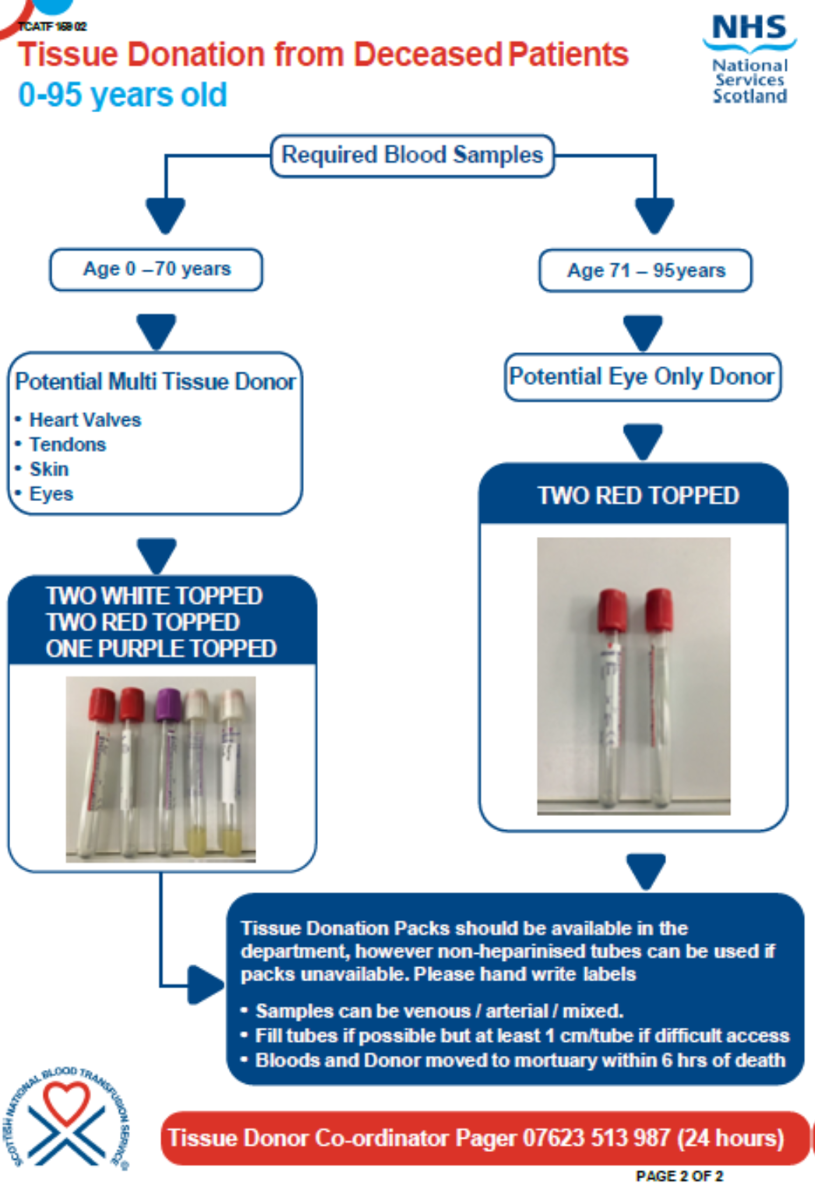
Tissue only donation can be facilitated by the Scottish National Blood Transfusion Service who are the primary provider of tissues for therapeutic use in Scotland. Anyone who dies in hospital has the potential to become a tissue donor as unlike organ donation, tissue donation can take place up to 48 hours after death for heart tissue and tendons and within 24 hours for eye donation. Organ donors may also be able to donate tissue.
Tissue donation after death includes the potential of donating life-saving heart tissue and skin and life-enhancing tendons and corneas.