Insulin Adjustment by Diabetes Specialist Dietitians

Warning

Objectives

A patient group directive (PGD) is not appropriate for insulin dose adjustment (5) and therefore this written guideline has been developed and approved.

To purpose of this guideline is to authorise appropriately qualified and trained Diabetes Specialist Dietitians (DSDs) (see Essential criteria p4) to advise alterations to insulin doses to individuals without the requirement for a patient specific prescription written by a medical practitioner or non-medical prescriber.

This guideline is not applicable to the initial supply of insulin.  This guideline is designed as a guide to the safe limits within which DSDs can adjust insulin dose and the competencies required by them when recommending insulin dose adjustment and working within this guideline

As the Consultant is the person responsible for the patient care, anyone operating under this guideline is accountable to the Medical Consultant, Dietetic Line Manager and own professional body.

Scope

Diabetes is a chronic condition in which therapy should be tailored to the individual, with self-management being a key goal. There is strong evidence that good glycaemic control in both Type 1 and Type 2 diabetes significantly reduces the risk of future complications (1,2).  Diabetes Specialist Nurses (DSN) and Diabetes Specialist Dietitians (DSD) working as part of the Diabetes multidisciplinary teams in both paediatrics and adults across a number of healthcare settings have a pivotal role to play in educating patients in the management of their therapy to optimise blood glucose control within the context of their individual lifestyles and circumstances.

It is widely recognised that the adjustment of insulin is an integral part of the DSN role but in recent years, DSDs too have been advising on insulin adjustment as a key part of their role, an example of this is the Dose Adjustment For Normal Eating (DAFNE) project.  DAFNE with its solid evidence base has shown improved glycaemic control, better quality of life and psychological wellbeing (3,4).  This project has also highlighted the benefits of both DSNs & DSDs advising and educating patients on insulin dose adjustment.  Dietitians have a highly specialist and detailed knowledge of the nutritional value of food and how this affects blood glucose levels and insulin requirements.  DSDs provide advice and teaching on a number of aspects of diabetes care including the following:

  • Change in treatment e.g. change from oral medication to incretin mimetic therapy or to insulin +/- oral medication, change of insulin regimen
  • Pregnancy
  • New patient education at diagnosis
  • Adjustment of insulin doses in relation to Carbohydrate (CHO) intake and Insulin Sensitivity Factor
  • Adjustment of insulin doses with regards to disease related infection and oral intake
  • Adjustment of insulin in relation to exercise and alcohol
  • Adjustment of background insulin doses in relation to changes in basal requirements
  • Teaching of carbohydrate (CHO) counting skills
  • Weight management
  • Insulin pump therapy
  • Hybrid closed loop systems

This policy was adapted, with permission, from:

NHS Lothian Guidelines for Insulin Adjustment by Diabetes Specialist Dietitians (September 2017)

NHS Grampian Protocol for the Adjustment of Insulin Dose by Paediatric Diabetes Specialist Dietitians Working with Children within NHS Grampian (May 2019)

Clinical condition or situation to which this guideline applies

Indication: Diabetes Mellitus

Inclusion criteria:

  • Patients diagnosed with Diabetes Mellitus Type 1, Type 2, gestational, Maturity Onset Diabetes of the Young (MODY), Latent Autoimmune Diabetes of Adults (LADA) or secondary pathology Diabetes such as exocrine insufficiency, Cystic Fibrosis related Diabetes, drug/disease induced who attend NHS Borders for their inpatient and/or outpatient Diabetes care treated with insulin who would benefit from dose adjustment, with the exception of those who meet the exclusion criteria
  • Patients for whom a registered medical practitioner has prescribed insulin and is under the care of a Consultant Diabetologist/DSN prescriber and only when insulin doses are given subcutaneously by syringe, insulin pen or insulin pump
  • The DSDs will be authorised to titrate the dose of insulin when either a recent glucose profile or download (from a glucose meter, continuous  glucose monitor, intermittently scanned continuous glucose monitoring technology, pump or hybrid closed loop systems) is available for review

Exclusion criteria (the DSDs will NOT advise on dose adjustment in the following patients/instances):

  • Any child under 1 year of age
  • Patients who are unwell in the acute setting.
  • Patients/Parents/Carers who do not wish to be advised about medication adjustment by a DSD
  • If the presenting clinical condition is deemed to be out with area of expertise and knowledge of the DSD
  • If the patient being treated is using an insulin pump where the staff member is untrained in this aspect of care.
  • Patients who have not been assessed by a Consultant and prescribed insulin by a registered medical practitioner.

In the above circumstances the DSD will refer the case to a more experienced member of the Diabetes team e.g. Consultant.
Essential staff criteria for DSDs authorised to adjust insulin

Essential staff criteria for DSDs authorised to adjust insulin dose:

  • Health and Care Professions Council (HCPC) registered Dietitians with a minimum of 3 years’ post-registration experience and 1 years’ experience working as a Diabetes Specialist Dietitian at Band 6 or above employed by NHS Borders
  • Non-specialist Dietitians providing clinical cover for a DSD are NOT authorised under this guideline and must not advise on dose adjustment of insulin. Out with scope of practice within a supervision framework within the Diabetes Dietetic Team
  • British Dietetic Association (BDA) membership or other recognised professional indemnity cover
  • Have a detailed understanding of the disease process of Diabetes Mellitus, Type 1 and Type 2 diabetes, gestational, MODY, LADA or secondary pathology Diabetes such as exocrine insufficiency, Cystic Fibrosis related Diabetes, drug/disease induced
  • Have a detailed understanding and experience of the action, side effects and appropriate use of insulin in line with current treatment recommendations, keeping up to date with the East Region Formulary.
  • Be competent in the interpretation of downloads from glucose meters, continuous glucose monitors, pumps and hybrid closed loop systems and competent to discuss issues concerning insulin with patients/parents/carers
  • Hold a clinic caseload of at least 12 patients per year with Diabetes on insulin
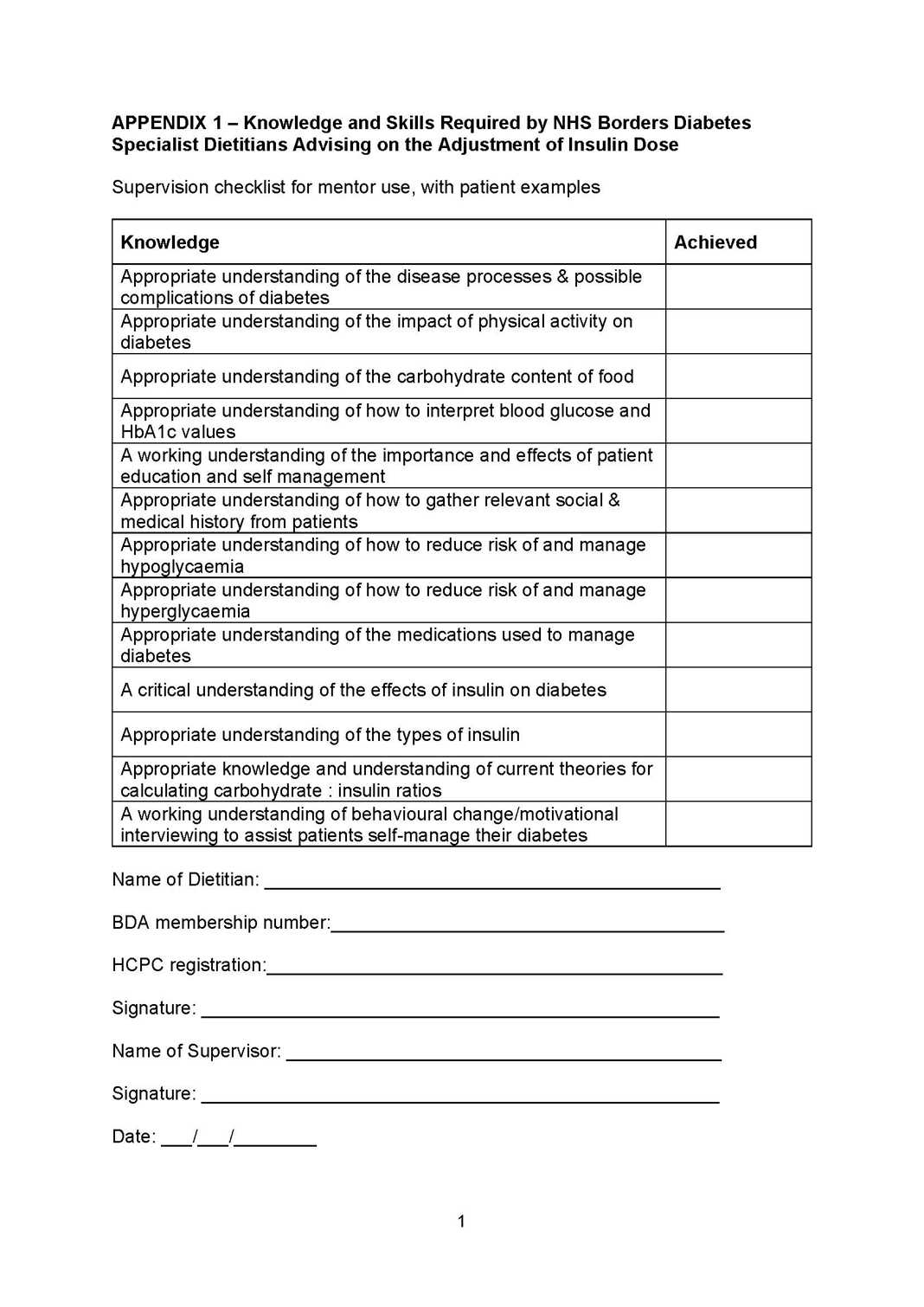
  • Supervision from a suitable mentor e.g. all Diabetes Consultants & DSNs who have completed a prescribing course. See Appendix 1 for supervision checklist
  • Have completed at least 2 days learning specifically dedicated to Diabetes per year. Learning outcomes must be demonstrable in a professional portfolio and at annual TURAS appraisal
  • Maintain their skills and knowledge in this area according to their individual Code of Professional Conduct (6) and HCPC and Standards of Conduct, Performance and Ethics and the Standards of Proficiency (7,8)
  • Have permission and seek agreement from the Dietetic Line Manager to work under this guideline
  • Be aware of his/her own professional accountability when working in accordance with this guideline
  • Completed the Safe Use of Insulin module by NHS England Learning Hub Safe Use of Insulin - elearning for healthcare (e-lfh.org.uk)

Maintaining Competency

New and existing DSDs will be required to provide and demonstrate evidence of continued competence to adjust insulin dose to enable them to continue to work within this guideline. Examples;

  • Hold a clinical caseload of at least 12 patients per year with diabetes on insulin therapy
  • Have completed at least 2 days (pro rata) learning specifically dedicated to diabetes per year. Learning outcomes must be demonstrable in a professional portfolio and discussed at annual TURAS appraisal
  • Provided advice to at least 4 patients per year receiving insulin with supervision from a mentor (supervision can include direct observation and/or retrospective discussion/reflection)
  • Practice supervision with peers, Consultants or DSNs
  • Audit of notes including audit of dose adjustment, adverse drug reaction, evaluation of treatment outcome and care and clear documentation
  • Attendance at relevant meetings, education seminars/conferences, critical appraisal of new evidence, annual and ongoing appraisal

Essential criteria for DSDs authorised to adjust insulin using insulin pump therapy

  • Completed a Diabetes and Insulin Pump Therapy course or provide equivalent evidence of pump competency
  • Responsible for/contributes to at least 2 pump start/upgrade patients per year with supervision with an experienced member of staff in insulin pump therapy

Essential criteria for DSDs authorised to adjust insulin using insulin hybrid closed loop (HCL) systems

  • Knowledge and understanding of essential system characteristics for supporting patients on HCL systems

Dietetic Managers responsibility

  • Ensuring staff are aware of and work in accordance with this guideline
  • Ensuring staff can provide evidence that they meet the competencies listed in Appendices 1 and 2
  • Ensuring staff are provided with the opportunities to undertake adequate training in all areas relevant to this guideline. This includes any updates to training that may be required
  • Maintaining a current record of all DSDs authorised to recommend dose adjustment of insulin under this guideline (record to be saved on shared drive)

Descriptions of insulins available under this guideline

Please see East Region Formulary for agreed list of insulins used within NHS Borders; Formulary | East Region Formulary (nhs.scot)

Current insulins on the NHS East Region formulary include:

  • Soluble Insulin - ActrapidÒ, Humulin SÒ
  • Insulin Aspart – NovorapidÒ, FiaspÒ, TrurapiÒ
  • Insulin Lispro – HumalogÒ, Humalog U200 Ò
  • Insulin Glulisine – ApidraÒ
  • Isophane Insulin – InsulatardÒ
  • Biphasic Isophane Insulin – Humulin M3Ò
  • Biphasic Insulin Lispro – Humalog Mix 25Ò & Humalog Mix 50Ò
  • Biphasic Insulin Aspart – NovoMix 30Ò
  • Isophane Insulin –InsulatardÒ, Humulin IÒ
  • Insulin Determir –LevemirÒ
  • Insulin Glargine –LantusÒ, AbasaglarÒ
  • Insulin Degludec – TresibaÒ
  • Insulin Glargine U300 –ToujeoÒ
  • Insulin Degludec with Liraglutide –XultophyÒ

This list is not exhaustive and is subject to change.

Adjustment of Insulin

DSD’s have a role in supporting patients with insulin adjustment to optimise glycaemic control. Each dose of insulin must be adjusted based on a clinical decision which takes account of self-reported pre & post blood glucose measurements, blood ketone measurements, HbA1c results, other co-morbidities, desired lifestyle, dietary patterns, dietary carbohydrate intake, agreed changes and targets.

The Insulin doses of bolus and basal insulin should be considered. DSD’s can adjust average total daily insulin dose by 10% (either an increase of 10% or decrease of 10%).

When insulin is increased the risk of hypoglycaemia is increased and when insulin is decreased the risk of hyperglycaemia is increased.  Long standing hyperglycaemia can increase the risk of micro and macro vascular complications.

Bolus Insulin:

Insulin dose in relation to food intake is frequently the major factor influencing good diabetes control. 

  • Adjustment of Insulin to Carbohydrate Ratio (ICR) and/or Insulin Sensitivity Factor (ISF) may be required. ICR and ISF can be increased or decreased as required to control blood glucose levels.

Basal Insulin:

The basal insulin should give a steady level of insulin during the day and night, therefore if the dose is correct, the BG readings on waking and before meals should be within target. Basal insulin can be adjusted gradually by DSD working within adjustment limits. 

  • Adjustment of basal insulin should be considered and basal rate testing recommended where appropriate.

Hybrid closed loop (HCL) systems:

Hybrid closed loop (HCL) systems link continuous glucose monitoring (CGM) with insulin pump technology to monitor blood glucose and automatically adjust the amount of insulin given through a pump. There are various HCL systems available.

  • Adjustment of HCL characteristics will be dependent on system in place.

DSDs must ensure they are adhering to +/- 10% changes to insulin based on average total daily dose. DSDs should consider that possible changes to both bolus and basal insulin may exceed this adjustment and therefore should consider more gradual changes. For paediatric patients who have a small total daily insulin dose, a +/- 10% adjustment may not be possible due to insulin dose provision and it is therefore advised the smallest insulin change possible is made. 

The effect of any insulin adjustment must be monitored over 3 days or more and glucose profile or download reviewed before further adjustments are made. Additional adjustments by the DSD may be appropriate before 3 days in certain individuals i.e. newly diagnosed, recurrent hypo/hyperglycaemia, illness.

Should the DSD feel more significant changes are required, they must seek advice from a more experienced member of the diabetes team e.g. Consultant, Registrar or DSN prescriber. This discussion and any further advice, must be clearly documented in the patients’ medical record (Sci-Diabetes/EMIS).

For paediatric diabetes management the following guidelines can be referred to when adjusting insulin:

DAFNE Handbook, version 3, April 2014

RHSC Diabetes Handbook, www.edinburghdiabetes.com


Follow-up

When insulin dose adjustment has been recommended the patient/carer/parent will be provided with the DSD or DSN contact details and advised who to contact if they have any queries, concerns or should any problem arise.

The patient/carer/parent should be advised what to do if they are unable to contact a member of the diabetes team for advice.

The patient/carer/parent should be made aware they can contact the Diabetes Team directly via the Diabetic Helpline during office hours (08.00-15.00).

Out of hours/weekends/public holidays;

  • Paediatric patients can call Ward 15 at the Borders General Hospital, NHS 24 or attend the Emergency Department
  • Adult patients can contact NHS 24 or attend Emergency Department

The DSD may refer the patient to another member of the diabetes team for review if felt clinically appropriate, e.g. illness, diabetic ketoacidosis (DKA), recurrent or severe hypoglycaemia.

Documentation

Adjustments to insulin dose must be recorded in Dietetic notes and medical/nursing notes (where appropriate) in paper or electronic form e.g. Scottish Care Information (SCI)-Diabetes and EMIS, in line with HCPC standards.  Documentation should include clinical justification or reasoning for advising a change.  Details of all changes to an insulin dose must be documented within SCI-Diabetes database which can be accessed by all secondary care clinic staff.  Letters can be sent to GPs detailing advice provided where appropriate and in cases where the G.P does not access SCI-Diabetes.

All Dietitians authorised to adjust insulin dose under this guideline will have this documented in personal files/electronic held staff records.

NHS Borders Liability

Similar guidelines/protocols/policies have been approved by the Central Legal Office (CLO) for use in NHS Scotland Health Boards and the CLO would respond in the event that a liability attaches to a Diabetes Specialist Dietitian, arising from the execution of his/her duties for NHS Borders whilst following this guideline and having met the essential criteria for the DSD authorised to adjust insulin dose.

Roles and Responsibilities

Role

Responsibilities

Consultant Physicians/Paediatricians

To authorise/review this guideline  and provide mentorship to DSDs (completion of supervision checklist, Appendix 1)

Director of Pharmacy

To authorise/review this guideline  and responsible for ensuring the registration of this policy

Lead Diabetes Specialist Nurse

To read/review this guideline and provide mentorship to DSDs

(completion of supervision checklist, Appendix 1)

Dietetic Line Managers

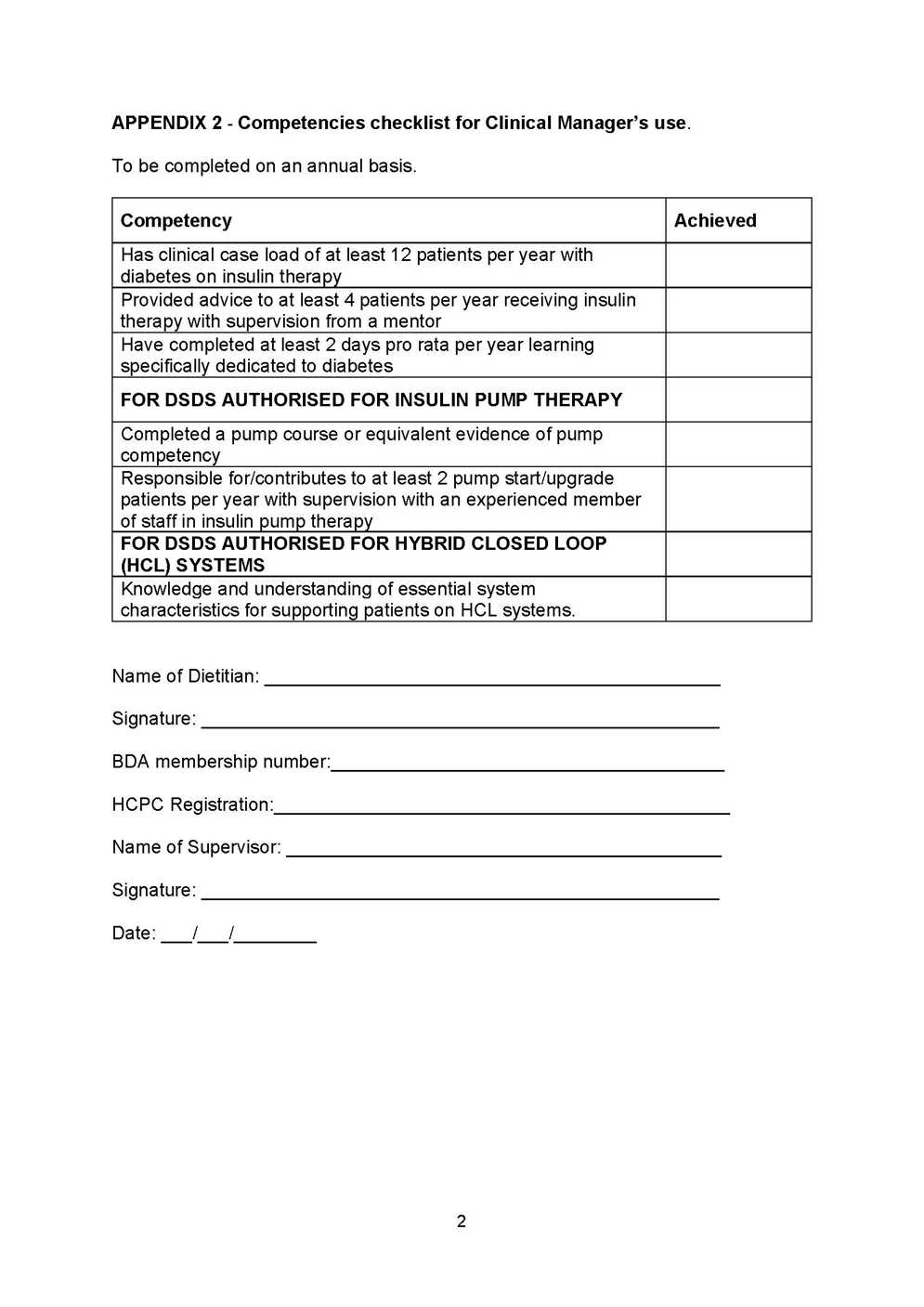
Ensure all staff are aware of and work within the guideline for Insulin Adjustment by Diabetes Specialist Dietitians. Ensure staff have received adequate training in all areas relevant to the guideline.  Maintain a current record of all DSDs authorised to recommend dose adjustment of insulin under this guideline.  Annual completion of checklist (Appendix 2)

Specialist Diabetes Dietitian’s

Before adjusting insulin doses the DSDs must have read this guideline and understand the context in which insulin dose adjustment is allowed by DSDs within NHS Borders. DSDs must maintain agreed competencies and advise line manager if they have any concerns regarding this guideline  and scope of practice.

Associate Director for Nursing/AHP Services

Accountable for the Professional guidance of Dietitians as AHPs working within NHS Borders

Document Development & Review

Development Group 2019

Jill Little (Lead Diabetes Specialist Nurse)

Nicky Berry (Director of Nursing)

Alison Wilson (Director of Pharmacy)

Gillian Bremner (Lead Paediatric Dietitian)

Erica Reid (Associate Director for Nursing/AHP Services)

Kenny Mitchell (General Manager in P&CS)

Dr Graeme Eunson (Consultant Paediatrician)

Dr Olive Herlihy (Consultant Physician)

Dr Rachel Williamson (Consultant Physician)

Review March 2021

Jill Little (Lead Diabetes Specialist Nurse)

Dr Graeme Eunson (Consultant Paediatrician)

Dr Olive Herlihy (Consultant Physician)

Dr Rachel Williamson (Consultant Physician)

Allana Gillies (Paediatric Dietitian)

Review May 2024

Allana-Lee Gillies (Paediatric Dietitian)

Amy Simmonds (Diabetes Specialist Dietitian)

Dr Alexander McNeil (Consultant Paediatrician)

Dr Balakumar Muthukrishnan (Consultant Physician)

Dr Graeme Eunson (Consultant Paediatrician)

Dr Rachel Williamson (Consultant Physician)

Julie Frater (Diabetes Specialist Dietitian)

Kirsten Thomson (Lead Clinical Pharmacist)

Richard Collins (Paediatric Diabetes Specialist Nurse)

Appendix 1 - Knowledge and Skills Required by NHS Borders Diabetes Specialist Dietitians Advising on the Adjustment of Insulin Dose


Appendix 2 - Competencies checklist for Clinical Manager use


Editorial Information

Last reviewed: 31/07/2024

Next review date: 31/07/2027

Author(s): Gillies A.

Version: v3

Approved By: ADTC

References

UKPDS Lancet 1998: 352; 837-853

The Diabetes Control and Complications Trial Research Group.  The effect of intensive treatment of diabetes on the development and progression of long-term complications in insulin-dependent diabetes mellitus.N Engl J Med. 1993 Sep 30; 329 (14): 977-86

DAFNE study group.  Training in flexible, intensive insulin management to enable dietary freedom in people with Type 1 diabetes: Dose Adjustment For Normal Eating (DAFNE) randomised control trial: BMJ: 2002; 325:746

ISPAD Clinical Practice Consensus Guidelines 2022.  Paediatric Diabetes 2022: 23(8)  1157-1551

Specialist Pharmacy Service (SPS): Using a Patient Group Direction to adjust doses of medicine. 2024. Using a Patient Group Direction to adjust doses of medicines – SPS - Specialist Pharmacy Service – The first stop for professional medicines advice

British Dietetic Association: Code of Professional Conduct. 2023. Code-of-Conduct.pdf (bda.uk.com)

Standards of Conduct, Performance and Ethics (HCPC 2016). https://www.hcpc-uk.org/globalassets/resources/standards/standards-of-conduct-performance-and-ethics.pdf

Standards of Proficiency – Dietitians (HCPC 2023). https://www.hcpc-uk.org/globalassets/resources/standards/standards-of-proficiency---dietitians.pdf

9    NHS Lothian, Diabetes Service, Diabetes for Children and Adolescents. Day to day diabetes management,Insulin Pumps

10 NHS Greater Glasgow and Clyde, Diabetes Service, Teaching materials, Insulin adjustment.  http://www.diabetes-scotland.org/documents/pdf_files/latest%20PHR%20material/insulin%20adjustment.pdf

11 NHS Greater Glasgow and Clyde, Diabetes Service, Teaching materials, Detailed insulin adjustment. http://www.diabetes-scotland.org/ggc/documents/pdf_files/latest%20PHR%20material/in-depth%20adjustment%20of%20insulin.pdf

12 UK's Association of British Clinical Diabetologist's Diabetes Technology Network (ABCD-DTN): Best practice guide for hybrid closed- loop therapy. Diabetic Medicine 2023 40 (7)