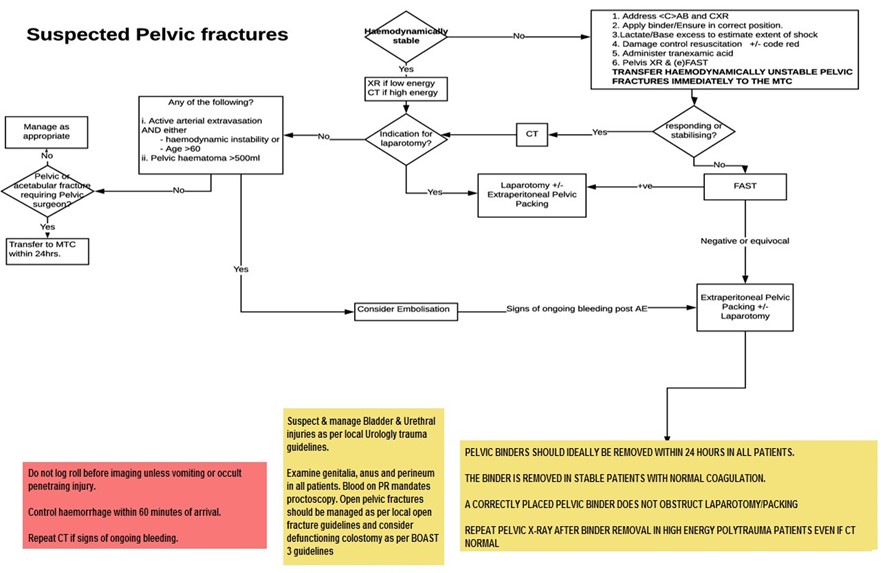
The lower abdomen, groin, buttocks, perineum, anus, rectum, and vagina must be examined in all cases for wounds. This can be performed intra-operatively or after imaging as appropriate.
A positive PR exam for blood mandates a proctoscopy. A positive PV exam for blood mandates a colposcopy.
Debridement should occur:
- Immediately if contaminated with agriculture, aquatic or sewage material
- Within 12 hours if high energy
- Within 24 hours if low energy.
Wounds to the anus and rectum, and some buttock and perineum wounds often require a defunctioning stoma and general surgery input. The principles of which are:
- Consider each case carefully on own merits regarding need and timing.
- Do not perform during damage control.
- Obtain consent where possible.
- May be created laparoscopically (for a defunctioning colostomy after distal injury).
- It should be sited in the upper abdomen remote form the site of pelvic fixation.
- Rectum/colon injuries from pelvic fractures should be treated with resection or repair, defunctioning stoma and irrigation of the distal bowel segment and pelvic drainage.


 North of Scotland major trauma guidelines