

 Optimal cancer diagnostic pathways

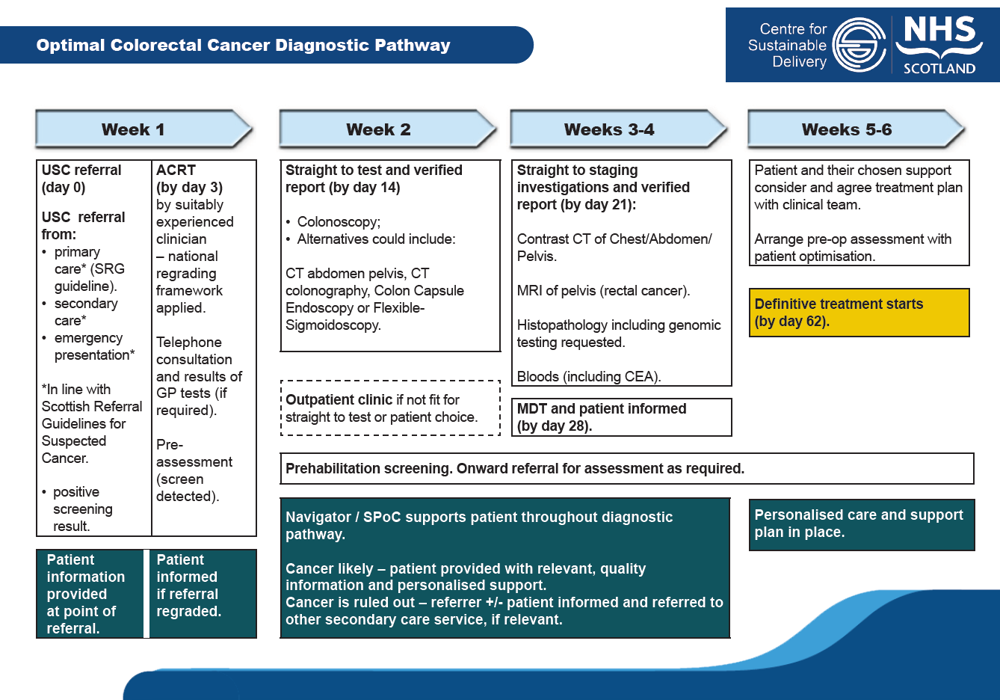
The Urgent Suspicion of Cancer (USC) Primary Care referral pathway should be used for patients who meet the Scottish Referral Guidelines (SRG) for Suspected Cancer criteria.
Patients will also be referred, who meet the screening threshold, through the Scottish Bowel Screening Programme which invites those aged between 50 and 74 to participate in bowel screening every 2 years.
Primary care should inform the patient that they are being referred as USC at the point of referral, while reassuring them that the majority of referrals result in a non-cancer diagnosis.
Primary care should also make the patient aware of their responsibility to make themselves available for tests and appointments in the coming days/weeks, as they may be invited at short notice.
Including as much relevant information and supporting materials in the initial referral from primary care is key to enabling active clinical triage to ensure the patient is on the right pathway at the right time. As per the Scottish Referral Guideline, if lower gastrointestinal cancer is suspected:
- Perform an abdominal and rectal examination;
- Arrange blood tests for renal function, liver function and full blood count plus ferritin/iron studies if anaemic.
Active Clinical Referral Triage (ACRT)
Clinical triage can be done by a suitably experienced clinician – preferably by a consistent group, regularly and should be complete within 3 days of the patient being referred (allowing for the weekend).
A national consensus was reached by the clinical community across NHS Scotland regarding the use of qFIT for prioritisation of patients with new lower gastrointestinal symptoms and should be adopted in all Health Boards - National Quantitative Faecal Immunohistochemical Testing (qFIT) for Patients with New Lower Gastrointestinal Symptoms 2024. Where possible, the referrer should provide details of any weight loss and the numerical value of the qFIT when referring to secondary care to allow effective triage.
If a USC referral is regraded at the point of vetting, the USC National Regrading Guidance should be adopted with the initial referrer and patient informed.
Pre-assessment (screen detected)
Patients referred through the National Bowel Screening Programme should have a pre-assessment to assess their suitability for diagnostic testing. How the pre-assessment is undertaken is for Health Boards to determine.


 @NHSScotCfSD
 Centre for Sustainable Delivery
 Scan the code to visit our website