Breast Cancer Surgery - Guide for Patients

Warning

NHS Borders 

Borders General Hospital
Huntlyburn Terrace
Melrose
TD6 9BS

"Information given on this site is not meant to take the place of a talk with your doctor or health worker."

Should you wish this information in another format please call 01896-826888 

Introduction

This booklet is designed to provide you with information about your recovery and continuing care after your breast surgery.  It outlines what to expect when you attend your follow-up, complications to be aware of, exercises to carry out and contact numbers and website links you may find useful.


Wound and skin care after surgery

You will have a see through waterproof (tegaderm) dressing covering your wound. Underneath this are white steri-strips these can stay in place for up to 10-14 days or more. This is shower proof but you may find it can curl up at the edges, if this happens it can be trimmed back with scissors.

Underneath the steri-strips are dissolving stitches, which are used for a better cosmetic finish. A surgical glue may also be used, that will wash off after 7-10 days.

DO

Remove your waterproof dressing 4 days following surgery.

Keep your wound and surrounding skin clean by washing with clean warm water.

Use non-perfumed or gentle soap (where possible avoid direct contact to wound dressings).

Gently pat your wound dry with a clean towel.

use deodorant roll-on once reviewed at surgical follow-up appointment

DON’T

use spray deodorant, perfumes or talcum powder

submerge your wound under water, if you prefer a bath ensure the wound is kept above the water level

shave until your wound is completely healed

Physical after effects of treatment

Altered sensations

You may experience a variety of unusual sensations following breast surgery.  These may include:

 “Pins and needles”

 Darting sensations/shooting pains

 Numbness

 A feeling of tightness

 A burning sensation

You may be aware of these around the wound(s), under the arm, down the inside of the arm or in the breast area.

Constipation

This can occur due to reduced activity and as a side-effect of your painkilling drugs.   Increasing your intake of fruit, vegetables and wholemeal foods may prevent this. Ensure you are drinking plenty of water.

Fatigue

The combination of your operation and an anaesthetic may leave you feeling tired.  This is often more noticeable when you are back in your own home.  The tiredness may last from a few days to several months and will be impacted by additional treatment such as chemotherapy and/or radiotherapy.

It is important to balance rest and activity to help manage fatigue. More information is available at the web link at the end of this booklet.

Potential post surgical complications

It is important to identify any post-surgery changes.  Without removing your dressings check the area daily. Some changes, such as bruising and swelling, are a normal part of the healing process. This booklet outlines some of the potential issues to be aware of, and advice on who to contact if any of these occur.

Haematoma (when a small blood vessel has leaked and bled into the wound). This would usually happen within the first 24-48hrs, particularly if you are on blood thinning medication.

Signs include:

  • A new sudden swelling - this would be hard and firm to touch
  • Bruising - dark bruising around the wound
  • Leakage - bleeding at the wound site. This can potentially be serious if left untreated

Infection

Signs include (you may have more than one sign of infection):

  • Redness
  • Heat
  • Swelling
  • Pain
  • Discharge
  • Fever

Good hand hygiene and keeping your wound clean can help prevent infection.

Seroma

A seroma is gradual build up of fluid under your wound that usually collects within a week after surgery.

Signs include

  • soft swelling
  • fluid like feeling under the skin
  • when touching your wound you may hear the fluid moving under your skin

A seroma is not harmful and can reabsorb back. However, if the seroma fluid continues to collect and causes discomfort you may need to have it drained.  This is a simple procedure done by the Breast Care Nurse.

If you think you have a seroma contact your Breast Care Nurse, 01896 826888.

Wound drain

  • during your operation you may have drain(s) inserted to prevent excess fluid collection around your wound
  • your surgeon will decide when the drain(s) should be removed
  • you may be discharged with these drain(s) still in place

If drain in place on discharge monitor daily for

  • redness, inflammation, increased pain
  • leakage from the site around the drain
  • dislodgement of the drain, drain not in correct place
  • sudden increase in fluid in the drain

If concerns call Breast Care Nurse or Ward 9 on 01896 826009

Removal of lymph node

Your surgeon may have removed some lymph nodes, Sentinal Node Biopsy or all of the lymph nodes from your armpit (axilla), Axillary node clearance as part of your surgery.

Lymph glands are part of your body’s lymphatic system and they have two functions:

1 Draining fluid from your tissues

2 Removing waste products from your tissues.

 Lymphoedema

  • Lymphoedema is a chronic swelling of the arm or breast caused by a build-up of lymph fluid in the tissues.
  • It can be caused by damage/trauma to the lymphatic system because of axillary surgery and/or radiotherapy.
  • Lymphoedema is less common with sentinel node biopsy than axillary node clearance but it can occur months or even years after treatment is finished.

If you do develop lymphoedema you can be referred to a specialist lymphoedema team by your doctor or nurse.

Information on reducing your risk of lymphoedema is available from the website link at the back of this booklet or in a separate leaflet that can be provided by your Breast Care Nurse.

Cording

Cording is a side effect of sentinel lymph node biopsy (1-3 nodes removed) or axillary node clearance (all nodes removed).

Signs include

  • Strings or cord- like structures you can see and/or feel under the skin of your underarm.
  • Pain and tightness when lifting your arm above shoulder height and straightening your elbow

Cording typically occurs anywhere from several days to several weeks after surgery. It can improve with regular exercises.

If you are concerned or cording persists please call Borders Macmillan Centre Physiotherapist for advice, 01896 826888

Arm exercises following surgery

 In order to regain full use of your arm it is important to do the exercises detailed in this booklet. You may feel some stretching and pulling over the operation area while doing your exercises. You may feel discomfort but it should not be painful.  Do not overdo the movements at first but gradually increase over time until you can use your arms normally.

  • How long - keep doing the exercises for around 6 weeks, until you are pain free and your movement has returned to normal
  • How often- try to do the exercises 3-4 times a day, starting with 5 repetitions and building to 10
  • Radiotherapy -If you have radiotherapy you will be required to raise your arm overhead during treatment. It is therefore important to do your exercises in preparation for this. It is also recommended to keep doing your exercises throughout radiotherapy to maintain your flexibility. You may also need to continue to regularly stretch your shoulder area in the longer term after radiotherapy finishes if this area continues to feel stiff.

Set A Exercises

These exercises should be started on the first day after your operation.  They should be performed in sitting or standing.

1. Shoulder shrugs

Shrug your shoulders up towards your ears, hold then relax.


2. Shoulder retraction
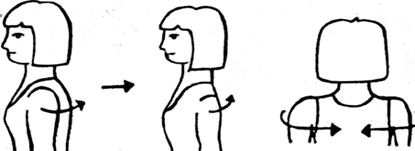
Pull your shoulders back – as if you are trying to squeeze your shoulder blades together at the back, hold for 5 seconds then relax.

3. Assisted shoulder flexion
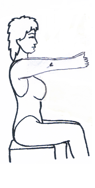
Hands clasped together &  elbows straight. Lift your hands up as far as shoulder level, hold for 5 seconds, and then lower them.

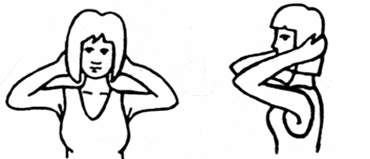
4. Elbow push

Placing your fingers behind your ears.  Keeping your head up and stretch your elbows out to the side then return to the middle.
 

Set B Exercises

These exercises are a progression from Set A and should be started once your wound drains have been removed.

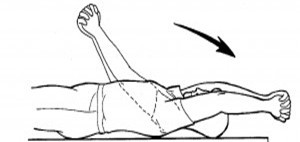
5. Assisted shoulder flexion in lying

These exercises should be done lying flat on the bed.

With hands clasped together and elbows straight lift your hands as high as you can, hold for 2-3 seconds then return to your thighs.
6. Elbow push

In lying clasp your hands behind your head.  Stretch your elbows out to the side trying to touch the bed with them. Hold this position for 2-3 seconds then slowly bring them back together. Progress this exercise by increasing the hold to 10-20 seconds.

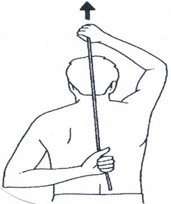
7. Towel stretch

Hold a towel behind your back with your operated arm at the bottom. Pull your operated arm up your back by pulling the towel from the top. Hold for 2-3 seconds then relax and return to the starting position.
Radiotherapy

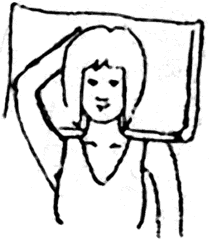
For those that require radiotherapy practising this position will ensure that you are ready for treatment.  You shoulder practise moving into this position daily, lying on your back with your arm supported on the bed.  You would hope to achieve this position by 6 weeks after surgery.  Gradually increase the time in this position to 15 minutes.
Breast prosthesis (forms)

 If your surgery includes:

  • Mastectomy
  • Insertion of tissue expanders before insertion of an internal prosthesis.
  • Delayed breast reconstruction due to additional treatment or personal choice or
  • Breast reconstruction without prosthesis

You may choose to wear an external breast form worn inside your bra to attain balanced appearance when you are dressed.  This prosthesis can also be fitted if you feel your breast has become smaller due to treatment.

Please discuss this with the Breast Care Nurse.

There are two types of breast form available:

  • Temporary (known as a “softie” or a “comfie”)
  • Permanent

Temporary breast forms

These can be fitted on the ward prior to your discharge home and are made from a soft material filled with soft polyester. They can be fitted by a trained member of staff or the Breast Care/Oncology Nurse. You will be provided with a temporary breast form to take home- your breast form can be adjusted by removing some filling.

Permanent breast forms

Permanent breast forms are made from silicone gel and are available in different shapes, designed to accommodate different types of surgery or treatment.   If you choose this option, they will be fitted when:

  • Your skin has completely healed
  • Swelling has subsided, or
  • Your radiotherapy treatment is complete (should you require it)

Permanent breast forms may provide a more natural result, due to their weight, texture and design. 

This will be discussed further with you at the breast prosthesis clinic which is held at the Macmillan Centre at the Borders General Hospital.   You will be able to look at a range of prosthesis and discuss their suitability for you with the clinic staff.   An appointment to attend the clinic will be send to you, 6 - 8 weeks after your surgery.

Please bring along a good fitting bra and a close fitting top for your appointment.   If you are unsure about your bra size, you can be measured and advised on this at the clinic.

Should you have any queries or problems, please contact the Breast Care Nurse on

01896-826888

9.00 am - 5.00 pm Monday to Friday.

Follow up

Your first follow up will be 2-3 weeks after surgery.  At this appointment you will be given the pathology results from your surgery.  It may be necessary for you to return for a further operation if the pathology team are not satisfied that all the cancer has been removed.

Returning to daily life

  • It is advised that you ease back into your daily activities gradually over the course of a few weeks. After your surgical follow up appointment the aim is to be back to undertaking most of your normal activities.
  • Gentle exercise is encouraged however you should avoid heavy lifting or jerking movements with your affected arm for up to 6 weeks following a mastectomy and/or axillary node clearance.
  • Driving – avoid driving until you have full range of movements in your arm, you are able to perform manoeuvres safely and can perform an emergency stop. It is advisable to check with your insurance provider regarding your cover during this time.
  • Wearing a seat belt – you must ensure you are able to wear a seatbelt. You can use a towel or small cushion to help make car journeys more comfortable.
  • Returning to work – this will depend on the type of surgery you have had, the nature of your job and how well you are recovering. We normally advise that you wait until after your surgical follow up before returning to work. If a sick certificate (‘fit note’) is required, the hospital can provide up until your follow up appointment. Thereafter your GP will provide this if required. Please inform the nurse looking after you if you need a sick certificate prior to discharge.
  • Regular medications – you will be able to restart your regular medications after discharge. If you are on any anti-coagulants (blood thinners) you may have specific instructions for restarting these. This will be on your discharge letter and discussed with you prior to going home.
  • Pain relief – You will be given pain reducing medication to take home. You should take these regularly for the first few days and then gradually decrease as you recover. In some cases you may find that your pain increases again after 10 days as you become more active. If this happens then you may need to revert to taking some pain reducing medication again for a few days. You should consult your GP if you experience any side effects such as nausea or constipation as a result of your medications.
  • Activities involving weight resisted exercise with the affected arm or high-impact exercise such as heavy gardening, gym, running and aerobics can be resumed gradually after 6 weeks. It is advisable to start gently and build up gradually.

Useful names and Addresses

Borders General Hospital Melrose TD6 9BS

Telephone:              01896-826000


The Macmillan Centre (Borders General Hospital)

Telephone:              01896-826888 


Caroline Renwick/Fiona Ainslie

Breast Care Nurse

Telephone:       01896-826830/826807


Sally Barr/Ruth Cossar

Physiotherapists and Lymphoedema Therapists

Telephone:       01896-826888


Useful websites:

http://www.careopinion.org.uk/

Share your experience of healthcare services and read about others


https://breastcancernow.org/

A UK-wide charity providing support for anyone affected by breast cancer


http://www.macmillan.org.uk/

A UK-wide charity supporting those affected by any cancer including breast cancer


https://www.macmillan.org.uk/cancer-information-and-support/stories-and-media/booklets/coping-with-fatigue-tiredness

A booklet published by Macmillan on Fatigue and strategies to help manage fatigue


https://www.macmillan.org.uk/cancer-information-and-support/impacts-of-cancer/lymphoedema/reducing-your-risk-of-lymphoedema


A leaflet published by Macmillan explaining the risk of lymphoedema with advise.

Editorial Information

Last reviewed: 31/01/2025

Next review date: 31/01/2027

Author(s): Barr S.

Version: 2.0

Approved By: Clinical Governance & Quality


