Medial elbow tendinopathy (MET - golfers elbow)

Warning

Please see list of red flags

Intro/background

Medial elbow tendinopathy

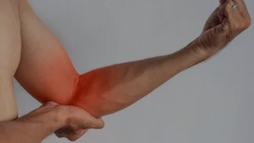
Golfers elbow can occur as a result of repetitive strain, wear or trauma of the attachment of the wrist flexors at the medial epicondyle. Pain can felt over the medial aspect of the elbow and may radiate into the forearm musculature. The insertional are is usually tender in palpation/touch and symptoms are usually aggravated by activities which involve flexion of the wrist such as lifting, gripping, shaking hands and unsurprisingly playing golf! The incidence of golfers elbow is about 1- 3% of the adult population
History - what to ask

  • Pain stretching the wrist flexors (arm at shoulder height, elbow straight and the wrist in full passive extension and supination)
  • Pain on resisted wrist flexion (arm at shoulder height, elbow extended and wrist in neutral – the clinician resists wrist flexion). A positive finding if the patients symptoms are reproduced
  • Tender on palpation of common flexor origin
  • Mechanism of onset, location of symptoms, severity and longevity of symptoms, limitation to function.

Investigations

Not indicated in primary care.

Differential diagnosis

  • Cervical spine/ radiculopathy
  • Elbow joint/articular issue
  • Medial ligament strain
  • Upper limb neural tension or ulna nerve entrapment.

Management within primary care/self-management guidelines

  • Pain relief in line with agreed formularies/guidance
  • Patient leaflet, patient education, activity modification
  • NHS AAA MSK website
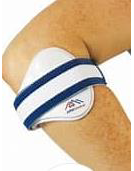
  • Use of golfers elbow strap

Golfers elbow strap

  • ****Injection: Injection as first line/ immediate management is not supported by the evidence. If persistent Sx (> 2/3 months), a one off injection can be considered in patients with troublesome/severe symptoms ensuring advised of risk of and evidenced based outcomes.

When & how to refer

  • Diagnostically uncertain
  • Symptoms persist beyond 2- 3/12 and interfere with ADLs despite conservative management
  • If a non red flag cervical source suspected, particularly if bilateral symptoms – refer to physiotherapy through usual pathway.

Editorial Information

Next review date: 01/10/2027

Author(s): Reid J.

Version: 01.0

Approved By: Trauma & Orthopaedics Acute Governance