Warning

Please see list of red flags

Intro/background

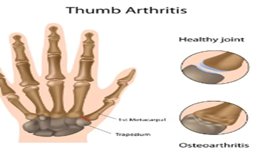
OA thumb

OA at the base of the thumb or the 1st carpometacarpal joint occurs as a result of degenerative changes in the trapeziometacarpal joint. Its prevalence increases with age, studies showing it can affect 15% of the population, and is more common in postmenopausal women. Patients often present with radial sided wrist pain, weakness and grating or crepitus at the base of the thumb. Symptoms are worsened by activities involving the thumb such as pinching and gripping.
History - what to ask

  • Mechanism of onset, location of pain, severity and longevity of symptoms, limitation to function.

Examination

  1. Active ROM & thumb opposition
  2. Grind test CMC Grind Test-Thumb (youtube.com)
  3. Pain with pinch or grasp.

Investigations

X-ray (when no improvement and considering referral into secondary care)

Differential diagnosis

De Quervain’s

Management within primary care/self-management guidelines

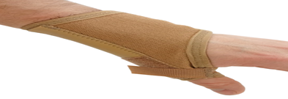
     Elastic thumb spica


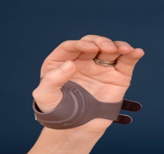
     Push CMC

  • Corticosteroid injection if thought appropriate and available.

When & how to refer

  • Diagnostically uncertain
  • Symptoms persist beyond 2-3/12 and/or interfere with ADLs
  • Exceptionally severe.

Editorial Information

Next review date: 01/10/2027

Author(s): Reid J.

Version: 01.0

Approved By: Trauma & Orthopaedics Acute Governance