Warning

Please see list of red flags

Intro/background

Osteoarthritis

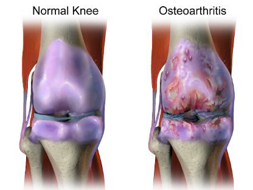
Osteoarthritis is more complex than wear and tear. It is a combination of multiple modifiable and non modifiable factors which have been identified including: Inflammatory and biomechanical processes, family history, age, obesity, diabetes, synovitis, innate immunity, lower limb alignment, joint shape and dysplasia, trauma and inflammation by metabolic syndrome.

History - what to ask

  • Pain – Usually worse in AM, or last thing at night and after period of sitting. Can disturb sleep.
  • Swelling - after period of weight bearing.

Examination

  • Exclude hip - painful ROM. If positive then need X-ray to exclude Hip OA
  • Observation - joint effusion, muscle atrophy. Antalgic gait pattern. Joint alignment
  • ROM – Loss of end range extension and flexion
  • BMI - Over 30 risk of excessive force across knee.

Investigations

X-ray to assess level of OA into min, mod or severe.

Differential diagnosis

Lspine, hip.

Management within primary care/self-management guidelines

  • NHS Ayrshire & Arran. Osteoarthritis - what can I do?
  • Keele University and Nice guidelines state that exercise should be first line of management regardless of age or severity of OA.
  • NICE. Osteoarthritis in over 16s: diagnosis and management.
  • Keele Health. Osteoarthritis resources clinicians.
  • Versus Arthritis. While you're waiting.
  • Patient education/Information to signpost toward information to enable/enhance understanding of condition,disease progression,management, self care and counter misconceptions about condition.
  • Flippin' Pain. Rethinking pain.
  • NHS Inform. Arthritis.
  • Discuss benefits in achieving/maintaining ideal weight. Signpost to services: Dieticians, weigh to go, leisure services.
  • Consider shock absorbent shoes and walking stick for pain relief.
  • Pharmacology.
  • Nice guidelines.
  • Paracetamol for pain relief if appropriate.

When & how to refer

  • Diagnostically uncertain.
  • Symptoms persist beyond 3 /12 and X-ray findings mod/sever OA. Good compliance with exercise BMI ideally between 30-35.
  • Patient not happy with improvement gained through conservative measures and has insight into risk/benefits of surgical intervention.

Editorial Information

Next review date: 01/10/2027

Author(s): Reid J.

Version: 01.0

Approved By: Trauma & Orthopaedics Acute Governance