1. Spinal instability
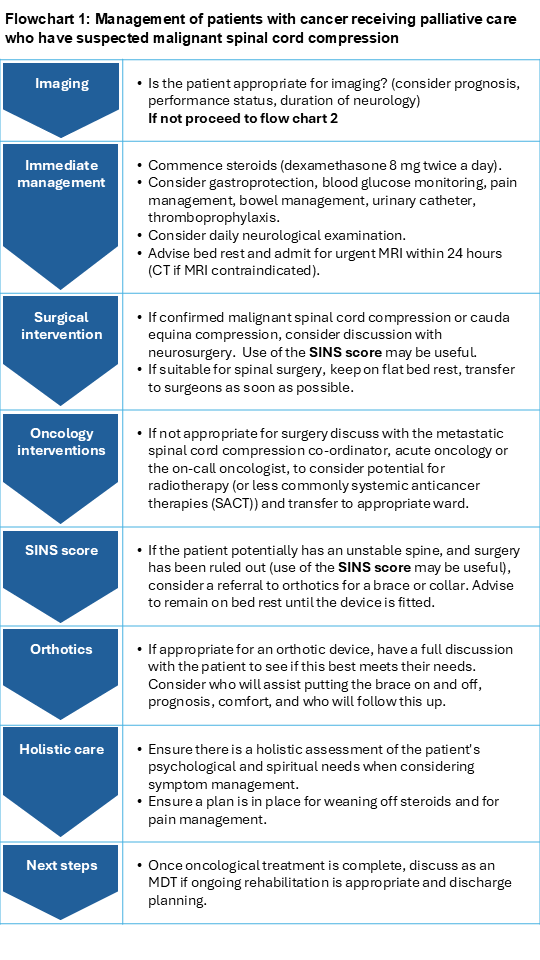
Once the MRI (or CT) report is available consider assessing risk of instability using a validated tool, such as the Spinal Instability Score (SINS). Online calculators such as the ones below are available to support this:
Scoring-systems-in-MSCC-SINS.pdf (oxfordmedicaleducation.com)
Spinal Instability Neoplastic Scale (SINS) Score (mdcalc.com)
SINS can guide onward management approaches, including consideration of neurosurgical intervention or a trial of orthotic braces as an adjunct to pain management approaches.
Instability should be assessed clinically following imaging. Consider neurosurgical discussion if the SINS score is 7 or greater.
If the SINS score suggests a high risk of instability, but surgery is not felt to be appropriate:
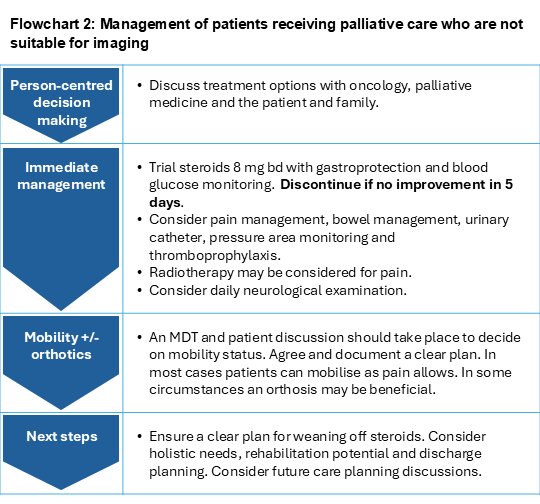
1. Use a shared decision-making approach to discuss mobility, considering the risks and benefits. Acknowledge the risk of worsening pain or paralysis with movement versus the risks of ongoing bed rest. Even if immobilised, progressive pain and neurological symptoms may occur as a result of disease progression. Individualised conversations should be clearly documented.
2. If opting to mobilise, the patient should only mobilise within the limits of their pain.
3. Orthotic supports may be a helpful adjunct in treating pain and may reduce the risk of paralysis in the short term, but this cannot be guaranteed.
2. Possible neurosurgical intervention
A person-centred multidisciplinary approach should be taken when considering if discussion with neurosurgery is appropriate.
Where appropriate, refer urgently to on-call neurosurgeon for discussion, following local protocols.
3. Possible oncological interventions
Liaise urgently with the local cancer centre (via malignant spinal cord co-ordinator where available) according to local protocols.
They may advise on urgent transfer for treatment such as radiotherapy.
4. Ongoing management
- Ensure adequate pain relief. Pain may be bony, neuropathic or mixed. Identifying the pain type may help guide the choice of analgesia. Consider bisphosphonates or denosumab. Please see the Pain guidelines for further information.
- Monitor bowels. Constipation is common and a bowel regimen may be required.
- Assess and monitor skin and pressure areas with interventions as required.
- Give opportunities to the person and their family or carers to discuss issues such as what their diagnosis means, and risks and benefits of treatment options.
- Carry out a holistic needs assessment.
- Provide advice on accessing support with psychological, emotional, spiritual and financial needs.
- Offer opportunities to discuss future care planning.
- Develop a personalised care plan with the person, taking advice from the multidisciplinary team (MDT) and other relevant clinicians.
- Offer support and rehabilitation based on ongoing review of the management plan and holistic needs.
- Start planning for discharge and ongoing care on admission to hospital.
- Offer supportive care to prevent and manage complications.
Consider referral to Specialist Palliative Care Services.


 Scottish Palliative Care Guidelines