Molluscum Contagiosum

Centre for Sustainable Delivery logo with the word Dermatology added at the base of the Logo
Warning

Patient Presentation

Molluscum Contagiosum is a common DNA pox virus infection of the skin.  Most infections resolve spontaneously within 12 –24 months. 


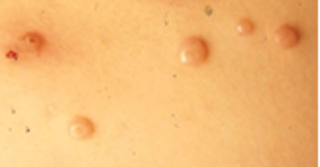
  • Flesh coloured or pink papules with umbilicated centreNatural progression arrow

Flesh coloured or pink papules with umbilicated centre image


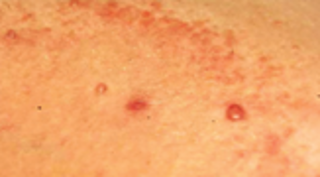
  • Eczema around molluscum contagiosum 

Eczema around molluscum contagiosum image


  • Resolving molluscum contagiosum 

Resolving molluscum contagiosum image


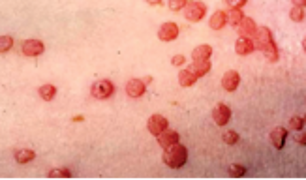
  • Extensive molluscum in immunosuppressed

Extensive molluscum in immunosuppressed image


Not all treatment options may be listed in this guidance. Please refer to local formulary for a complete list.

Treatment/therapy

GP Management 

In the majority of cases no treatment is required as spontaneous resolution occurs 

  • A number of topical treatments can be considered but evidence for efficacy is limited:
    • Podophyllotoxin 0.5% (for anogenital disease)
    • Imiquimod 5%
    • Hydrogen peroxide 1% cream
    • Salicylic acid preparations
    • Potassium hydroxide (over the counter Molludab, Mollutrex)
  • Cryotherapy (not usually considered under age 6) 
  • Topical antiseptic may help to reduce superadded bacterial infection 
  • Curettage with use of topical anaesthetic cream: send specimen for histopathology  
  • Eczema around molluscum: treat with emollients or mild topical steroid 


Therapeutic tips: 

  • Advise avoid sharing towels, sponges and clothes. 
  • Anogenital involvement 
    • Adults/sexually active young people: consider referral of patient to genitourinary medicine for infection screening if widespread anogenital involvement.  Advice about barrier methods of contraception. 
    • Children (under 16): anogenital involvement common.  Consider referral to child protection if there are other reasons for concern 
  • Do not use salicylic acid on face. 

Referral management

Dermatology Referral 

Criteria for referral 

  • Diagnostic uncertainty 
  • Extensive, painful, inflamed lesions 
  • Immunosuppressed patients 

Patient information resources

  • NHS24 Tel: 08454 242424 

Editorial Information

Last reviewed: 01/06/2025

Next review date: 01/04/2028

Author(s): Adapted from Dermatology Patient Pathways.

Co-Author(s): Dermatology Specialty Delivery Group, Centre for Sustainable Delivery.