Photosensitivity

Centre for Sustainable Delivery logo with the word Dermatology added at the base of the Logo
Warning

Skin light sensitivity, also known as photosensitivity, refers to an adverse reaction that occurs when an individual is exposed to light. This condition can be classified into several categories based on its underlying cause, including immunological factors, drug or chemical exposure, genetic predisposition, or the exacerbation of pre-existing skin disorders. Symptoms of photosensitivity can range from mild to severe and it will typically present as either an easy or exaggerated sunburn-like tendency or as a rash, potentially causing varying levels of discomfort and disruption to daily life. Early diagnosis and intervention are essential for improving patient understanding of photosensitivity conditions and enabling the implementation of appropriate prevention and treatments.

If you suspect a patient may be showing a heightened sensitivity to light, they can be referred to the Scottish Photobiology Service. The Scottish Photobiology Service is the only service in Scotland that carries out investigations in patients who are suspected to have light sensitivity. It is a specialist service and can only be undertaken in Dundee, because of the need for skilled staff and equipment. All light testing is therefore carried out in the Photobiology Unit, Level 8, Ninewells Hospital, Dundee.

Not all treatment options may be listed in this guidance. Please refer to local formulary for a complete list.

Treatment/therapy

Mild

The most common type of photosensitivity in Scotland is polymorphic light eruption (PLE), which affects around 20% of the population and is often confused with “prickly heat”. Milder cases of PLE light sensitivity often present an itchy, raised lumpy rash, sometimes with watery blisters, which appear on sun-exposed areas after sun exposure during spring/summer in the UK or when abroad. This often disappears after 2-7 days and although potentially irritating, does not impact on patients’ lives significantly. PLE or similar mild reactions to light can be managed in Primary Care by doing the following:

  • Advice given to the patient on appropriate photo(sun)protection such as sitting in the shade and using clothing, hats, and high SPF 50+ sunscreen, and by taking a steroid cream on holidays to use on the rash if it occurs. There are links available within patient resources that have more detail on the type of clothing and sunscreens available that would be appropriate for patients.
  • Sometimes people with mild PLE can also desensitise/harden themselves by exposing themselves cautiously to very low levels of daylight exposure on a regular basis, starting in springtime.
  • Advise the patient to avoid being outdoors during peak UV levels, for example between 11am-3pm.
  • Creams that can be prescribed include a steroid cream: such as 1% Hydrocortisone, Eumovate or Betnovate cream to use on the rash for a few days. Only 1% Hydrocortisone cream or ointment (or sometimes Clobetasone butyrate 0.05% cream or ointment) should be used on the face, and only for a few days. Tacrolimus ointment could be used to help prevent the rash.


Moderate

Some people experience more troublesome symptoms, such as the following: disruption to their day-to-day life by having to seek shade often, experiencing skin symptoms all year round, acute pain on sun/light exposure, experiencing symptoms even through clothing or through window glass. For these patients, a prompt and accurate diagnosis is required, and referral to the Scottish Photobiology Service is advised. Depending on the diagnosis made, management can include:

  • Reducing exposure to light
    • Seeking shade and avoiding reflective surfaces
    • Wearing protective clothes
    • Keeping away from windows or applying a special type of UV filter film
    • Lighting – LED lighting can be more appropriate
    • Use of high SPF sunscreens – some available on prescription
  • Preventing symptoms and managing symptoms
    • Not avoiding being outdoors completely – as sometimes hardening/desensitisation is possible
    • Plan ahead
    • Make small changes to daily routine
    • Preventative use of locally applied corticosteroids
    • A potent steroid cream or ointment each morning for 5 days can help to prevent polymorphic light eruption. This can be useful when going on holiday
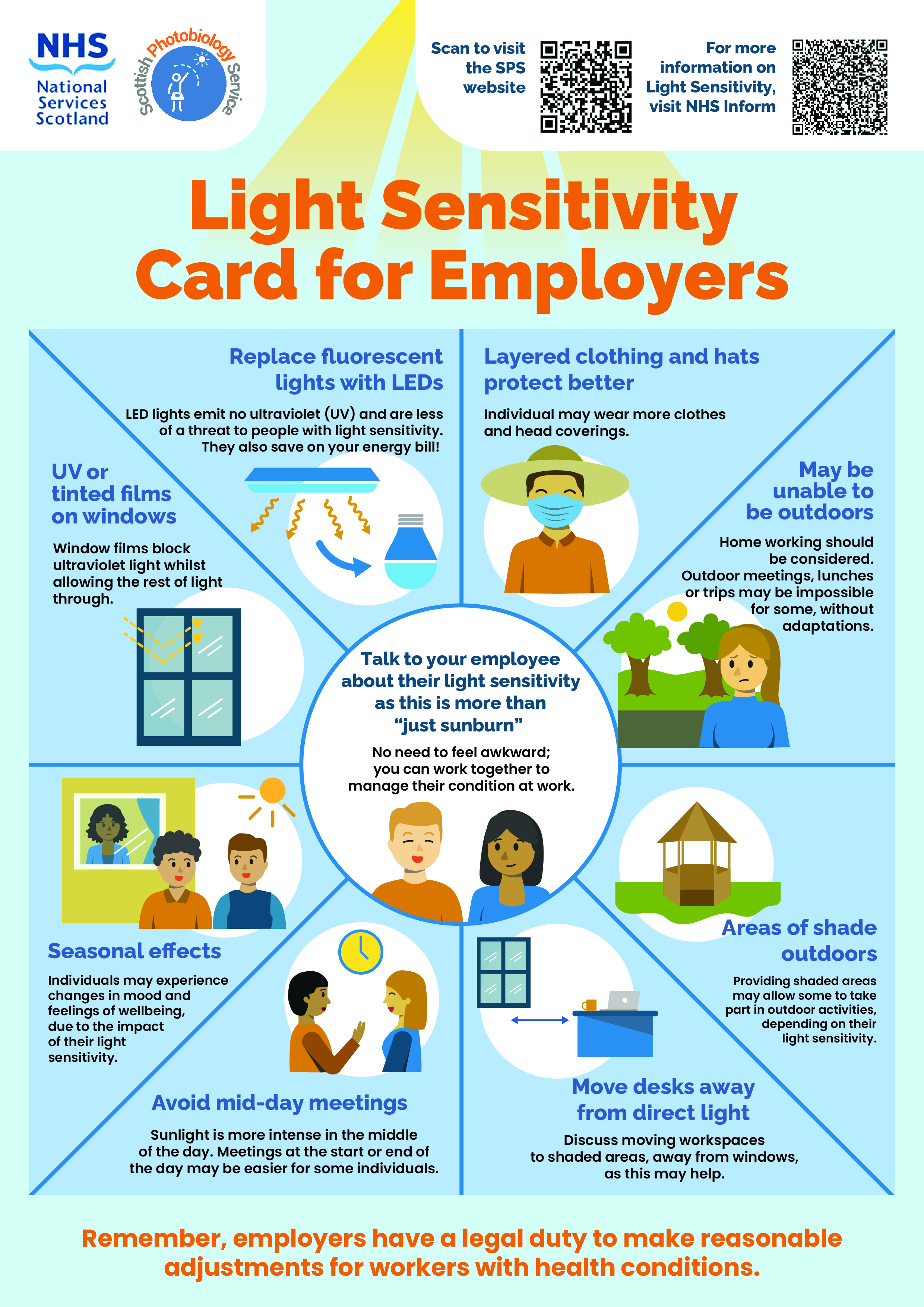
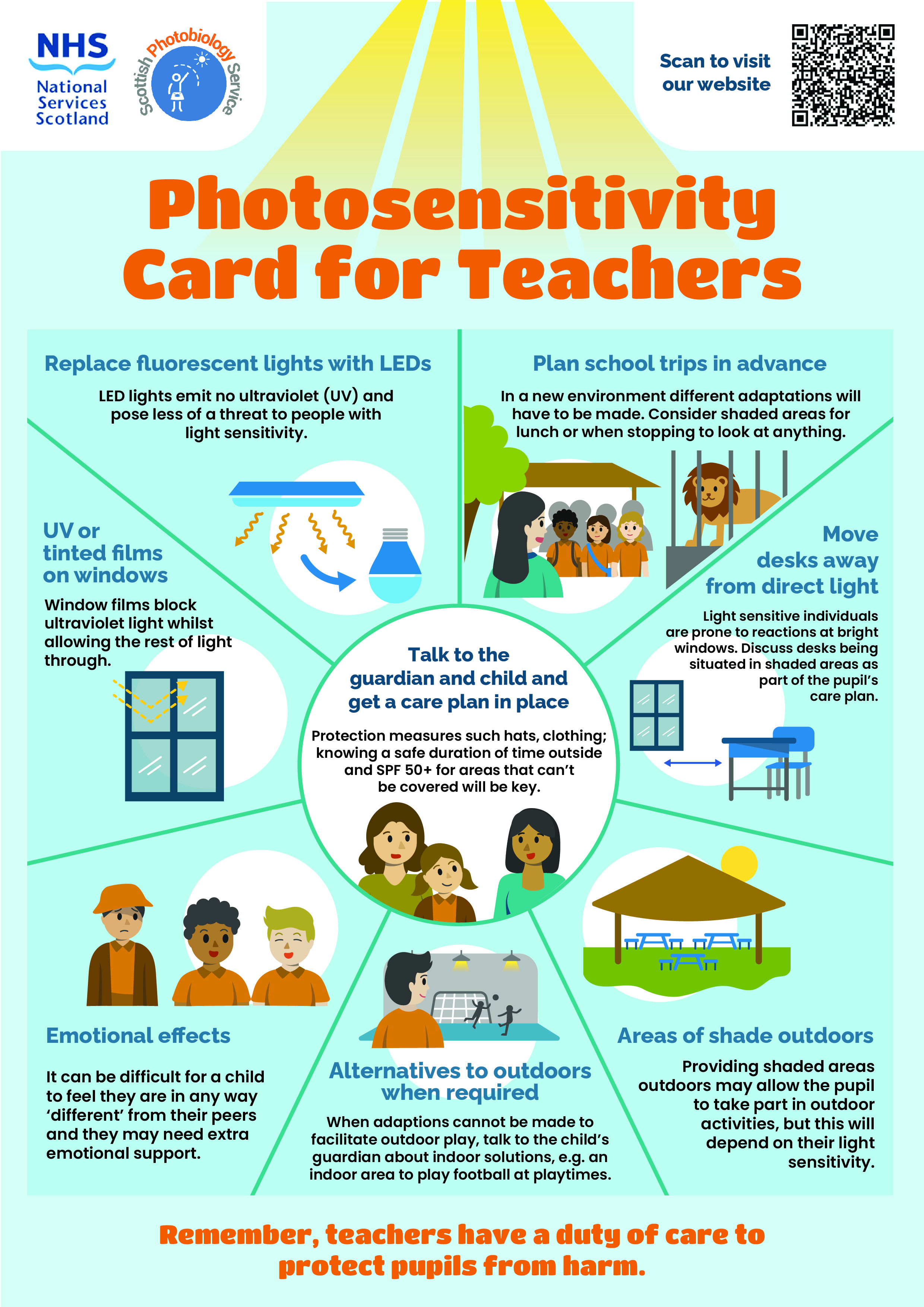
  • Places of work and school
    • Use filters or blinds on windows and consider where the person will be sitting
    • Allow home working or to stay in one place during working day
    • Replacing fluorescent lights with LEDs


Severe

  • For more severe photosensitivity, other treatments such as immunosuppressing medications, may be needed, but this would be with specialist input and monitoring.
  • Any person who is avoiding sun exposure should also be aware that they may become deficient in vitamin D, so taking vitamin D supplements and making sure your diet contains vitamin D, such as with oily fish, is advisable.
 

Referral management

Mild

Manage within primary care using the methods listed above.


Moderate

Some management from Primary care as listed above. Referral to local Dermatology, which can subsequently be escalated to Photobiology if that is considered necessary.


Severe

Patients showing clear symptoms of suspected light sensitivity can be referred to the Photobiology Unit.

Photo diagnostic service:

The Scottish Photobiology Service accepts referrals from any dermatologist in Scotland. Please send a referral letter to Scottish Photobiology Service, Photobiology Unit, Ninewells Hospital and Medical School, Dundee, DD1 9SY. The Unit will also consider referrals from outside of Scotland, although there may be an associated cost. Please contact Professor Ibbotson at the above address.

Referral criteria:

  • Suspected or confirmed photosensitivity
  • Diagnosis is unclear
  • Advice is required regarding management
  • Needing to exclude photosensitivity

Cutaneous Porphyria’s:

The Scottish Cutaneous Porphyria Service (SCPS) is part of the Scottish Photobiology Service and offers a diagnostic and monitoring service for all types of cutaneous porphyria in Scotland.

Referrals should usually be made to local Dermatology which can then be escalated to the SCPS as send away tests via local Blood Sciences/Biochemistry. Direct referrals from primary care to SCPS can be made alongside a Dermatology referral in cases where there is a strong suspicion of cutaneous porphyria.

All requests for porphyrin testing should be made using the referral form available on the SCPS website. Specimen requirements, including advice on light protection, minimum samples volumes and transportation are also available on the SCPS website: www.scps.scot.nhs.uk.


Clinical tips

Things to look out for:

  • Rash, blisters or scarring on light exposed sites (e.g. face, neck, ears, back of hands and outer forearms).
  • No rash on naturally shadowed area (e.g. under chin, upper eyelids, behind ears, cut-of line with clothing/footwear)
  • Easy and/or exaggerated sunburning or abnormal freckling in a child
  • Pain (even without any rash) / immediate symptoms following exposure to light
  • Skin pain ± rash can occur with light exposure all year, through clothes, through windows and with indoor lights
  • Some drugs and supplements (e.g. doxycycline, thiazides, quinine and no-steroidal anti-inflammatories and St John’s Wort) can cause light sensitivity.


Clinical resources


Patient information resources

  • National Services Scotland (NSS) and Scottish Photobiology Service

Light sensitivity card for employers


Photosensitivity card for teachers


  • Scottish Photobiology Unit

What to expect when visiting the photobiology unit

Editorial Information

Last reviewed: 01/03/2026

Next review date: 01/03/2029

Author(s): Scottish Photobiology Service.