Optimal referral is about ensuring patients are placed on the right cancer pathway at the earliest opportunity. Consistent use of the Scottish Referral Guidelines (SRGs) for Suspected Cancer and decision-support tools improves equity of access, speeds up diagnosis, and avoids unnecessary delays. This element underpins the principle of “right patient, right pathway, and right time. 


Case study - NHS Tayside - virtual vetting of bowel screening colonoscopy referrals

1. What was the issue/problem identified?

Following COVID-19, NHS Tayside experienced a staffing crisis within the Bowel Screening Team. The existing system of telephone pre-assessment for every patient with a positive screening test became unsustainable, leading to delays in access to colonoscopy. A new model was required to ensure patients could move quickly and safely to diagnostic testing. 

2. What did you do?

To address this, NHS Tayside introduced a virtual vetting model, adapted from the symptomatic colonoscopy service. Under this approach, clinicians reviewed each patient’s electronic records, including comorbidities, medications, and mobility, before deciding on the appropriate pathway. The majority of patients were sent directly to colonoscopy, while only those with identified risks required further pre-assessment. To embed the new process, the team also developed a visual one-page summary to support staff training and provide an accessible reference for the pathway changes. 

3. What was the outcome?

The introduction of virtual vetting reduced waiting times for colonoscopy following a positive bowel screening test and made more efficient use of clinical time by reserving pre-assessment for those patients who genuinely required it. Patient flow improved significantly, and the quicker access to testing helped to reduce anxiety associated with delays. The visual summary reinforced consistency of practice and gave staff greater confidence in applying the new model.  
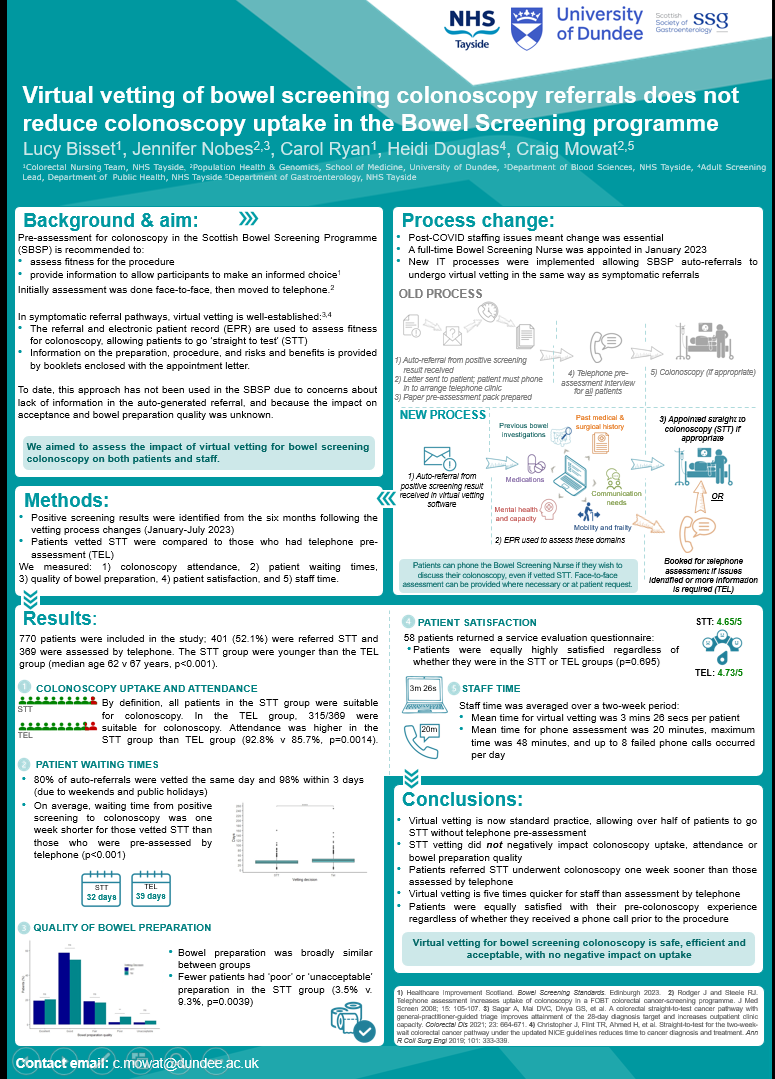
NHS Tayside infographic
click to enlarge

Contact

NHS Tayside Cancer Services — enquiries.tayside@nhs.scot


Guidance

A comprehensive review of the Scottish Referral Guidelines (SRGs) for Suspected Cancer has now been completed, with the updated guidance published on 6 August 2025. The SRGs are a key resource for healthcare professionals, helping to ensure patients with symptoms suspicious of cancer are identified and referred quickly, while supporting clinicians to recognise when alternative care pathways may be more appropriate. This update reflects over a year of extensive engagement, drawing on more than 120 pieces of evidence and 230 contributions from clinicians, networks, and stakeholders across NHS Scotland. To support implementation, a suite of educational and awareness resources has also been developed. 

  • The updated SRGs provide clear, evidence-based recommendations to guide clinical decision-making. They are the foundation for consistent, safe, and equitable cancer referral practices across Scotland 


  • The qFIT Consensus 2024 sets out the national position on the use of quantitative faecal immunochemical testing in assessing patients with possible colorectal cancer symptoms. It provides clear guidance to support confident, evidence-based use of qFIT across primary and secondary care. 


Resource and key links

The resources below support primary care professionals in recognising potential cancer symptoms and making timely, confident referrals. GatewayC is an NHS education platform used across the UK, providing free, evidence-based online learning to support earlier cancer detection and improved care for people affected by cancer. It offers interactive courses, webinars, and videos aligned with the Scottish Referral Guidelines, helping referrers apply best practice in everyday consultations.  

In addition, the Cancer Research UK Scottish Cancer Referral Guidelines Infographic provides a clear and visual summary of key symptoms and referral pathways, offering an accessible, quick-reference tool to support decision-making.