

 Framework for Effective Cancer Management (FECM)

1. What was the issue/problem identified?
Weekly reports were being used to monitor key performance indicators and metrics to identify challenges linked to cancer tracking and pathway compliance. This helped highlight barriers to effective Dynamic Tracking and Escalation processes.
NHS Lanarkshire was experiencing an increased number of patients within the diagnostic backlog, alongside a rising volume of patients across multiple tumour groups. This placed pressure on the ability to track patients effectively and escalate in a timely way. A review of diagnostic escalations also highlighted challenges in how escalations were responded to, and in the processes used to manage them.
Recognised challenges and barriers:
- Tracking backlog, leading to delayed escalations, lack of real-time tracking, and subsequent missed opportunities.
- Diagnostic capacity constraints and issues with stratification of patient booking.
- Lack of understanding of breach analysis among service teams outside of Cancer Services who could influence change and support mitigations.
2. What did you do?
To address these issues, NHS Lanarkshire focused first on reducing the diagnostic backlog. Following a Tracker review, it was identified that a reorganisation of the team was required. This allowed for renewed focus on patient pathways from day of referral, and improved collaboration with the clinical & operational teams. Dedicated resources were allocated to identify cases that were purely tracking delays, which allowed the team to reduce the backlog by 72% and create space to review the escalation process itself.
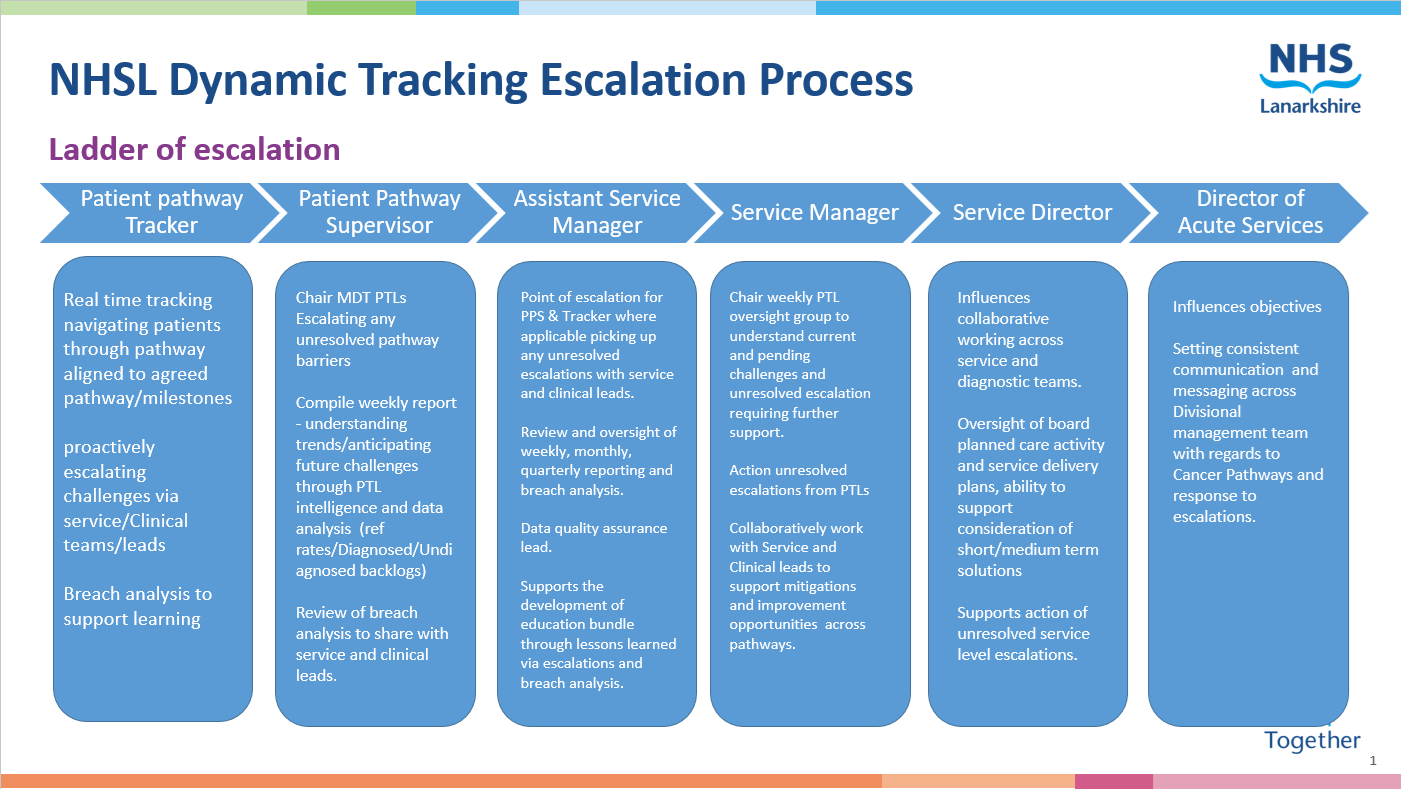
The ladder of escalation was revised, supported by the introduction of a weekly PTL (Patient Tracking List) oversight group chaired by the Service Manager/Assistant Service Manager to progress unresolved escalations at a service level or beyond. A single point of contact model was implemented in diagnostics, with Patient Pathway Coordinators in Radiology, ensuring clear ownership of escalations. Standardised pathways were developed for each tumour group and verified by clinical and management teams. These described the full clinical and operational steps in the pathway, alongside daily, weekly, and monthly responsibilities for the tracking team. This is an evolving process requiring regular review and update according to pathway development.
Weekly MDT PTL meetings were introduced to strengthen joint working, with diagnostic, theatre capacity and treatment pathways actively prioritised. Barriers to cancer waiting times were also escalated through the Board’s Planned Care groups, helping create collective ownership and enabling future service planning. Finally, the use of timely breach analysis at both individual and tumour-group level was embedded, with practices aligned closely to the Scottish Government’s Framework for Effective Cancer Management.
3. What was the outcome?
These actions delivered improvement. Real-time tracking enabled meaningful escalation, helping to reduce delays, shifting practice from reactive to proactive. Data quality improved through consistent use of the National Cancer Waiting Times Data & Definitions Manual, and there was a sustained reduction in the backlog of patients, including those waiting more than 100 days. Escalation processes became clearer and more reliable, improving communication and collaboration between clinical and service teams. Diagnostic booking was standardised and aligned to dynamic tracking principles, ensuring USC scans were prioritised appropriately, enabling a 48-hour turnaround target for radiological diagnostic bookings. Breach analysis also became more collaborative, with timely information-sharing and shared accountability for pathway optimisation through revised governance reporting structure.
Overall, NHS Lanarkshire achieved a sustained improvement in cancer performance, with stronger processes, clearer ownership, and more effective escalation across the patients’ pathway.
Contact
Kerry Paterson, Service Manager- Cancer, Haematology, Breast & Plastics Kerry.paterson@lanarkshire.scot.nhs.uk