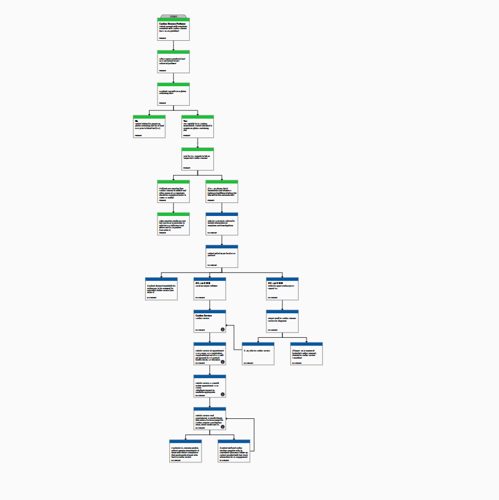
Guidance for Primary Care
Presenting symptoms include:
- Severe diarrhoea, excessive wind and/or constipation longer than 4 weeks duration.
- Persistent or unexplained gastrointestinal symptoms, such as nausea and vomiting longer than 4 weeks duration.
- Recurrent abdominal pain, cramping or bloating.
- Iron, vitamin B12 or folic acid deficiency.
Symptoms meriting consideration of the diagnosis are detailed in the ‘References and Further Resources’ on pg. 5.
Ideally, a set of standard baseline bloods should be performed on the initial positive blood sample if the patient is found to have positive coeliac serology eg. to consider iron studies, Vitamin B12 and folate, Vitamin D, urea and electrolytes, creatinine, calcium, phosphate and magnesium, LFTs and TFTs. This might allow clinicians to address deficiencies even before an endoscopy and should ideally accompany the referral to the coeliac service. Note – in some health boards the laboratory will run these bloods in any patient with positive coeliac serology and in these regions the bloods do not need to be specifically requested.
Patients should remain on a gluten containing diet during investigations, including endoscopy if planned, to avoid the risk of false negative results.
Notes for Endoscopists
Scottish Government guidelines suggest patients requiring endoscopy should have their upper endoscopy within 6 weeks and is also in accordance with BSG guidelines but we acknowledge there are challenges with this timescale. Services should consider dedicated coeliac service lists to address the needs of this patient group.
Best practice suggests that when coeliac disease is suspected, even if the macroscopic appearances are normal, both D1 and D2 biopsies should be taken and should be single bites. D1 and D2 biopsies should be placed in separate pots. A minimum of 4 from D2 and 2 from D1.
If a patient has not had a coeliac serology test within 1 month of the upper endoscopy, then best practice suggests this should be repeated on the day of the endoscopy to allow optimal serology-histology correlation especially for patients who may have had a long wait for endoscopy.


 Gastroenterology