

 Gastroenterology

Gastro-oeosphageal reflux disease results in a retrosternal burning pain. It can also be associated with upper abdominal pain and an acid taste in the mouth. It can be worse both with eating and on lying flat.
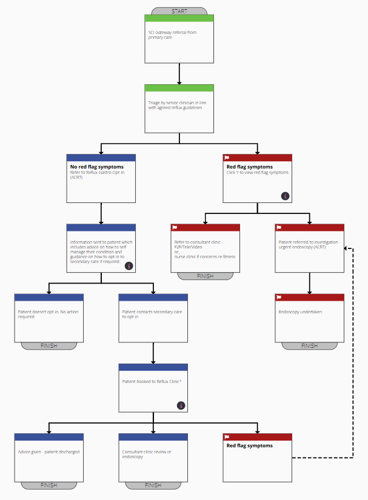
Reflux is a common long term condition that results in a high number of referrals to the Gastroenterology Service. Traditionally patients are either seen in Gastroenterology clinics as a new patient or referred directly for endoscopy.
The detection rate from these investigations for patients with reflux who don’t present with ‘red flag’ Urgent Suspicion of Cancer (USoC) warning symptoms is very low, as highlighted in the recent report from the British Society of Gastroenterology (BSG): Diagnostic yield from symptomatic gastroscopy in the UK: British Society of Gastroenterology analysis using data from the National Endoscopy Database | Gut (bmj.com).) and is below the threshold for USoC referrals.
This pathway aims to help patients self-manage their condition and highlight to primary care the more complex cases that should be referred to secondary care for investigation.
It also provides an opt-in mechanism so that patients who continue to have problems can still access secondary care services through Reflux clinics.


 @NHSScotCfSD
 Centre for Sustainable Delivery
 Scan the code to visit the CfSD website