Urticaria Not Associated with Anaphylaxis, Management in Children, Paediatrics (508)

Warning

Background

Urticaria is a common presentation to the Emergency Department as it is striking in appearance causing alarm to parents. Urticaria is thought to affect around 20% of the population at some point in their life.

Urticaria refers to itchy erythematous skin lesions, which may be raised (wheals) with flat/macular erythematous edges (flares). The wheal may be white in the centre. Angioedema describes swelling, usually but not always, in combination with urticaria elsewhere. Urticaria is usually immune mediated with a number of recognised triggers. Type 1 (IgE mediated) allergy can present with urticaria but is short lived (hours) and if food allergy is usually associated with other additional symptoms, such as swelling, vomiting, breathing difficulty, and rarely, anaphylaxis.

Anaphylaxis is a medical emergency and requires immediate treatment.

Symptoms & Signs of Anaphylaxis

  • Facial/ mouth swelling 
  • Difficulty breathing
  • Difficulty speaking or swallowing
  • Feeling of impending doom 
  • Hypotension
  • Abdominal pain and vomiting 
  • Collapse and unconsciousness 

Assessment

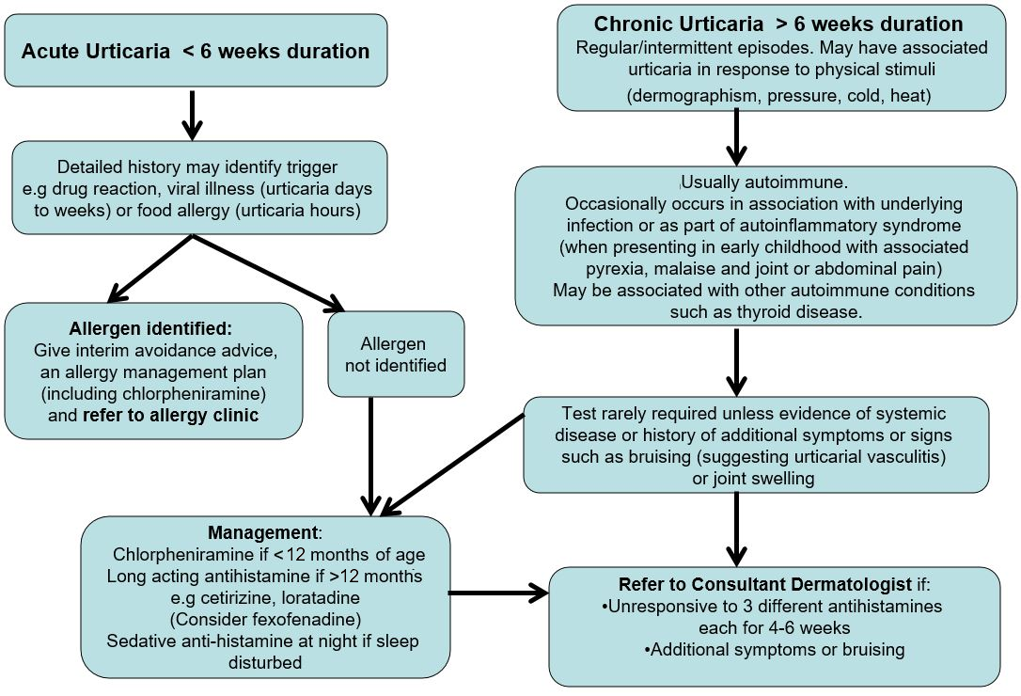
Urticaria can be defined as either acute, lasting less than 6 weeks in duration, or chronic, either lasting longer than 6 weeks or with regular recurrent episodes. Chronic urticaria may be associated with physical stimuli (e.g. dermographism, cold, heat, pressure) and often has an autoimmune component. A family history of thyroid disease and detailed history to attempt to identify a trigger, the duration of symptoms, the presence of any facial or mouth swelling, wheezing or difficulty breathing is important.

Triggers for urticaria can include viral illnesses, allergens and drugs (e.g. penicillin and NSAIDS). In many cases, the trigger is unclear.

Urticaria due to IgE mediated allergy typically occurs within minutes of exposure to the allergen (maximum 1-2 hours) and lasts for a short period (minutes to a few hours).

Urticaria due to viral illness or a drug reaction can last for several hours, days or sometimes weeks and can come and go during that period.

Further investigations are not usually required unless there is evidence of systemic disease or additional symptoms such as bruising, which could suggest urticarial vasculitis. If this is suspected, the following investigations should be done in the ED - FBC, ANA, C3 and C4 and TFT

Treatment

  • If a specific allergen is suspected, the child should be given antihistamine and assessed to ensure they are not developing an anaphylactic reaction. Subsequent avoidance of the potential allergen should be advised. An allergy management plan and antihistamine should be given at discharge and the child referred to an allergy clinic. If the history and presentation is diagnostic of a food allergy, then refer to a dietician.
  • If no specific trigger is identified, management consists of an antihistamine.
    • If the child is younger than 12 months chlorphenamine should be given.
    • If the child is older than 12 months, a longer acting antihistamine should be used (first line long acting antihistamine is cetirizine).

When to Refer to Dermatology Clinic

Patients should be referred if urticaria persists for longer than 3 months and is unresponsive to 3 successive trials of a long acting antihistamine, each trialled for 4-6 weeks. Children with additional symptoms such as bruising or joint swelling should also be referred to dermatology, as these symptoms may be suggestive of systemic disease. The ED discharge summary can be used to advise the GP on the criteria for referral to a Dermatology Clinic.

Cetirizine Dosage 

Age

Cetirizine Dose

1-2 yrs

250micrograms/kg BD

2-5 yrs

2.5mg BD

6-11 yrs

5mg BD

12-18 yrs

10mg OD


Chlorphenamine Dosage

Age

Chlorphenamine Dose

1mth-12mth

1mg BD

Flow chart of management of urticaria in A&E

Editorial Information

Last reviewed: 05/05/2026

Next review date: 31/05/2029

Author(s): Dr Stacey Wightman (Supervisor - Dr Scott Hendry) – Paediatric Emergency Department.

Version: 3

Co-Author(s): Dr Paula Beattie - Dermatology, Dr Rosie Haugh - Immunology and Allergy, Dr Scott Hendry - Paediatric Emergency Department.

Approved By: Paediatric Guidelines Group

Reviewer name(s): Steven Foster.

Document Id: 508