


- Cumulative pregnancy rates for Cu-IUDs with 380mm2 copper are between 0.1 and 1% after the first year of use.
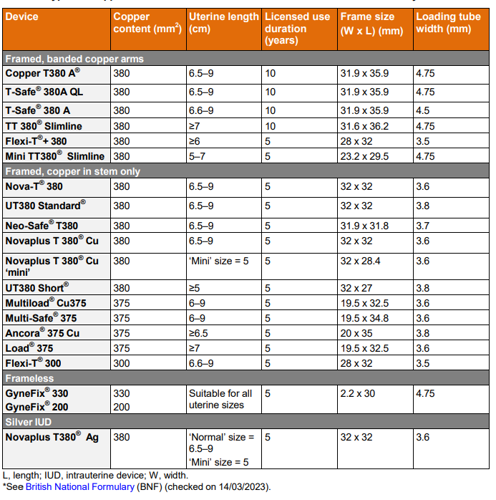
- Pregnancy rates are lowest for T-shaped devices which have a copper surface area of 380 mm2 with copper banding on both the arms and stem.
- Cu-IUDs with longest duration of use should be used as they reduce the risk of infection, perforation and expulsion associated with reinsertion (see Table 1).
- Contraceptive effectiveness is not affected by use of enzyme-inducing drugs or weight/BMI
- The intrauterine ball is not available in the UK at the time of guideline publication
If a Cu-IUD with a copper surface area ≥300 mm2 is inserted in those ≥40 years old, the CoSRH supports extended use of the device, and the Cu-IUD can be used for contraception until menopause. It can be removed 1 year after the final menstrual period if this occurs after age 50 years.
Table 1: Types of copper intrauterine devices listed in the British National Formulary
Source: FSRH Guideline (March 2023) Intrauterine Contraception. BMJ Sexual & Reproductive Health 2023; 49:Suppl 1. Published https://srh.bmj.com/content/49/Suppl_1. doi: 10.1136/bmjsrh-2023-IUC