

 SJH Emergency Medicine
- The flowcharts were last updated in 2018, and some information may have changed. For up-to-date information please see the DVLA Assessing fitness to drive: a guide for medical professionals
- The diagrams have been taken from the Edinburgh EM Fitness to Drive guidance (intranet link)
- For information on psychiatric conditions, please refer to Chapter 4 of the DVLA’s guidance document.
- Medical standards for driver licensing may vary depending on the license group, e.g., if they have a license that only covers cars and motorcycles (group 1), or lorries and buses (group 2).
- Not all conditions may appear in the summary flowchart - in these cases please consultant the full DVLA guidance. A summary of the advice from the DVLA is: "Anyone with a medical condition likely to cause a sudden disabling event at the wheel, or who is unable to control their vehicle safely for any other reason, must not drive."
Driving advice
Warning
Many conditions seen in the emergency department are associated with driving restrictions. It is standard practice to ask all patients about their driving status, and carry out an assessment of fitness to drive.
Doctors have a duty to advise patients on the impact that their medical condition has on their ability to drive safely. They must also inform patients of the legal requirement to notify the DVLA where necessary. Doctors must notify the DVLA if the patient cannot or will not do this themselves.
The advice flowcharts below pertains to the DVLA’s medical restrictions on driving, for conditions with which patients may be discharged home from the emergency department.
If driving is to be restricted, general advice would be not to drive until further investigations, or the patient has been seen by a specialist
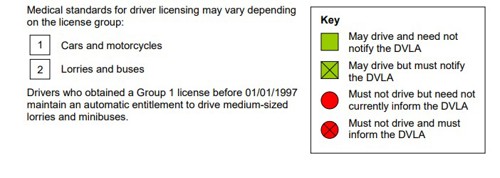
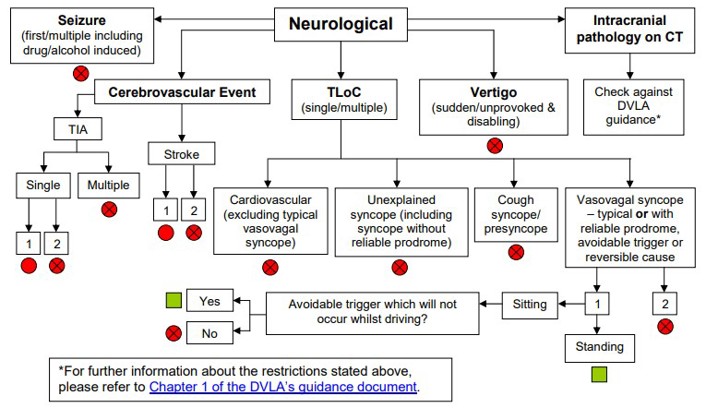
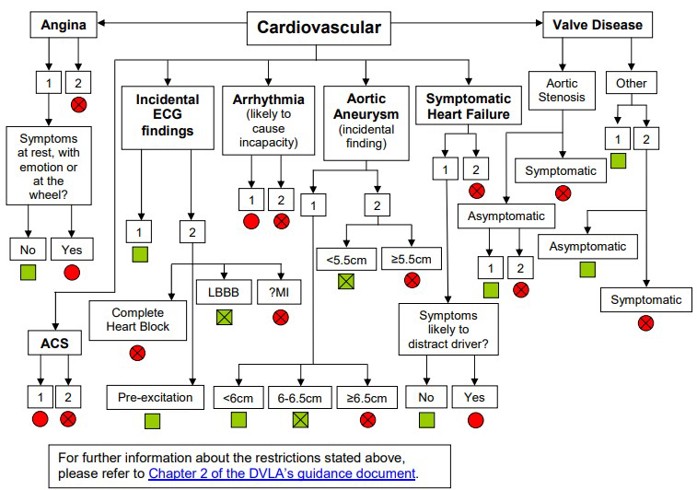
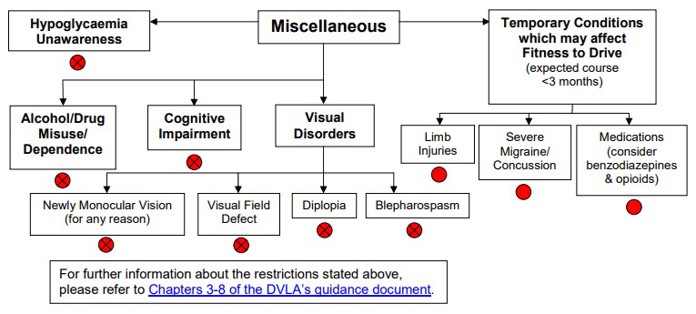
The DVLA note: "Circumstances may arise in which a person cannot or will not notify DVLA. It may be necessary for a doctor, optometrist or other healthcare professional to consider notifying DVLA under such circumstances if there is concern for road safety, which would be for both the individual and the wider public."
If such a situation occurs, please speak to a senior doctor. These conversations with a patient may be tricky, and need to be carefully documented. Furthermore any mandatory reporting to the DVLA needs to follow the DVLA guidelines as well as GMC advice on "Patients' fitness to drive and reporting concerns to the DVLA or DVA". There are legal issues around confidentiality to consider, and follow-up work (including communication with the DVLA, GP, and patient) may take many hours. The linked advice in this section will be helpful.