Warning

This protocol is for uncomplicated seizure. If the patient is in status epilepticus then please consult that pathway.

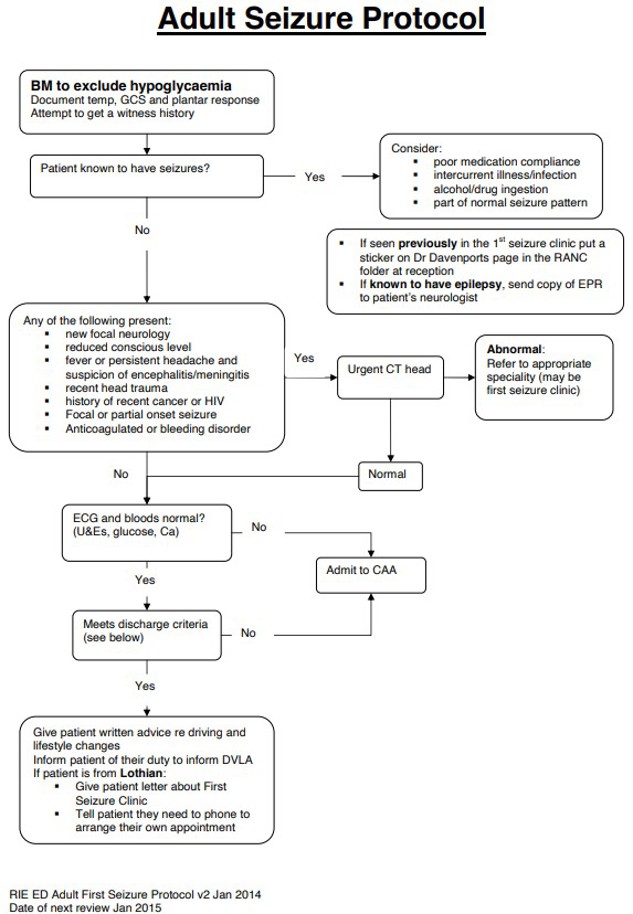
The current (2024) protocol is adapted from the 2014 RIE ED seizure protocol (alternative intranet link). There are a few caveats to using this protocol that apply for SJH ED patients, including patient disposition, that you can read in the rest of this page.

Flowchart

Uncomplicated seizure protocol


Discharge criteria

If blood, ECG and CT scan (if indicated) results are normal it is safe to allow them home if:

  • patient is fully recovered with no persisting neurological symptoms (e.g. headache) or signs (e.g.
    fever)
  • observations (including temperature) and investigations are normal
  • the patient has a responsible adult to stay with them after discharge
  • they agree to attend any arranged follow-up
  • they have been given appropriate driving advice, and this has been documented on TRAK

If the patient has had multiple seizures, they ideally should be admitted to medicine for observation

Issues to consider on assessment

  • Take a careful history and document clearly.
  • Get eye-witness account of events before, during and after the event.
  • If relevant, read the ambulance documentation.
  • Check BM, ECG and bloods.
  • Follow the flow chart to ensure safe for discharge and gauge need for CT scan.
  • Counsel patient and relative carefully regarding seizure safety.
  • Discuss driving advice and document this on TRAK

Patients with known epilepsy (or previous seizures)

  • Consider if compliant with medication
  • Check BM / bloods
    • Sometimes neurology would suggest taking a blood sample for drug levels, however results may take days to come back
  • Consider other precipitating factors
  • If single seizure, and recovered per discharge criteria as above, can discharge and copy notes to the epilepsy team they are known to
  • Give them driving cessation advice, and document this

Patients presenting with a first seizure

If a patient presents with a first seizure, even with an obvious precipitant, we should ask for first fit clinic follow-up. If they are being discharged, make sure they fulfil all the safe discharge criteria above.

As of February 2025, first seizure referrals follow the same process as seen in the RIE ED: please fill the online first seizure referral form, and give the patient the first seizure patient information leaflet.

The neurology service have advised that patients should be seen via the RIE pathway, however if the patients will not attend DCN in Edinburgh then the patient could be discussed with neurology at SJH.

Issues to discuss with patient

  • Avoid situations where another seizure would carry increased risk – climbing ladders, working
    with heavy machinery etc.
  • Shower rather than bath. If a bath then someone else should be at home, bathroom unlocked, shallow bath without taps on when patient is in it.
  • Care when cooking and preparing food. Microwaves can be safer. Position saucepan handles towards back of cooker.
  • Only go swimming with someone who would know what to do if patient had a fit.
  • They must stop driving a vehicle until seen by a specialist.

Editorial Information

Last reviewed: 10/03/2025

Next review date: 10/03/2027

Author(s): Deepankar Datta.

Reviewer name(s): Deepankar Datta.