Wound and skin care of lower limbs with cellulitis (for healthcare professionals)

Warning

What is cellulitis?

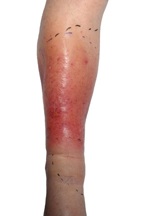
Cellulitis is an acute spreading infection of the skin and subcutaneous tissues. It can occur anywhere in the body, the lower leg is the most common site. This guide is for healthcare professionals to aid in the wound and skin care of a patient with cellulitis, not the medical management. Cellulitis typically only occurs in one leg, it is unlikely to be cellulitis if both legs are red and inflamed. The inflammation may have a border that can be clearly outlined and may have blistering or even superficial bleeding into the blisters, which if left untreated can cause ulceration.

Additional resources:

Acute cellulitis - intact skin

Acute cellulitis intact skin

  • Regular recording and site-marking to monitor position of erythema.
  • Leg calf measurement.
  • Ensure adequate analgesia to manage pain.
  • Skin care; ensure good hygiene using soap substitute and non-perfumed emollient, encouraging self-care where appropriate.
  • Encourage mobility and gentle exercise as appropriate.
  • Ensure leg elevation during periods of rest.

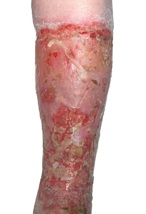
Acute cellulitis - broken skin

Acute cellulitis broken skin

  • Follow NATVNS Wound Cleansing Pathway.
  • Consider a biofilm disrupting cleansing solution.
  • If gelatinous blister/slough is loose, consider using a debridement pad/cloth to remove material as tolerated by patient.
  • Apply emollient to surrounding intact skin.
  • Refer to local Wound Formulary, apply appropriate dressing to broken skin, record on Wound Assessment and Management Chart, monitor progress closely.
  • If in hospital contact community nurse prior to discharge to hand over wound management regime and plans for review. Provide dressings as per local protocol (usually one week supply)
  • If patient normally has compression bandaging or wraps, reapply if patient can tolerate the therapy.

Post acute phase - intact and broken skin

  • Provide the patient with the information leaflet and answer any queries relating to this.
  • Skin care - ensure good hygiene using soap substitute and non-perfumed emollient encouraging self-care where appropriate.
  • Continue to monitor healing regularly, documenting progress on wound assessment chart.
  • Failure for wound to progress towards healing, consider full assessment of the lower limb.
  • This should include Doppler/ABPI assessment.
  • Depending on results of assessment, consider compression therapy (bandaging or wraps)
  • Refer to local protocols for compression therapy.

Editorial Information

Last reviewed: 01/12/2025

Next review date: 01/12/2028

Author(s): National Association of Tissue Viability Nurse Specialists Scotland.