TAM (Treatments and Medicines) NHS Highland

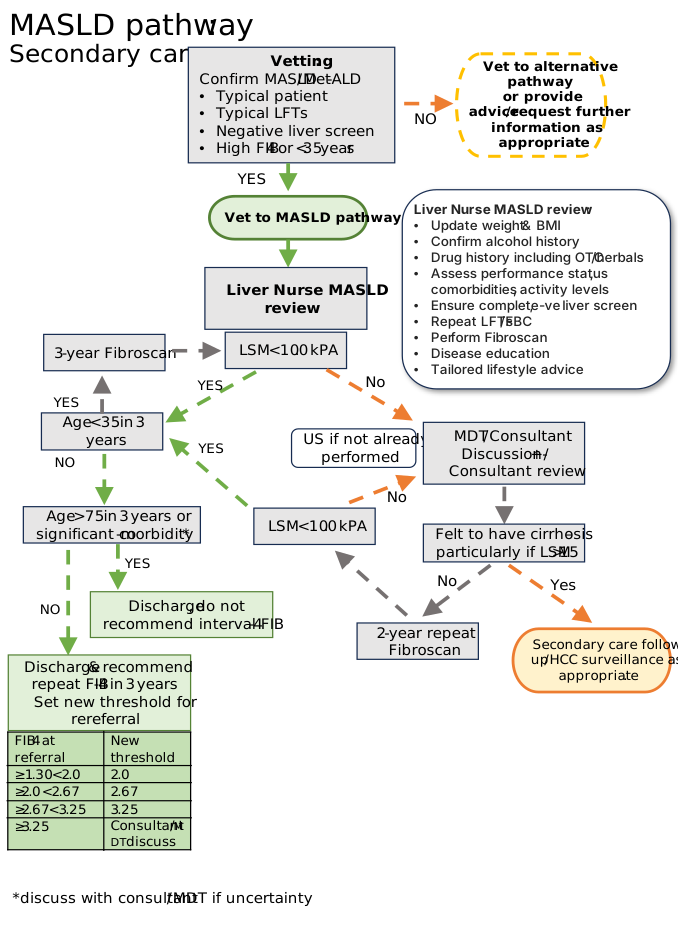
Following referral of patients likely to have MASLD/MetALD with possible significant fibrosis, the aims should be to ensure certainty of diagnosis, risk stratify, reinforce lifestyle advice and discharge or arrange follow-up as appropriate.
A liver stiffness of <10 kPa rules out compensated advanced chronic liver disease (cACLD), with levels >10kPa being suggestive of cACLD and values >15 kPA making cACLD probable.
These strata predict the risk of hepatic decompensation and hepatocellular carcinoma amongst patients with MASLD, with progression and regression on serial measurements correlating with increased and decreased risk.
Patients with LSM <10.0 can thus be safely discharged. Consider recommending a higher threshold of FIB-4 to trigger further referral.
Patients with LSM suggestive of cACLD (>10.0 and <15.0 kPa) have an increased medium-term risk, but relatively low absolute risk of event over the short term. This gives the opportunity to assess the response to lifestyle interventions over a 2-year period.
Those with a LSM >15 kPa are at increased risk of liver-related events and consideration should be given to follow up in cirrhosis clinics according to local protocols.
Taking into account patient wishes, co-morbidities and frailty, consider whether HCC surveillance is likely to be beneficial.
Those with a LSM >20 kPa or platelets <150 are at risk of clinically significant portal hypertension and should be considered for either endoscopic assessment for varices or empirical treatment with carvedilol.