Warning

Audience

  • Highland HSCP 
  • Primary & Secondary Care
  • Adults only

This guidance is for any health professional that refers into the Orthopaedic service: 

  • GP, First Contact Practitioner, Musculoskeletal Physiotherapists, Consultants

Adult hip pathway

Red flags

  • History of trauma
  • Weight Loss
  • Systemically unwell, Fever, High Pulse: Consider infection or serious pathology
  • Structural deformity: leg shortened / External rotation (fracture or avascular necrosis)

Are Red flags present? 

  • YES: Urgent phone to Orthopaedics on-call (Bleep 3000) + SCI referral
  • NO: Follow assessment pathway

Adult hip assessment pathway

Are other joints involved? YES

Polymayalgia rheumatica (PMR): 

Inflammatory arthropathy: 

  • Hip and shoulder girdle pain and stiffness
  • Age > 50
  • > 1 joint involved
  • Triple 'S' symptoms
  • Symptoms inflam back


Are other joints involved? NO

Initial Management:

  • Ideal weight/ healthy eating advice
  • Activity modifications
  • Analgesia +/- NSAIDs
Painful capsular pattern: reduced prior to Flexion / Abduction / Internal rotation Painful non-capsular pattern Meralgia paraesthesia with NO back pain

Provide: Signposting; Ideal weight advice and effect on symptoms; Education on condition and management: 

Burning / numbness lateral aspect of thigh

If no improvement: refer to MSK Physiotherapy via SCI gateway: SCI Gateway

Post physiotherapy care

No improvement with completion of Physiotherapy AND CAPSULAR PATTERN

  • Up to date (within 1 year) X-ray- AP Pelvis
  • If moderate to severe changes: refer to Orthopaedics via SCI Gateway
  • Needs up to date BMI (within 1 year)
  • Discussion with patient regarding potential surgery

No improvement with completion of Physiotherapy AND NON-CAPSULAR PATTERN

  • Refer to Orthopaedics
  • Needs up to date BMI (within 1 year)

Chronic hip pathway

Patient follows adult hip pathway

Referral to Orthopaedics for assessment by Orthopaedic Consultant

For total hip replacement

Listed for surgery

Diagnostic uncertainty
  • Patient added to RETINJOPWL
  • CSI PIL: Why am I having a hip injection? (NHS Highland intranet access required).
  • Hip CSI x 1 then review with Consultant at 8 to 12 weeks
Not yet for total hip replacement
  • Refer to: Physiotherapy (Escape pain programme)
  • Occupational therapy (home modifications, as required)
  • Dietician (diet management, as appropriate) 
Not medically fit for surgical procedure

Refer to:
Physiotherapy, 
Occupational therapy,
Dietician, as above

Patient added to RETINJOPWL 

CSI PIL: Why am I having a hip injection? (NHS Highland intranet access required).

If effective, max x 4

Discussion with patient regarding long-term management

Assess for hip denervation according to Criteria for hip denervation: (NHS Highland intranet access required)

  • YES: Refer to Chronic Pain Team via letter directly for hip denervation
    PIL: Hip radiofrequency denervation (NHS Highland intranet access required)  
  • NO: Review with Consultant and update treatment plan. 

Adult knee pathway

Red flags 

  • Infection 
  • Sarcoma 
  • Skeletal trauma / fracture / dislocation 

Are red flags present? 

  • YES: Urgent phone to Orthopaedics on-call (Bleep 3000) + SCI referral
  • NO: Follow assessment pathway

Adult knee assessment pathway

Gradual onset

Known mechanism of injury 

  • Osteoarthritis 
  • Anterior knee pain 
  • Degenerative meniscus 

Patellofemoral joint instability 

Ligament/meniscus injury

Initial management: 

  • Signposting see links under "Known mechanism of injury" 
  • Ideal weight advice 
  • Education regarding condition and management. https://www.arthritis-uk.org/

1st time

If no improvement after 3 months or ongoing instability: 

No instability/ locking 

If no improvement after 3 months: 

No improvement:

If no improvement: 

Recurrent

  • Orthopaedic referral via SCI gateway
  • Continue with MSK rehabilitation

Instability / locking is present

  • Orthopaedic referral via SCI gateway
  • Continue with MSK rehabilitation

Referral to Orthopaedics:  

  • Up to date (within 1 year) X-ray. Weight bearing AP and Lateral of knee. If referring for anterior knee pain include skyline view.
  • Up to date BMI (within 1 year)
  • Evidence of completed course of MSK physiotherapy

Elbow pathway

Red flags 

  • Atypical mass / swelling
  • Unremitting / increasing pain 
  • Systemically unwell 
  • Night pain 
  • Malaise 
  • Weight loss

Are Red flags present? 

  • YES: Urgent phone to Orthopaedics on-call (Bleep 3000) + SCI referral
  • NO: Follow assessment pathway

Elbow assessment pathway 

Tendinopathy 

Intra-articular 

Peri-articular 

Nerve involvement

  • Lateral epicondylitis 
  • Medial epicondylitis 
  • Bicipital tendinopathy 
  • Osteoarthritis 
  • Osteochondritis dessicans 
  • Radial head instability 
  • MCL / LCL sprain/tear 
  • Olecrannon bursitis 
  • Ulna nerve 
  • Radial nerve 
  • Medial nerve

Provide: signposting self-management, advice and education via https://www.myself-management.org/

Education and activity / load management 

Progressive strengthening exercise programme, may include stretching 

PIL: Tendonitis
Exercises: Tennis elbow

Education and activity management

Arthritis UK: Exercises

Trial corticosteriod injection 

Bursitis 

Ice, compression bandage, NSAIDs 

Restore ROM, strength and function

PIL: Cubital tunnel
PIL: Radial tunnel
PIL: Medial Nerve 

If no improvement: refer onto MSK Physiotherapy via SCI gateway

Referral to Orthopaedics 

  • if referring for intra-articular condition: Provide up to date X-ray: AP and Lateral of elbow
  • if referring for tendinopathy: Provide USS results

Please note that Orthopaedics do not aspirate / excise olecranon

Hand pathway

Red flag indicators of serious pathology. If suspected On Call Orthopaedic Bleep 3000

Hand Specific:

  • Ca,
  • suspected tumour,
  • unexplained sensory or motor deficit,
  • significant trauma,
  • fracture,
  • infection

CRPS (Complex Regional Pain Syndrome) of the hand:

Rheumatoid arthritis / inflammatory 

  • Morning stiffness > 1 hr
  • Pain MCP / PIP joints
  • Raised CRP

Early Arthritis Clinic


Tingling hand / fingers 

Rule out:

  • Diabetes
  • Hypothyroidism
  • Vitamin deficiency, including B12.
  • Cervical Spine

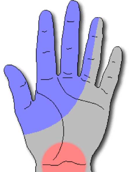
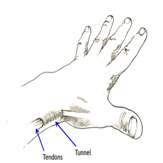
Median Nerve/Carpal Tunnel


Mild/Moderate:

Moderate/Severe:
Refer to Orthopaedics

  • Include: Duration, distribution, frequency night time wakening, tinels / phalens muscle wasting, previous treatments

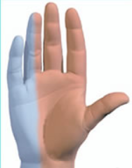
Ulnar Nerve/Cubital Tunnel

    
Mild/Moderate:

Moderate/Severe:
Refer to Orthopaedics

  • Wasting hand intrinsic muscles
  • Clawing little / ring fingers


Osteoarthritis 

  • Pain in Thumb / Finger Joints?
  • Typically base of thumb, PIP and DIP joints

Mild / Moderate:

Moderate / Severe: 
Refer to Orthopaedics

Important:
To assist with Active Referral Triage Process (ACRT), all referrals should include: Duration, acknowledgement of trial of all treatments described above and up to date X-rays

X-ray:

  • Fingers: PA / Lat
  • Thumb: AP / Lat including base


Soft tissues

Trigger digits

  • Commonly at A1 pulley
  • More common in Diabetics

Mild / Moderate:

  • Ergonomic advice
  • Splinting
  • Injection: can repeat if successful
  • BSSH PIL

Moderate / Severe:

  • Poor result with injection
  • Diabetic:

Refer to Orthopaedics

  • Include: duration, distribution, diabetic status, number of injections
Dupuytrens Disease
  • More common in Diabetics
  • Family history
  • BSSH PIL

Refer to Orthopaedics if:

  • Cannot get hand flat on table
  • Catching finger when washing face /putting hand in pocket or gloves
  • If wishes to consider surgery
  • Include: estimated level of contracture and duration.

Important:
To assist with Active Referral Triage Process (ACRT), all referrals should include:
Duration and inclusion of three photographs each with the affected digit(s) passively straightened, 1. a full palmar view and 2. lateral views (1 radial and 1 ulnar)

Ganglions

  • Typical site dorsum of wrist.
  • Can be due to osteoarthritis
  • Surgery rarely indicated as recurrence rate is high and poor satisfaction with ongoing scar tissue sensitivity.
  • BSSH PIL


Chronic wrist pain 

  • Including deQuervains
  • Atypical wrist pain

De Quervains tenosynovitis

Mild / Moderate:

  • Activity modifications, splinting, exercises, injection

Moderate / Severe:
Refer to Orthopaedics

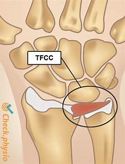
Atypical wrist pain:

  • Ulnar sided wrist pain- consider TFCC especially after FOOSH or distal radius fracture.

Mild / Moderate:

  • Activity modification, splinting, isometric and proprioception exercises

Moderate / Severe:
Refer to Orthopaedics

Neck pathway

Red flags

  • Fever, night sweats, or unexplained weight loss
  • Excruciating pain, cervical lymphadenopathy, intractable night pain, pain that is increasing, exquisite tenderness over the vertebral body, or generalised neck stiffness
  • Nausea or vomiting
  • New or severe headache
  • Photophobia or phonophobia
  • Visual loss
  • Skin erythema, wounds, or exudate

For other red flags symptoms please review:  NICE CKS: What are the signs and symptoms of cervical radiculopathy?

Are Red flags present? 

  • YES:
    • YES: Urgent phone to Orthopaedics on-call (Bleep 3000) plus SCI referral
    • ?contact MSCC
  • NO: Follow assessment pathway

Neck assessment pathway

Non-specific neck pain Nerve root radicular pain +/- radiculopathy Whiplash Acute Torticollis

Gradual or sudden onset

+/- diffuse shoulder/scapulae pain

+/- headaches

Positional asymetry, limited AROM often asymmetrical.

No objective loss of sensation or muscle strength

Non dermatomal spread

Possible tenderness in intervertebral joints/ hypertonic muscles/ tenderness.

Gradual or sudden onset

Neck pain with bilateral or unilateral shoulder pain that approximates to that of a dermatome.

Postural asymmetry

Cx AROM may be limited and pain may radiate into U/Ls with AROM.

Neuro signs- dermatomal/ myotomal / reflex changes

Neck pain, stiffness and headache post trauma.

Reduced Cx AROM

Muscle spasm +/- U/L pain / paraesthesia

May experience fatigue, dizziness, dysphagia or nausea.

May experience deafness or tinnitus

May experience memory loss

May experience TMJ pain

Psychological considerations

Sudden onset

No history of trauma

Unilateral neck / shoulder pain

Diffuse muscle spasm and tenderness

Abnormal Cx movements

Asymmetrical head position and neck

Recurrence is common

  • Consider Self Supported Management
  • Review Cx spine guidance as necessary
  • Refer onto MSK PHYSIOTHERAPY if no improvement with self management.
  • Consider yellow flags / other pathology / structures / Alternative findings / Medication history / pain control / Natural history / communication /education / patient empowerment

Most will resolve in days to 8 weeks.

1 to 2 may continue to have low-grade symptoms or recurrences for more than one year.

Can recur or become chronic

Non-specific neck pain info

Most will improve within 4 weeks.

After 4 to 6 weeks consider onward referral to ORTHOPAEDICS if persistent debilitating arm pain +/- loss of power or sensation remain unchanged/ worsening despite conservative treatment, including neurogenic analgesia

Radicular neck pain info

Recovery times may vary.

Approx 40% recover within 12 weeks.

Approx 50% recover within 1 year.

Whiplash info

Usually resolve 7 to 10 days.

Majority resolve <6 to 8 weeks

Torticollis info

No improvement

  • Consult senior colleague
  • Reflect / Review guidance & spinal guidance.
  • Discuss with spinal team.

Refer to GP:

  • If appropriate analgesics are required
  • Systemic inflammatory disease is suspected
  • A non MSK pathology is suspected as source of symptoms (ie.visceral)
  • Patient exhibits high levels of distress with the possibility of clinical levels of anxiety and depression.

Refer to Neurosurgery:

  • The patient presents with persistent debilitating arm pain with progressive neurological deficit (e.g. loss of power/sensation/altered reflexes) and they are not responding to treatment
  • OR persistent myotomal weakness is detected at any one nerve root in the absence of pain
  • OR myotomal weakness is detected at more than one spinal nerve root.
  • Referral may also be made if the patient wants a further opinion/investigation, or is unable to accept the self-management philosophy.

Refer to Chronic Pain:

  • Patients with persistent non-specific neck pain and significant yellow flags that hamper their ability to engage in an active rehabilitation process should also be discussed with a senior colleague.  Where appropriate, these patients should then be referred to the pain management team for a multidisciplinary biopsychosocial assessment.

Orthopaedic foot and ankle pathway

Red flags (foot and ankle specific)

  • Achilles tendon rupture
  • Charcot arthropathy (Diabetes): Charcot Guidelines
  • Patient systemically unwell: fever, high pulse: consider infection/ serious pathology
  • Disproportionate night pain
  • Progressive neurological decline
  • Critical Limb Ischaemia
  • DVT
  • For ankle injuries, see: Ottowa Ankle Rules

Are red flags present? 

Foot and ankle assessment pathway

Rearfoot

Midfoot Forefoot

Ankle: 

  • Lateral ankle
  • Posterior heel pain (eg Achilles tendinopathy

Refer to Physiotherapy

Dorsal midfoot pain

  • Including dorsal midfoot compression syndrome / OA

Refer to Podiatry

Refer to Orthotics if patient requires assessment for insoles / footwear

Metatarsals

  • Plantar metatarsal pain (eg neuroma, 2nd MTPJ pathology, metatarsalgia)

Refer to Orthotics if patient requires assessment for insoles / footwear

Plantar heel pain: 

  • Plantar fasciopathy
  • Bursitis
  • Fat Pad Atrophy

Refer to Podiatry

Plantar midfoot pain

  • Including posterior tibial tendon dysfunction

Refer to Podiatry

Refer to Orthotics if patient requires assessment for insoles/ footwear

First MTPJ pain

  • Hallux limitus / rigidus
  • Hallux Valgus

Refer to Podiatry

If no improvement with appropriate AHP intervention:
Refer to Orthopaedics

Orthopaedic referral

  • Request imaging at time of referral, if appropriate, (ie Ultrasound or X-ray)

Post surgery

  • Patients who require post-surgical rehabilitation will be referred to appropriate MSK AHP (likely podiatry, orthotics or physiotherapy) where appropriate. May include advice on mobilisation, gait re-education, advice on analgesics, use of therapeutic footwear or devices.
  • 3 months post surgery: If patient requires longer term intervention they should be referred to the appropriate MSK AHP and placed on the relevant pathway (see above).

Patient information 

Forms (intranet access required)

Shoulder pathway

Red flags

  • Mass / Swelling
  • Red skin / Fever / Systemically unwell
  • Trauma / Epileptic fit / Electric shock leading to loss of external rotation and abnormal shape (dislocation?)
  • Age > 50 years + history of cancer + unexplained weight loss + failure to improve after one month of conservative management

Are Red flags present? 

  • YES: URGENT phone call to on-call registrar +/- urgent SCI referral to Orthopaedics
  • NO: Follow assessment pathway

Shoulder pathway

Polymyalgia rheumatica Inflammatory arthropathy Osteoarthritis / Frozen shoulder Subacromial impingement / Acromioclavicular joint Degenerative rotator cuff (non-traumatic) Instability:
Multidirectional vs unidirectional
Follow clinical guidelines (NHS Highland intranet access required) Follow rheumatology referral guidelines (NHS Highland intranet access required)

Signpost to self management information +/- CSI, if appropriate

For instability self management information found at: https://bess.ac.uk/shoulder-instability/

No improvement within 3 months: refer routinely to MSK Physiotherapy for supervised rehabilitation +/- via SCI Gateway if appropriate

No improvement within 3 months: refer onto Orthopaedics via SCI Gateway

If clinical diagnosis of osteoarthritis: up to date X-ray (within 1 year) : AP and Lateral of shoulder needs to be completed and reported prior to referral


Low back pathway

Less than ~1% of all low back pain is due to a specific underlying pathology

Red flags (not exhaustive)

  • Cauda Equina Syndrome
  • Spinal Fracture
  • Cancer
  • Infection

Red flags symptoms include (not exhaustive)

Are Red flags Present?

Low back pain pathway

Non-specific low back pain: (~90 to 95% of all cases)

  • Consider Self Supported Management, Review
  • Refer onto MSK PHYSIOTHERAPY if no improvement with self-management.
  • Consider yellow flags/ other pathology/ structures/ Alternative findings/ Medication history/ pain control/ Natural history/ communication/ education/ patient empowerment
  • Self-limiting condition for the majority of people affected, and usually within a few weeks.
  • Can recur or become chronic
  • ~30% may continue to have low grade symptoms or recurrences for more than one year.
  • Management | LBP Back pain


Nerve root radicular pain +/- radiculopathy: (~5 to 10% of all cases)

  • Consider Self Supported Management, Review
  • Refer onto MSK PHYSIOTHERAPY if no improvement with self-management.
  • Consider yellow flags/ other pathology/ structures/ Alternative findings/ Medication history/ pain control/ Natural history/ communication/ education/ patient empowerment
  • Half of patients will spontaneously recover within 6/52
  • After 12 weeks consider onward referral to ORTHOPAEDICS if persistent debilitating leg pain +/- loss of power or sensation remain unchanged/worsening despite conservative treatment.
  • Management Sciatica (lumbar radiculopathy)


Spinal Stenosis: (~5 to 10% of all cases)

  • Usually >60years old
  • Classically the sufferer can walk a certain distance (sometimes 50m or further, eg 500m) and then they need to stop because the pain & numbness intensifies.
  • Most find that sitting down or leaning forward enables them to recover so that they can then walk again. Some also get these symptoms on standing.
  • Usually patients have no pain in the leg at rest.
  • British Association of Spine Surgeons - Spinal Stenosis
  • Consider Self Supported Management, Review
  • Refer onto MSK PHYSIOTHERAPY if no improvement with self-management.
  • Consider yellow flags/ other pathology/ structures/ Alternative findings/ Medication history/ pain control/ Natural history/ communication/ education/ patient empowerment
  • The course of the problem has some uncertainty, 1:5 will improve with time, 3:5 will stay the same, & 1:5 will worsen
  • After 12 weeks consider referral to ORTHOPAEDICS if persistent debilitating leg pain +/- loss of power or sensation worsening despite conservative treatment.
  • Spinal Stenosis: Causes, Symptoms, and Treatment | Patient


Fragility fractures

  • Older age (>50 years for women and >65 years for men)
  • Previous fragility facture
  • Long term glucocorticoids
  • History of falls
  • Family history of hip fracture Other causes of secondary OP, eg, RA & problems with malabsorption
  • Low body mass
  • Full overview: SIGN142 Osteoporosis
  • Sudden pain in Tx or Lx spine following minor trauma
  • Consider Self Supported Management, Review
  • Refer onto MSK PHYSIOTHERAPY if no improvement with self-management.
  • Consider yellow flags/ other pathology/ structures/ Alternative findings/ Medication history/ pain control/ Natural history/ communication/ education/ patient empowerment

No Improvement

  • Consult senior colleague/ Reflect/ Review guidance & Spinal Guidance
  • Discuss with spinal team.

Refer to GP:

  • If appropriate analgesics are required
  • Systemic inflammatory disease is suspected
  • A non MSK pathology is suspected as source of symptoms (ie.visceral)
  • Patient exhibits high levels of distress with the possibility of clinical levels of anxiety and depression.

Refer to Orthopaedics:

  • The patient presents with persistent debilitating leg pain with progressive neurological deficit (eg, loss of power/ sensation/ altered reflexes) and they are not responding to treatment.
  • Referral may also be made if the patient wants a further opinion/ investigation, or is unable to accept the self-management philosophy.

Refer to Chronic Pain: 

  • Patients with persistent non-specific neck/back pain and significant yellow flags that hamper their ability to engage in an active rehabilitation process should also be discussed with a senior colleague. Where appropriate, these patients should then be referred to the pain management team for a multidisciplinary biopsychosocial assessment. How you can help yourself with your pain | NHS Highland

Abbreviations

  • AVN: Avascular Necrosis
  • Ax:  Assessment
  • BMI: Body Mass Index
  • BSSH: British Society for Surgery of the Hand
  • Ca: Cancer
  • CRPS: Chronic regional pain syndrome
  • CSI: Corticosteroid Injection
  • CTS: Carpal tunnel syndrome
  • Cx: Cervical
  • DIP: Distal interphalangeal
  • DVT: Deep vein thrombosis
  • Dx: Diagnosis
  • Eg: Example
  • ER: External Rotation
  • LCL: Lateral Collateral Ligamen
  • MCL: Medial Collateral Ligament
  • MCP: Metacarpal joint
  • MSCC: Malignant spinal cord compression
  • MSK: Musculoskeletal
  • MTPJ: Metatarsal phalangeal joint
  • NSAIDS: Non-steroidal anti-inflammatory drugs
  • OA: Osteoarthritis
  • OPWL: Out patient waiting list
  • PIL: Patient information leaflet
  • PIP: Proximal interphalangeal
  • PMR: Polymyalgia rheumatica
  • Pt: Patient
  • RA: Rheumatoid arthritis
  • RV: review
  • Sh girdle: Shoulder Girdle
  • Triple S Symptoms F/Abd/IR: Flexion/ Abduction/ Internal Rotation
  • THR: Total hip replacement
  • USS: Ultrasound scan

Editorial Information

Last reviewed: 09/06/2026

Next review date: 09/06/2029

Author(s): Orthopaedics.

Version: 3.1

Approved By: TAM Subgroup of the ADTC

Reviewer name(s): C Laurie, Advanced Physiotherapy Practitioner, Department of Trauma and Orthopaedics, Christian Michels, Orthopaedic Consultant.

Document Id: TAM313