Asthma in children aged 6 to 15 years old (Paediatric Guidelines)

Warning

Audience


This guideline is based on: Asthma: diagnosis, monitoring and chronic asthma management (BTS, NICE, SIGN)

It is advised to use this guideline in conjunction with Highland Formulary and cBNF

National guidance states: 

Do NOT prescribe a SABA to people of any age with asthma WITHOUT a concomitant prescription of an ICS.

  • ALL patients should receive an ICS device on initiation of inhaled therapy.
  • NB: Remind patients to rinse their mouth after using an ICS to avoid oral thrush. 
There is NO role for the use of SABA in an AIR or MART pathway.

AIR: Anti-inflammatory reliever

MART: Maintenance and reliever therapy

Essentials of good asthma care

1. Confirm diagnosis

2. Maintain lowest controlling therapy

  • Note: NO SABA monotherapy

3. Choose inhaler type

Always choose a device that the individual can and will use, based on individual assessment.

  • DPI (dry powder inhaler) use in children: 
    • Regional network advice is to consider a DPI, where appropriate, from around age 8 to 9 years old, ensuring that inspiratory effort and technique is checked.
    • Many DPIs are licensed in children, however some young children may not have the inspiratory effort necessary to use them.
    • See: 'Further information for Health Care Professionals', for evidence to support the use of DPIs in children
  • Look out for the CO2 inhaler footprint:
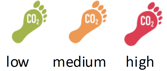
    CO2 legend
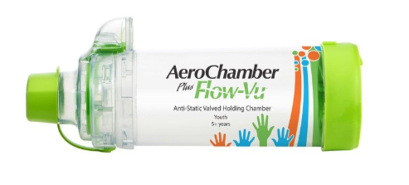
  • Spacers:

4. Provide personalised asthma action plans (PAAPs): 

See: Asthma + Lung UK Asthma action plans and guidance notes for HCPs

  • ALL children and young people (CYP) should have a PAAP
  • ALL CYP on an AIR or MART regimen should have a PAAP corresponding to the regimen that they are using
  • AIR and MART plans should outline:
    1. The number of doses a CYP can have in each different (green / amber / red) zone 
    2. The maximum dose they can have at any one time
    3. The maximum total daily dose in 24 hours
  • The CYP and their carers should be advised to seek an URGENT MEDICAL REVIEW if they are regularly using extra doses close to their maximum doses.

5. Provide education and training to CYP and their carers

6. Perform asthma reviews for all

Perform reviews at least once a year: 

  • Check adherence
  • Check inhaler technique
  • Identify and document triggers
  • Check numbers of ICS picked up / prescriptions
  • If on conventional therapy, review if more than two SABA inhalers in 12 months
  • Review 8 to 12 weeks after any treatment change

Diagnosis

For diagnosis of asthma in all age groups see: Asthma: diagnosis, monitoring and chronic asthma management (BTS, NICE, SIGN)

Please note:

  • New guidance puts a much greater emphasis on diagnostic testings.
  • Perform tests as per the NICE Guideline, if available to you in Primary Care.
  • If not available, use traditional methods, such as: history, clinical examination, Peak Flows and trials of ICS, etc.

Useful Link: How to calculate Peak Flow, see: Primary Care Respiratory Update

Referral

Refer to secondary care if:

  • Poor asthma control, despite optimised care
  • Two or more courses of oral steroids in 12 months
  • Two or more A&E or PAU visits in 12 months (with asthma or suspected asthma)
  • Inpatient or acute admission to hospital (with asthma or suspected asthma)
  • Diagnostic uncertainty
  • Also, see specific referral criteria in each algorithm as per NICE Flow charts

Please note referrals will NOT be accepted for: 

  • The sole purpose of “doing or interpreting a test”.
    Paediatrics in Raigmore have no easy access to FeNo or reversibility Spirometry (only available at the Adult Lung Lab).

Note for Secondary Care:

  • If a CYP on a MART regimen has had SABA treatment as part of an emergency hospital admission for an acute exacerbation, they should be transferred back from SABA to their MART regimen according to their MART PAAP BEFORE discharge so as to allow treatment to be gradually reduced at home according to their MART PAAP / symptoms. 

Pathway: 6 to 11 years

Age 6 to 11 Step 1:

Conventional Pathway: Low-dose ICS + SABA

MDI:

Medium CO2

Clenil Modulite Clenil Modulite 50 microgram + spacer 
(beclometasone dipropionate) 

  • 1 to 2 puffs, twice daily via spacer

Salamol Evohaler Salamol 100 microgram + spacer
(salbutamol)

  • 1 puff when required. 
  • Maximum: up to 10 puffs every 4 hours 

Consider 8 to 12-week trial of montelukast:

Advise carers to seek medical advice if:

  • Needing to use maximum number of puffs in one day
  • OR using SABA 3 or more times per week
  • OR waking at night due to asthma
  • OR using 2 or more SABA inhalers in 12 months
    (Taking into consideration that multiple inhalers may initially be prescribed for different care settings, needing to resupply 2 or more inhalers in 12 months is an indication for review). 


If uncontrolled, go to: 

Age 6 to 11 Step 2:

Assess ability to use MART, including the ability to use a DPI

Continue montelukast, if effective

Low-dose MART

OR continue Conventional pathway:
Low-dose ICS/LABA + SABA

DPI:

Lower CO2

STOP regular SABA on repeat

Symbicort Turbohaler Symbicort 100/6 Turbohaler 
(budesonide with formoterol)

  • Regular dose: 1 puff once or twice daily
  • Reliever dose: 1 puff when required to relieve symptoms

Maximum:

  • Maximum single reliever dose: up to 4 puffs 
  • Maximum daily dose: normally up to 4 puffs. Can be increased up to 8 puffs for a limited period, and in emergencies

MDI:

Medium CO2

Seretide Evohaler Seretide 50 Evohaler + spacer
(fluticasone with salmeterol)

  • 1 puff twice daily

Salamol Evohaler Salamol 100 microgram + spacer (salbutamol)

  • 1 puff when required
  • Maximum: up to 10 puffs every 4 hours

Advise carers to seek medical advice if:

  • Requiring 4 inhalations per day
  • Requiring additional doses most days (3 or more times a week)

Consider:

  • Set an issue duration 45 days per inhaler to prompt if inhalers are being ordered more frequently than expected

Advise carers to seek medical advice if:

  • Needing to use maximum number of puffs in one day
  • OR using SABA 3 or more times per week
  • OR waking at night due to asthma
  • OR using 2 or more SABA inhalers in 12 months
    (Taking into consideration that multiple inhalers may initially be prescribed for different care settings, needing to resupply 2 or more inhalers in 12 months is an indication for review). 


If uncontrolled, go to:

Age 6 to 11 Step 3

Continue montelukast, if effective

Moderate-dose MART

Conventional pathway: Moderate-dose ICS/LABA + SABA

  • Refer to Medical Paediatrics via SCI Gateway
  • Advice can be sought via Clinical Dialogue

MDI:

Medium CO2

Seretide Evohaler Seretide 50 Evohaler + spacer
(fluticasone / salmeterol)

  • 2 puffs twice daily

Salamol Evohaler Salamol 100 microgram + spacer
(salbutamol)

  • 1 puff when required.
  • Maximum: up to 10 puffs every 4 hours

Advise carers to seek medical advice if:

  • Needing to use maximum number of puffs in one day
  • OR using SABA 3 or more times per week
  • OR waking at night due to asthma
  • OR using 2 or more SABA inhalers in 12 months
    (Taking into consideration that multiple inhalers may initially be prescribed for different care settings, needing to resupply 2 or more inhalers in 12 months is an indication for review). 

If uncontrolled:

  • Refer to Medical Paediatrics via SCI Gateway
  • Advice can be sought via Clinical Dialogue

Pathway: 12 to 15 years

Age 12 to 15 AIR / MART pathway

STOP regular SABA on repeat

Always try AIR / MART pathway first line.

Note: NICE/BTS/SIGN 2024 do NOT recommend the 'conventional' pathway for adolescents 12 years and over. See NICE NG245: Asthma: Algorithm

If assessed to be unsuitable: 

  • Discuss benefits of AIR / MART (safer, reduced exacerbations, reduced mortality)
  • Discuss concerns (some people worry if they can’t feel the inhaler that it is not working)
  • Some situations where AIR/MART may NOT be appropriate may include: 
    • Cannot tolerate formoterol
    • Cannot use a DPI
    • Cannot manage flexible dosing
Initial management:
INFREQUENT symptoms, go to: 

Step 1: AIR pathway

Initial management:
FREQUENT symptoms,
OR
uncontrolled at step 1, go to: 

Step 2: Low-dose MART

If uncontrolled at step 2, go to:

Step 3: Moderate-dose MART

DPI:

Lower CO2

Symbicort Turbohaler Symbicort 200/6 Turbohaler
(budesonide with formoterol)

  • Reliever dose: 1 puff when required

Maximum:

  • Maximum single reliever dose: up to 6 puffs 
  • Maximum daily dose: normally up to 8 puffs. Can be increased up to 12 puffs for a limited period and in emergencies

DPI:

Lower CO2

Symbicort Turbohaler Symbicort 200/6 Turbohaler
(budesonide with formoterol)

  • Regular dose: 1 puff twice daily OR 2 puffs once daily
  • Reliever dose: 1 puff when required

Maximum:

  • Maximum single reliever dose: up to 6 puffs 
  • Maximum daily dose: normally up to 8 puffs. Can be increased up to 12 puffs for a limited period and in emergencies

DPI:

Lower CO2

Symbicort Turbohaler Symbicort 200/6 Turbohaler
(budesonide with formoterol)

  • Regular dose: 2 puffs twice daily
  • Reliever dose: 1 puff when required

Maximum: 

  • Maximum single reliever dose: up to 6 puffs
  • Maximum daily dose: normally up to 8 puffs. Can be increased up to 12 puffs for a limited period and in emergencies

Advise carers to seek medical advice if:

  • Requiring 8 inhalations in a day
  • Requiring additional doses most days (3 or more times a week)

Consider: Set an issue duration per inhaler to prompt if inhalers are being ordered more frequently than expected:

  • 60 days if on AIR
  • 45 days if on low-dose MART
  • 18 days if moderate-dose MART  

If uncontrolled:

  • Check
    • Adherence
    • Rate of prescription pick up
    • Technique
  • If available / feasible in Primary Care: check FeNo and blood eosinophil count
    • If either is raised (FeNO >35 ppm): REFER to Paediatrics
  • If neither raised, or FeNO / eosinophil count testing is NOT available / feasible in Primary Care, consider:
    Montelukast
    8 to-12 week trial:

If remains uncontrolled:

  • Refer to Medical Paediatrics via SCI Gateway
  • Advice can be sought via Clinical Dialogue

Conventional pathway: 12 years and over

Age 12 and over Conventional pathway

Always try AIR / MART pathway first line

Note: NICE/BTS/SIGN 2024 do NOT recommend an alternative pathway for adolescents 12 years and over. See NICE NG245: Asthma: Algorithm 

If AIR/MART pathway assessed to be unsuitable: 

  • Discuss benefits of AIR / MART (safer, reduced exacerbations, reduced mortality)
  • Discuss concerns (some people worry if they can’t feel the inhaler that it is not working)
  • Some situations where AIR/MART may NOT be appropriate may include: 
    • Cannot tolerate formoterol
    • Cannot use a DPI
    • Cannot manage flexible dosing

If after trying AIR/MART it is deemed unsuitable, document reason in patient notes and consider a fixed dose regimen as shown below. 

  • Reconsider AIR/MART at every review and at least annually. 
  • SABA monotherapy must NOT be used

Step 1: Low-dose ICS + SABA

Step 2: Low-dose ICS/LABA + SABA

Step 3: Moderate-dose ICS/LABA + SABA

DPI:

Lower CO2

Pulmicort Turbohaler Pulmicort 100 or 200 Turbohaler
(budesonide)

  • 1 puff twice daily

PLUS 

Salbutamol Easyhaler Salbutamol 100 microgram Easyhaler

  • 2 to 10 puffs when required
  • Maximum: 10 puffs every 4 hours

OR MDI:

Medium CO2

Clenil Modulite Clenil Modulite 100 or 200 microgram + spacer (beclometasone dipropionate)

  • 1 puff twice daily

PLUS

Salamol Evohaler Salamol 100 microgram + spacer
(salbutamol)

  • 2 to 10 puffs when required
  • Maximum: 10 puffs every 4 hours

DPI:

Lower CO2

Symbicort Turbohaler Symbicort 200/6 Turbohaler
(budesonide with formoterol)

  • 1 puff twice daily

PLUS

Salbutamol Easyhaler Salbutamol 100 microgram Easyhaler

  • 2 to 10 puffs when required
  • Maximum: 10 puffs every 4 hours

OR MDI:

Medium CO2

Seretide Evohaler Seretide 50 Evohaler + spacer
(fluticasone with salmeterol)

  • 2 puffs twice daily

PLUS

Salamol Evohaler Salamol 100 microgram + spacer
(salbutamol)

  • 2 to 10 puffs when required
  • Maximum: 10 puffs every 4 hours


DPI:

Lower CO2

Symbicort Turbohaler Symbicort 400/12 Turbohaler
(budesonide with formoterol)

  • 1 puff twice daily

PLUS

Salbutamol Easyhaler Salbutamol 100 microgram Easyhaler

  • 2 to 10 puffs when required
  • Maximum: 10 puffs every 4 hours

ALTERNATIVE DPI:

Lower CO2

Relvar Ellipta Relvar Ellipta 92/22 microgram
(fluticasone with vilanterol)

  • 1 puff, once daily

PLUS

Salbutamol Easyhaler Salbutamol 100 microgram Easyhaler

  • 2 to 10 puffs when required
  • Maximum: 10 puffs every 4 hours

OR MDI:

Medium CO2

Seretide Evohaler Seretide 125 Evohaler + spacer
(fluticasone with salmeterol)

  • 2 puffs, twice daily

PLUS

Salamol Evohaler Salamol 100 microgram + spacer
(salbutamol)

  • 2 to 10 puffs when required
  • Maximum: 10 puffs every 4 hours

If uncontrolled:

  • Check
    • Adherence
    • Rate of prescription pick up
    • Technique
  • If available / feasible in Primary Care: check FeNo and blood eosinophil count
    • If either is raised (FeNO >35 ppm): REFER to Paediatrics
  • If neither raised, or FeNO / eosinophil count testing is NOT available / feasible in Primary Care, consider:
    Montelukast
    8 to-12 week trial:

If remains uncontrolled:

  • Refer to Medical Paediatrics via SCI Gateway
  • Advice can be sought via Clinical Dialogue

Emergency management

Emergency management: AIR/MART pathway

ICS / formoterol (AIR / MART) containing inhalers CAN be used in the red zone of a Personalised Asthma Action Plan in an emergency.

  1. Take 1 puff of your reliever inhaler (Symbicort)
    • Wait 1 to 3 minutes
  2. If there is NO improvement in symptoms, take another puff
  3. Repeat this up to a maximum of
    • Age 6 to 11: 4 puffs
    • Age 12 to 15: 6 puffs
  4. If the child / young person remains symptomatic: call 999
  5. If needed, repeat step 1 whilst waiting for the ambulance to arrive

Even if symptoms improve, all CYP should be advised to see their doctor or asthma nurse immediately after an asthma attack

Emergency management: Conventional pathway

  1. Take 1 puff of your reliever inhaler (salbutamol) 
    • if necessary / available a spacer device can be used
    • Wait 1 to 3 minutes
  2. If there is NO improvement in symptoms, take another puff
  3. Repeat this up to a maximum of 10 puffs
  4. If the child / young person remains symptomatic: call 999
  5. If needed, repeat step 1 whilst waiting for the ambulance to arrive

Even if symptoms improve, all CYP should be advised to see their doctor or asthma nurse immediately after an asthma attack

Further information for Health Care Professionals

DPI use in children:

Information for patients

Resources to support self-management: 

Abbreviations

  • AIR: Anti-inflammatory reliever
  • CYP: Children and young people
  • DPI: Dry powder inhaler
  • ICS: Inhaled corticosteroid
  • MART: Maintenance and reliever therapy 
  • PAAP: Personalized asthma action plans
  • pMDI: Pressurised metered dose inhaler
  • SABA: Short-acting beta agonist

Editorial Information

Last reviewed: 03/03/2026

Next review date: 04/03/2029

Author(s): Paediatrics.

Version: 1

Co-Author(s): Primary Care: Dr R Hampton, Highland Council: ???.

Approved By: TAM subgroup of the ADTC

Reviewer name(s): Dr S Ghayyda.

Document Id: TAM743