The Queen Elizabeth National Spinal Injuries Unit
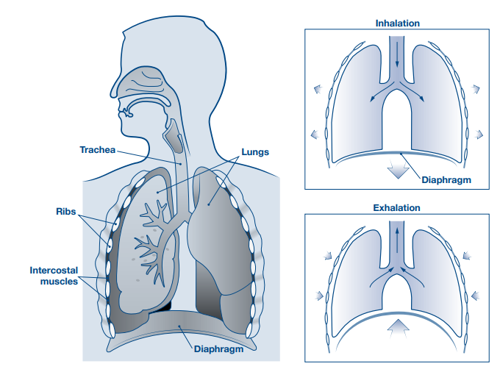
When you breathe in, air is drawn in through your mouth and nose and is then carried into your lungs via the trachea (windpipe). This then splits into 2 branches called the bronchi, one for each lung. The bronchi continue to split into many smaller branches called bronchioles and the air eventually ends up in air sacs at the end called alveoli. Oxygen is then passed from the alveoli into your blood stream and carbon dioxide is passed back the way through your lungs for you to breathe out through your mouth and nose.
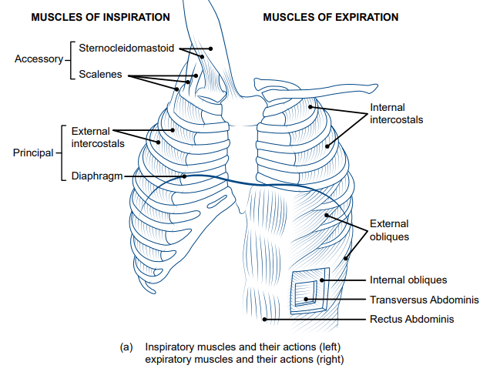
Healthy lungs produce a small amount of mucus (phlegm) each day which we clear without even thinking about it. The main role of this mucus is to protect your lungs by trapping any dirt, debris or bugs. Respiratory muscles bring about movements in your chest to allow you to breathe and clear your lungs and can be affected by spinal cord injury just like the muscles in your arms and legs (see Figure 2). These muscles can affect how big a breath you take in, or breathe out and also give you force behind a cough or a sneeze (see the table below for details on these muscles).
| Muscle | Spinal Nerve |
Normal Function | After Spinal Cord Injury |
| Scalenes Sternocleidomastoid (Accessory Muscles) |
C2-3 C4-6 |
Only used when breathing is stressed e.g. during hard exercise | Can assist breathing if your diaphragm is weak |
| Diaphragm | C3-C5 | Contracts downwards to lengthen your thorax which pulls air down in to the lungs | If your diaphragm doesn’t work well enough, you will need a ventilator to breath |
| External Intercostals | T1-T10 | Lifts your rib cage up and out to make your breath deeper | Rib cage won’t move as much when breathing in, resulting in smaller breaths. This may make you more tired or make it difficult to clear mucus. |
| Internal Intercostals | T1-T10 |
Push your rib cage down and in to compress your lungs and push anything out |
Weak cough |
| Abdominals | T6-12 | Contract powerfully during a cough to help push out anything in your lungs. Also maintains abdominal pressure making it easier for your diaphragm to function |
Weak cough. Diaphragm has to work harder as it sits in a poorer position due to lack of abdominal pressure. |