Obstructive sleep apnoea diagnostic pathway

Warning

Background

There is a very high burden of Obstructive Sleep Apnoea Syndrome (OSAS) in the general (adult) population. Referrals to adult secondary care Respiratory Services match the volume of all other respiratory referrals combined. Furthermore, there are increasing numbers of referrals year on year due to a combination of increasing recognition of this syndrome in the population and a burgeoning obesity epidemic.

It is estimated that over 80% of cases in the general population have not yet been investigated or treated. UK national studies have projected the significant health economic benefits of finding and treating people with OSAS. For example, broad (largely cardiovascular) secondary health benefits, reduction in road accidents and insurance costs, reduced unemployment/increased productivity, improved relationships. Successful treatment with CPAP is also generally long term, that is, it is a symptomatic treatment (of daytime somnolence) and doesn’t alter the underlying problem such that symptoms would return if treatment stopped. Morbidity and mortality benefits increase the longer a person remains on CPAP therapy.

This pathway aims to ensure timely and standardised access to assessment, diagnosis and onward referral for treatment for NHS Scotland (adult) patients with suspected OSAS.


Pathway recommendations

In developing this diagnostic pathway, the main aims were to maximise efficiency and earlier diagnosis given large patient numbers, as well as making it as simple as possible to deliver in terms of widening access across Scotland. It is important to note that this pathway is only designed to confirm or refute the diagnosis of OSAS. It is not designed for wider sleep related issues.

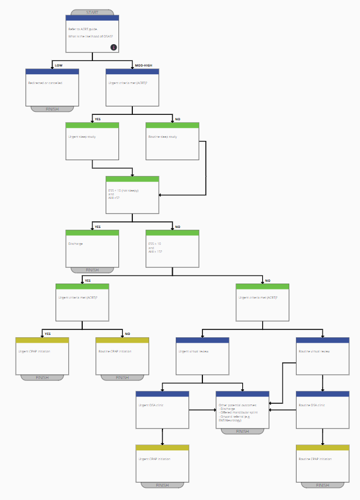
Patients are invited to opt in to the diagnostic pathway following ACRT at the point of referral. Patients triaged as having moderate to high likelihood of OSAS will be offered a sleep study, according to their level of urgency (please see ACRT guideline, Appendix 1, for further detail of triage urgency classification). They will be asked to complete a detailed sleep apnoea questionnaire to go alongside the sleep study result. On the basis of reviewing both of these ‘virtually’, a clinician decision is made on whether to offer a trial of CPAP treatment for ‘clear cut’ OSAS, whether to discharge the patient on the basis of a normal sleep study, or whether the patient needs further assessment (in clinic) if their symptoms and sleep study result are more borderline. Patients with a moderate to high likelihood of OSAS (on the basis of their symptoms and sleep study result) will then be offered a trial of CPAP therapy. Patients with a low likelihood of OSAS will be discharged from the service.

At present patients are offered a Home Sleep Apnoea Test that they must collect and bring back to the department. This device also needs manual ‘scoring’ for a report by a physiologist. It is hoped that soon a significant proportion of patients may be able to be offered a wearable home testing device to aid diagnosis of OSAS, thus negating travel and hospital parking, as well as generating a reliable automatic report for rapid diagnosis and onward management.

Click the image below to view the obstructive sleep apnoea diagnostic pathway.

Colour key for pathway:

  Blue - clinical decision

  Green - protocol decision

  Amber - trained specialist decision


References and further resources

  1. NICE guideline [NG202]: Obstructive sleep apnoea/hypopnoea syndrome and obesity hypoventilation syndrome in over 16s. Published 20 August 2021 https://www.nice.org.uk/guidance/ng202
  2. NICE diagnostic guidance [DG62]: Home-testing devices for diagnosing obstructive sleep apnoea hypopnoea syndrome. Published 19 December 2024 https://www.nice.org.uk/guidance/dg62
  3. Epstein LJ, Kristo D, Strollo et al. Adult Obstructive Sleep Apnea Task Force of the American Academy of Sleep Medicine. Clinical guideline for the evaluation, management and long-term care of obstructive sleep apnea in adults. J Clin Sleep Med. 2009 Jun 15;5(3):263-76. DOI: https://doi.org/10.5664/jcsm.27497 


   gjnh.cfsdpmo@gjnh.scot.nhs.uk

  www.nhscfsd.co.uk

@NHSScotCfSD

Centre for Sustainable Delivery

  Scan the code to visit our website

Editorial Information

Last reviewed: 09/02/2026

Next review date: 09/02/2029

Author(s): Centre for Sustainable Delivery.