Warning

Audience

  • All NHS Highland
  • Primary and secondary care
  • Adults and children

NB: Requests for device checks go to the Device Team, NOT the cardiologist. See SCI Gateway for details.
Cardiac devices include: pace makers and implantable cardioverter defibrillators (ICD). This guidance refers to ICDs.  

ICDs are implanted in patients who have had either a previous sudden cardiac arrest or are considered to be at high risk of sudden cardiac death from an arrhythmic cause. 

  • An ICD can deliver either rapid burst pacing or a shock, with the aim of terminating a ventricular arrhythmia (ventricular tachycardia or ventricular fibrillation) and restoring normal cardiac rhythm.
  • Most ICDs also function as a pacemaker to either prevent slow heart rates or as part of cardiac resynchronisation therapy (CRT or biventricular pacing).
  • The pacemaker and ICD functions of each device are programmable independently of each other.


Due to the increasing survival rates and advances in cardiac disease, there is a growing number of the general population who are living with an Implantable Cardioverter Defibrillator (eg. ICD or CRT-D).

Implantable cardioverter defibrillator (ICD) and Cardiac Resynchronisation Therapy with defibrillator (CRT-D‘s) are implantable devices that are fitted in the same way as pacemakers and used to treat life threatening heart rhythm disturbances – ventricular tachycardia and ventricular fibrillation.  The ICD/CRT-D constantly monitors the heart rhythm and if it senses one of these abnormal rhythms, it delivers an electrical impulse or shock to return the heart back to normal. An ICD/CRT-D can therefore prevent sudden death.

As the numbers of these devices are increasing on a daily basis, it has been recognised that the health professionals within primary and secondary care, alongside the Scottish Ambulance Service, require further support in the management of these people.

Acute management of ICDs

This is to provide guidance to community teams in the acute management of patients who are presenting acutely unwell with an arrhythmia and have an ICD in situ.


Ring magnet placement

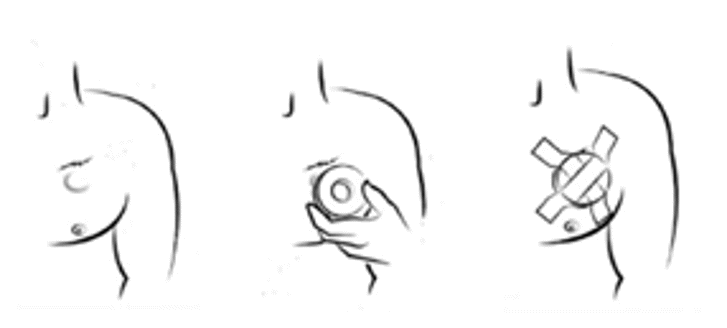
Application of a clinical magnet (typically ring / donut) will allow temporary discontinuation of ICD therapies. It will not affect pacing function. Magnets are typically available in hospital cardiology departments, cardiac wards, and emergency departments. This should only be a temporary measure as magnet application may be unreliable and uncomfortable. The following steps should be taken when a magnet is used.

  1. Ask the patient to feel and point to where the ICD is located (if possible), if not then look for the scar usually located to the left below the clavicle. Alternative placement could be on the right or down under the Left arm around the 6th rib.
  2. Feel for the ICD which will be a solid lump under the skin
  3. Place the magnet over the lump: you may hear a quiet alarm / vibration as the magnet disables therapies.
  4. Secure the magnet in place with micropore / transpore, as pictured below to ensure the magnet does not move. Magnets temporarily stop the ICD delivering shock therapies but only whilst in position over the ICD and normal function is restored as soon as it is removed. Some manufacturers’ devices will reactivate ICD therapies after 8 hours of magnet application. If a patient is known to have a Biotronik ICD (or the manufacturer is unknown), the magnet should be removed and reapplied every 7 hours.

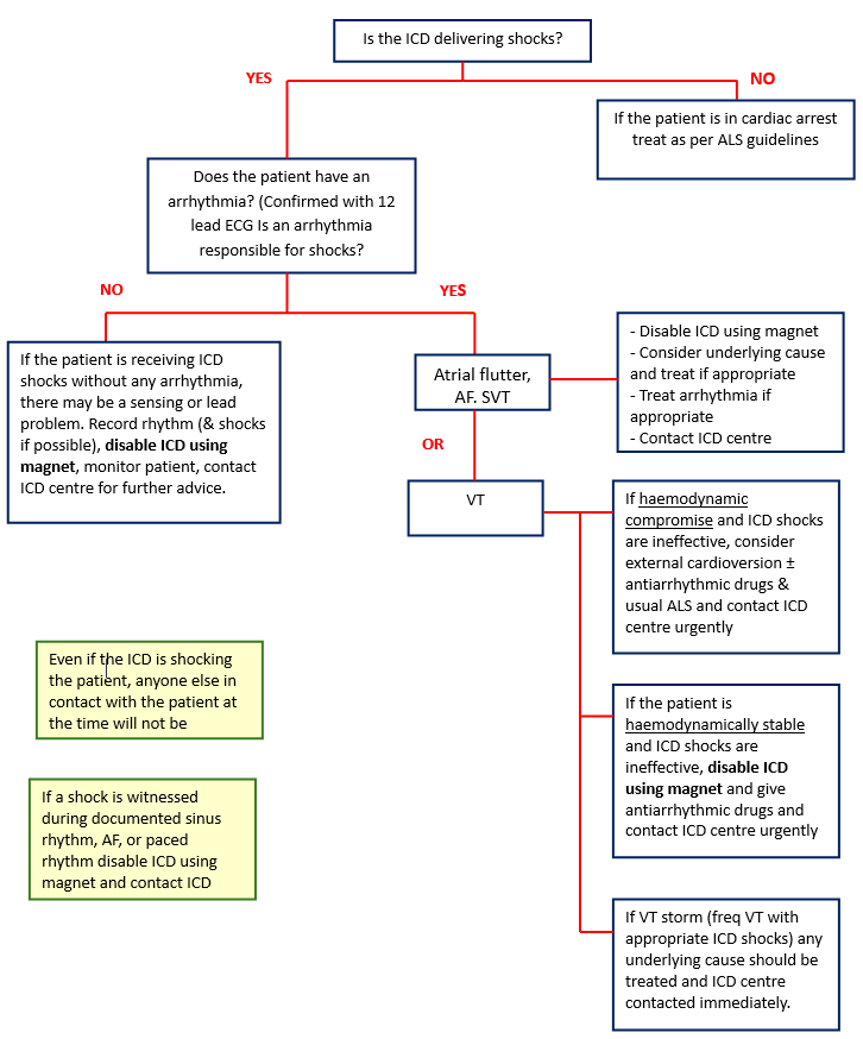
Flowchart for the acute management of ICD

Deactivation of ICDs at end of life

This is to provide guidance to all healthcare professionals caring for a person approaching the end of their life and / or in whom a shock from an ICD would no longer be appropriate with an active Implantable Cardioverter Defibrillator (ICD).

  • It aims to promote awareness and timely discussion between professionals and patients and to encourage best practice.
  • Guidance from this document can be used in a hospital, hospice, and community setting.
  • It is based on guidance and documentation from the Resuscitation Council UK and the British Heart Rhythm Society.
Deactivation (and later reactivation) of an ICD may be needed in other clinical setting (e.g. during operations and other procedures), this document does NOT address those indications.

The number of people with an ICD is rising due to the increasing indications for ICD implantation, people are also now living longer with these devices.

  • As a result, an increasing number of patients with an ICD will deteriorate either with worsening cardiac failure, another non-cardiac condition or general frailty and will have a limited prognosis.
  • Therefore, to ensure the person receives high-quality end-of-life care, they should have the opportunity to consider and discuss the option to deactivate the shock function of their ICD.
  • If the ICD shock therapy is not discontinued, there is an increased risk that, as a person reaches the last days of life, the ICD may deliver multiple, painful shocks, which are distressing.
Communication is key to ensure all key stakeholder have the appropriate information to help patients and their families to make an informed decision surrounding deactivation of their device.
  • A patient and carer booklet is available to help them understand why the question of deactivation is being asked. 
  • All decisions relating to deactivation must be documented and shared with the multidisciplinary team.
    A copy of the deactivation form should be maintained in the patient’s notes; cardiac device notes and uploaded to SCI store.

When to consider and discuss ICD deactivation

Any discussions regarding ICD discontinuation should be introduced as early as possible and at a time which is appropriate to the individual patient and their family. Ideally these conversations should be part of wider advance care planning rather than in isolation. This will vary but specific situations that may trigger a conversation about possible device discontinuation may include the following.

  • Prior to implantation, at the time of consultation, as part of the informed consent process
  • When requested by a patient or family member
  • During assessment for device replacement (elective replacement due to battery depletion or advisory)
  • Multiple shocks being delivered as a result of disease progression
  • A change in clinical status; worsening of condition or new comorbid condition with a poor prognosis (e.g. advanced malignancy, dementia)
  • Frailty
  • Repeated hospitalisations for heart failure
  • Repeated emergency department visits
  • Refractory symptoms of a cardiac condition, despite optimal therapy
  • Deemed ineligible for advanced heart failure therapies (e.g. mechanical circulatory support or transplant)
  • Deteriorating quality of life and functional status
  • The presence of a DNAR order, although the two are separate decisions.
  • When referred to hospice or a nursing home facility.

It is preferable that any discussions regarding ICD shock therapy discontinuation take place in advance.

  • Unfortunately, these discussions often occur in emergency situations, which can cause distress and present practical challenges to facilitate urgent device discontinuation.
  • A proactive approach to identify patients who may be approaching the time for shock discontinuation can reduce stress and distress for the patient, family, and healthcare professionals.
  • All members of the team involved in follow up of these patients should be encouraged to flag any general deterioration in the patient’s health or functional status to the device follow up team.
  • It may be that ICD shock discontinuation is discussed many times before an eventual decision is made.

Who should discuss ICD deactivation?

  • Decisions about discontinuation of any device should be shared decisions, with full involvement of the patient themselves and the healthcare team caring for them and must be based on careful assessment of the individual’s circumstances at the time.

What should we discuss about ICD deactivation?

  • Near the end of a person’s life, the ICD may deliver shocks that are painful and distressing and clinically inappropriate.
  • Discontinuation of shock therapy from an ICD is not the same as completing a DNACPR order but one may prompt discussion of the other.
  • Discontinuation of shock therapy from an ICD will not cause death. Once an ICD has been deactivated, if a patient has a heart rhythm change that could cause death, the ICD will not deliver treatment.
  • Discontinuation of shock therapy of an ICD does not deactivate its pacemaker function.
  • Discontinuation of shock therapy from an ICD is painless and does not require surgery. However, it does need to be done face to face.
  • Magnet discontinuation of ICD shocks requires a medical grade magnet and is only temporary. A programming device provides reliable discontinuation of shocks.
  • If a patient’s clinical condition improves unexpectedly or they change their mind the ICD can be reactivated.
  • It is best to think and decide about ICD discontinuation in advance and in the context of more comprehensive advanced care planning rather than in a crisis.

How should we deactivate ICDs?

The flow charts below summarise the processes for discontinuation of ICD shock therapy.

  • Where possible, device discontinuation should occur in a device follow up setting (typically a hospital).
  • This is more likely to be possible if device discontinuation is considered early in patients who are deteriorating.
  • The team should document shock discontinuation in the patient record and in cardiac device notes.


Planned ICD deactivation

ICD shock therapy discontinuation is a simple and quick procedure carried out through a device programmer by an appropriately trained member of the team. If management plans change, ICD shocks can be reactivated using a similar procedure.

  • ICD deactivation can be carried out at Raigmore Hospital and at outlying clinic hospitals (Belford, Caithness General Hospital, Thurso, Portree, Broadford and Stornoway), if planned to be performed when Cardiac Physiologists are visiting.
  • If the patient CANNOT attend the clinic, then the Cardiac Physiology Team will arrange a domiciliary device discontinuation. This can be challenging to deliver in a timely manner, particularly out of usual office hours. A list of email and phone contacts are available at the end of this document. Appropriate forms should be completed, and device discontinuation communicated to the wider healthcare team.

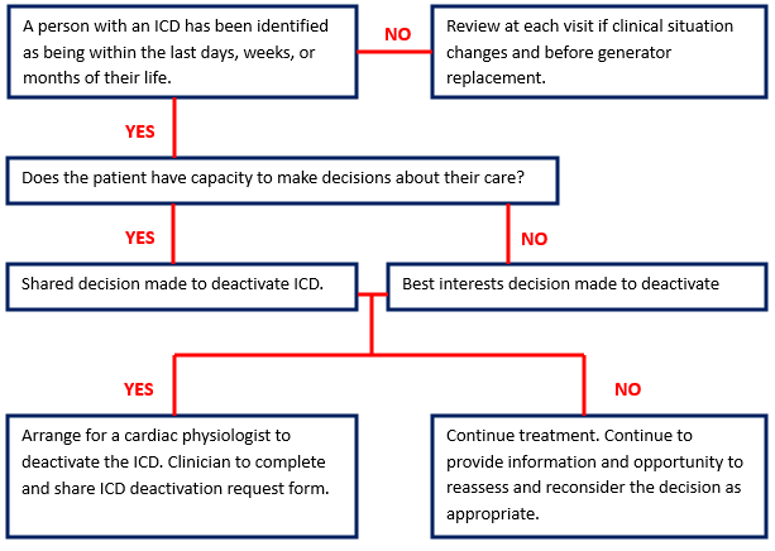
Flowchart for PLANNED ICD deactivation

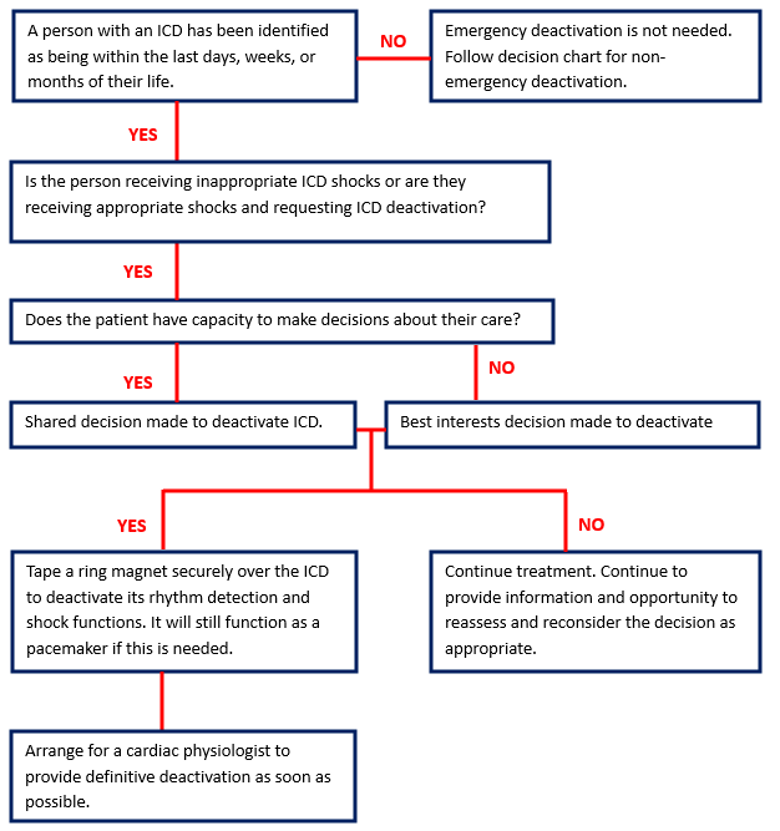
Emergency ICD deactivation

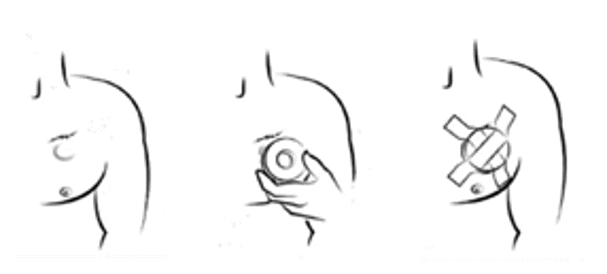
If there is a delay in facilitating ICD shock discontinuation with a programmer, application of a clinical magnet (typically ring / donut) will allow temporary discontinuation of ICD therapies. It will NOT affect pacing function. Magnets are typically available in hospital cardiology departments, cardiac wards, and emergency departments. This should only be a temporary measure as magnet application may be unreliable and uncomfortable. The following steps should be taken when a magnet is used.

  1. Ask the patient to feel and point to where the ICD is located (if possible), if not then look for the scar usually located to the left below the clavicle. Alternative placement could be on the right or down under the Left arm around the 6th rib.
  2. Feel for the ICD which will be a solid lump under the skin
  3. Place the magnet over the lump: you may hear a quiet alarm / vibration as the magnet disables therapies.
  4. Secure the magnet in place with micropore / transpore, as pictured below to ensure the magnet does not move. Magnets temporarily stop the ICD delivering shock therapies but only whilst in position over the ICD and normal function is restored as soon as it is removed. Some manufacturers’ devices will reactivate ICD therapies after 8 hours of magnet application. If a patient is known to have a Biotronik ICD (or the manufacturer is unknown), the magnet should be removed and reapplied every 7 hours.

Flowchart for EMERGENCY ICD deactivation

Contacts

Office Hours: 08:30 to 17:00

Out of Hours:

  • Coronary Care Unit: 01463 705849

Abbreviations

  • AF: atrial fibrillation
  • ALS: amyotrophic lateral sclerosis
  • DNACPR: do not attempt cardiopulmonary resuscitation
  • DNAR: do not attempt resuscitation
  • ECG: echocardiogram
  • ICD: implantable cardioverter defibrillator
  • SVT: supraventricular tachycardia
  • VT: ventricular tachycardia

Editorial Information

Last reviewed: 02/03/2026

Next review date: 02/03/2029

Author(s): Cardiology.

Version: 2

Approved By: TAM subgroup of the ADTC

Reviewer name(s): K Callum, Chief Cardiac Physiologist.

Document Id: TAM124

References
  1. UK, R.C. Deactivation of implantable cardioverter-defibrillators towards the end of life. Available from: https://www.resus.org.uk/sites/default/files/2020-05/CIEDs%20Deactivation.pdf.
  2. BHRS. DISCONTINUATION OF ICD SHOCK THERAPIES TOWARDS THE END OF LIFE: A PRACTICAL GUIDE. 2024; Available from: https://bhrs.com/wp-content/uploads/2024/01/BHRS-Discontinuation-of-ICD-shock-therapies-towards-the-end-of-life-JANUARY-2024.pdf.