This is to provide guidance to all healthcare professionals caring for a person approaching the end of their life and / or in whom a shock from an ICD would no longer be appropriate with an active Implantable Cardioverter Defibrillator (ICD).
- It aims to promote awareness and timely discussion between professionals and patients and to encourage best practice.
- Guidance from this document can be used in a hospital, hospice, and community setting.
- It is based on guidance and documentation from the Resuscitation Council UK and the British Heart Rhythm Society.
Deactivation (and later reactivation) of an ICD may be needed in other clinical setting (e.g. during operations and other procedures), this document does NOT address those indications.
The number of people with an ICD is rising due to the increasing indications for ICD implantation, people are also now living longer with these devices.
- As a result, an increasing number of patients with an ICD will deteriorate either with worsening cardiac failure, another non-cardiac condition or general frailty and will have a limited prognosis.
- Therefore, to ensure the person receives high-quality end-of-life care, they should have the opportunity to consider and discuss the option to deactivate the shock function of their ICD.
- If the ICD shock therapy is not discontinued, there is an increased risk that, as a person reaches the last days of life, the ICD may deliver multiple, painful shocks, which are distressing.
Communication is key to ensure all key stakeholder have the appropriate information to help patients and their families to make an informed decision surrounding deactivation of their device.
- A patient and carer booklet is available to help them understand why the question of deactivation is being asked.
- All decisions relating to deactivation must be documented and shared with the multidisciplinary team.
A copy of the deactivation form should be maintained in the patient’s notes; cardiac device notes and uploaded to SCI store.
When to consider and discuss ICD deactivation
Any discussions regarding ICD discontinuation should be introduced as early as possible and at a time which is appropriate to the individual patient and their family. Ideally these conversations should be part of wider advance care planning rather than in isolation. This will vary but specific situations that may trigger a conversation about possible device discontinuation may include the following.
- Prior to implantation, at the time of consultation, as part of the informed consent process
- When requested by a patient or family member
- During assessment for device replacement (elective replacement due to battery depletion or advisory)
- Multiple shocks being delivered as a result of disease progression
- A change in clinical status; worsening of condition or new comorbid condition with a poor prognosis (e.g. advanced malignancy, dementia)
- Frailty
- Repeated hospitalisations for heart failure
- Repeated emergency department visits
- Refractory symptoms of a cardiac condition, despite optimal therapy
- Deemed ineligible for advanced heart failure therapies (e.g. mechanical circulatory support or transplant)
- Deteriorating quality of life and functional status
- The presence of a DNAR order, although the two are separate decisions.
- When referred to hospice or a nursing home facility.
It is preferable that any discussions regarding ICD shock therapy discontinuation take place in advance.
- Unfortunately, these discussions often occur in emergency situations, which can cause distress and present practical challenges to facilitate urgent device discontinuation.
- A proactive approach to identify patients who may be approaching the time for shock discontinuation can reduce stress and distress for the patient, family, and healthcare professionals.
- All members of the team involved in follow up of these patients should be encouraged to flag any general deterioration in the patient’s health or functional status to the device follow up team.
- It may be that ICD shock discontinuation is discussed many times before an eventual decision is made.
Who should discuss ICD deactivation?
- Decisions about discontinuation of any device should be shared decisions, with full involvement of the patient themselves and the healthcare team caring for them and must be based on careful assessment of the individual’s circumstances at the time.
What should we discuss about ICD deactivation?
- Near the end of a person’s life, the ICD may deliver shocks that are painful and distressing and clinically inappropriate.
- Discontinuation of shock therapy from an ICD is not the same as completing a DNACPR order but one may prompt discussion of the other.
- Discontinuation of shock therapy from an ICD will not cause death. Once an ICD has been deactivated, if a patient has a heart rhythm change that could cause death, the ICD will not deliver treatment.
- Discontinuation of shock therapy of an ICD does not deactivate its pacemaker function.
- Discontinuation of shock therapy from an ICD is painless and does not require surgery. However, it does need to be done face to face.
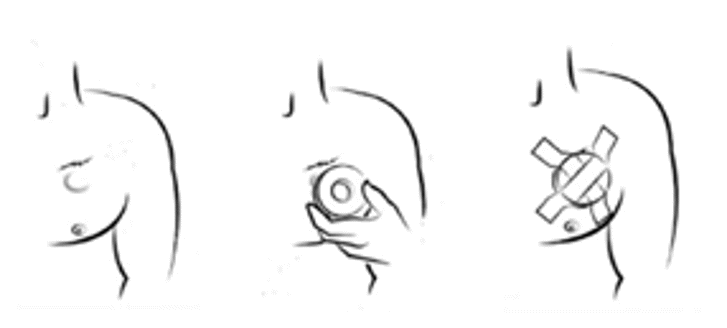
- Magnet discontinuation of ICD shocks requires a medical grade magnet and is only temporary. A programming device provides reliable discontinuation of shocks.
- If a patient’s clinical condition improves unexpectedly or they change their mind the ICD can be reactivated.
- It is best to think and decide about ICD discontinuation in advance and in the context of more comprehensive advanced care planning rather than in a crisis.
How should we deactivate ICDs?
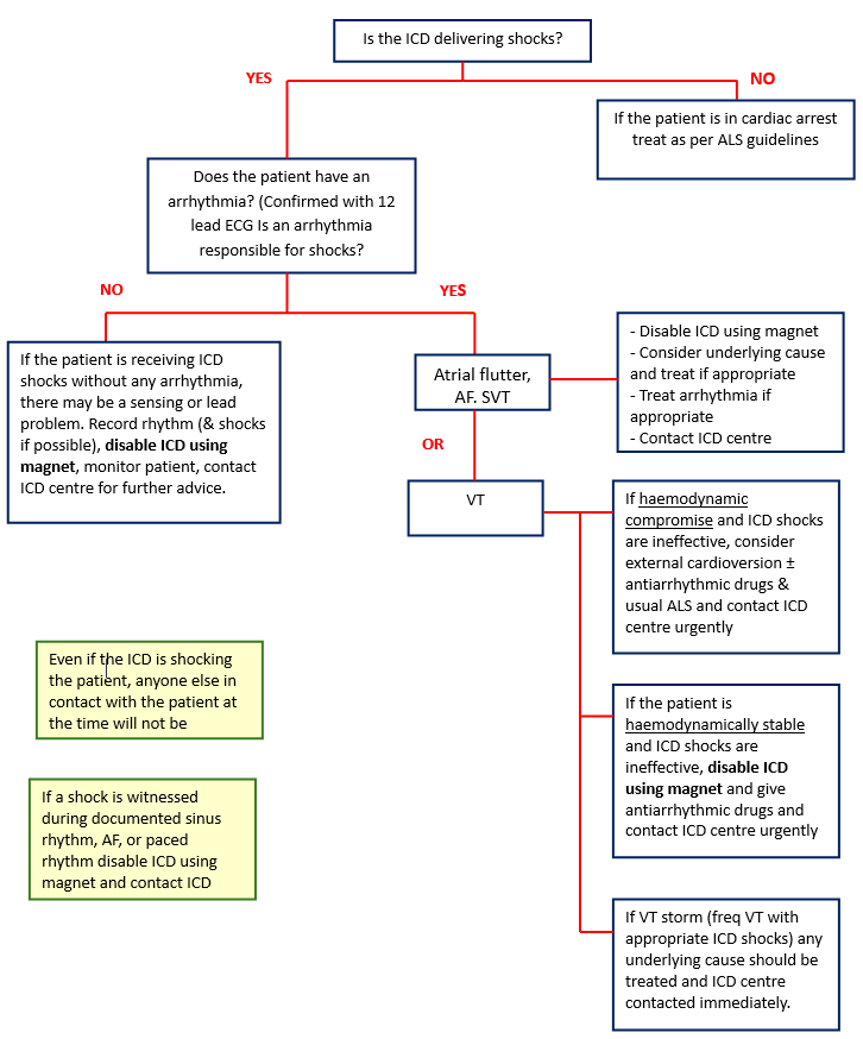
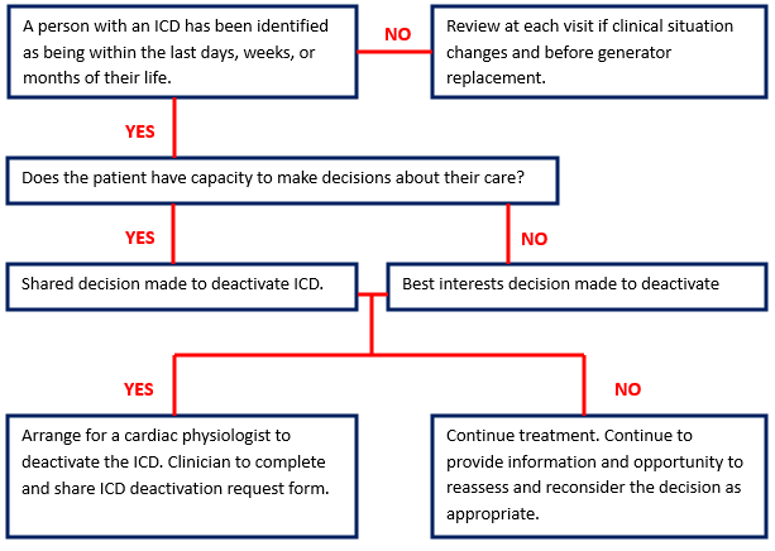
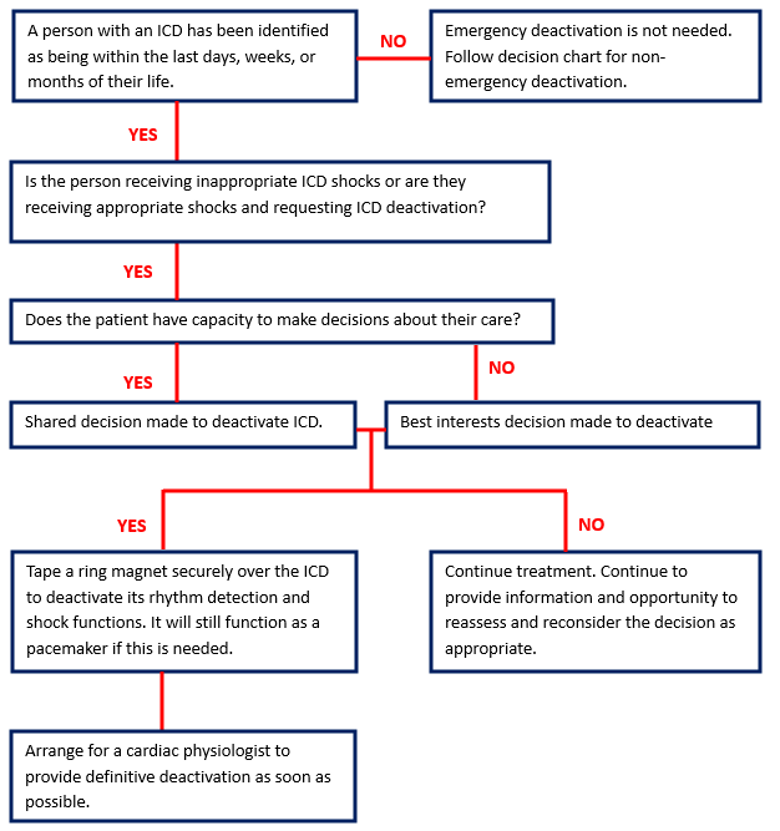
The flow charts below summarise the processes for discontinuation of ICD shock therapy.
- Where possible, device discontinuation should occur in a device follow up setting (typically a hospital).
- This is more likely to be possible if device discontinuation is considered early in patients who are deteriorating.
- The team should document shock discontinuation in the patient record and in cardiac device notes.


 TAM (Treatments and Medicines) NHS Highland