Warning

This is the phase of rehabilitation when you are close to achieving the inpatient rehabilitation goals set by you and your team. Your dependence on the medical, nursing, therapy and psychology team for advice, education and task practice will reduce as your knowledge, skill level and problem-solving ability increases.  

At this time, if possible, you should increase your time out of the Unit and into the community and/or at home. It will also be useful to structure your day similar to how it will look at home (rather than working to the timetable of the Spinal Unit) in preparation for discharge. Training can be arranged for family/ friends/ carers on any aspect of your care from any member of the team.  

It is normal for therapy sessions to wind down as you achieve your inpatient physiotherapy or occupational therapy goals and this is an excellent opportunity to explore how you will fill your time after leaving the Unit.  The support organisations can provide invaluable expertise and guidance with this. 

Discharge Planning

As the team begin to feel you no longer need hospital care or rehabilitation to reach your potential, we will raise the notion of discharge. For some, this can cause a degree of anxiety and uncertainty. The spinal unit can often feel like a protective bubble and the thought of leaving can be unsettling both for you and for your family as a whole. For others, the prospect of leaving and returning home can be a relief and a further step forward in your recovery.

The process of planning your discharge can be complicated and there are many variables, for example:

  • Are you completely independent and able to look after yourself, or do you require support for many of your day-to-day activities?
  • Are you still able to get in and out of your home easily? If you can, do alterations need to be made to allow you to live independently?
  • If you are not able to access your home, do you need to consider alterations to your home? If alterations are not possible or impractical, do you need to consider moving?
  • What timescales are involved?

Discharge is a very well-considered process and is a collaborative process between your medical consultant and the rehabilitation team.

For some, there is the sense that they feel their rehabilitation is being cut short and that they have not had their fair chance. As a unit, we fully believe we give people every opportunity to benefit from the resources the NHS has to offer. It may be that not everyone will agree with our opinions, but it is important that our reasoning and clinical decision making is understood. Members of the team will always be willing to chat this through with you and explain why the team thinks discharge is an appropriate step.
Interim Placement

The end of rehabilitation means that you will have to leave the Unit. In an ideal world, people would leave the Unit and go back to their own home. Unfortunately, few houses are suitable for wheelchair access and many people are required to move house or undertake alterations to their own home. The timescales involved in these processes can be lengthy and would quickly result in the Unit being full of patients who have completed rehabilitation and are waiting on housing.

The Unit requires those who have completed rehabilitation to be discharged as this allows newly injured individuals to be admitted. This means people often need an interim placement - a stepping stone between the Spinal Unit and their long-term home. An interim placement could be a local hospital ward, a rented property, social housing, homeless accommodation, or a nursing home. Some may go home to their own home but under less than ideal circumstances, for example, easy access in and out of the property or access to the bathroom. All of these examples would be considered temporary but allow the Unit to have a throughput of patients.

Leaving the Unit

At the point of discharge, you will be either taken home by your own relative or by ambulance transport. You will be given medication and supplies for 7 days. Your GP practice will then continue to offer any medicines and supplies going forward. If you require any additional equipment or aids, these will typically have been delivered before discharge.

Community Integration

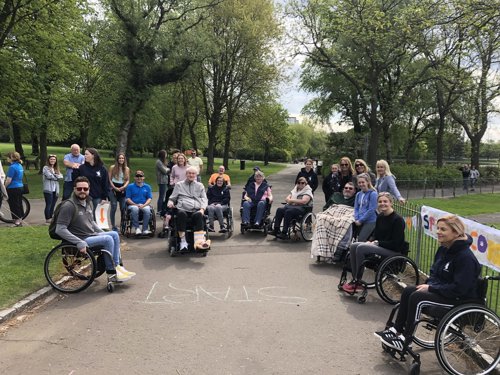
As part of your rehabilitation, the team will discuss how you will get out and about and often support you and your family to start doing this before you are discharged. Any challenges you encounter can then be discussed and support given. Sometimes you will go out with the team to practice going to the shops, going out for a meal, using public transport or accessing leisure activities.

After you leave the Unit, we recommend you get out in your local community as much as possible. You can do this initially with family and friends and then move towards doing this on your own when you feel confident to do this. Often people attend a local gym, go shopping, socialise with friends and family and then branch out to day trips and holidays when you feel ready. Additional support and information with this can be provided through Back Up and SIS.

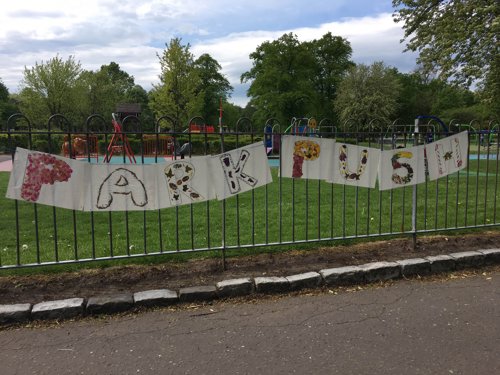
Park push


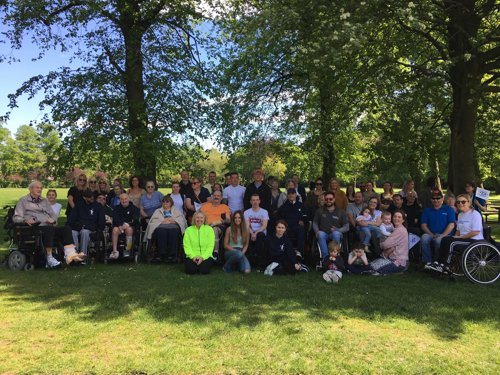
Park push group photo


Park push activities

Editorial Information

Last reviewed: 30/09/2024

Next review date: 30/09/2028

Author(s): Editorial Group QENSIU .

Version: V1

Co-Author(s): louise.cownie@nhs.scot , campbell.culley2@nhs.scot , mary.hannah@nhs.scot , susan.gilhespie2@nhs.scot , claire.lincoln2@nhs.scot .

Reviewer name(s): Mary Hannah.